

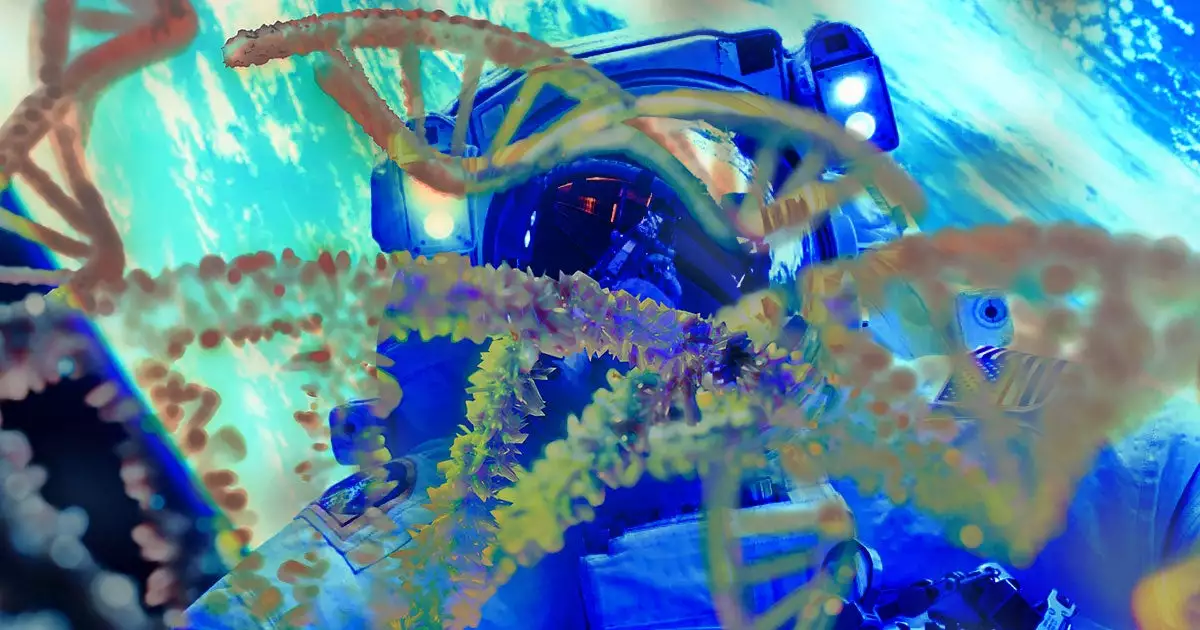

Microgravity’s Hidden Toll: The Dark Genome Awakens in Orbit
The International Space Station, long a crucible for the extremes of human ingenuity and endurance, has now become the stage for a profound biological revelation. A recent peer-reviewed study in *Cell Stem Cell* uncovers how bone-marrow stem cells, when exposed to the peculiar stressors of microgravity, undergo a rapid and alarming transformation. Within days, these cells activate dormant “dark genome” retroviral sequences—ancient genetic stowaways that comprise more than half of our DNA—while simultaneously accelerating cellular aging and eroding their regenerative powers.
This phenomenon is not merely academic. The implications ripple outward, threatening astronaut immunity and tissue repair, and by extension, the viability of long-duration missions to the Moon, Mars, and beyond. The study’s findings, while unsettling, offer a rare window into the mechanics of aging and disease, compressing years of terrestrial biological change into mere days, and opening new vistas for therapeutic innovation.
The Cellular Fallout: From Dormant DNA to Accelerated Aging
The research team’s deployment of miniaturized, shoebox-sized microphysiological platforms aboard the ISS marks a leap forward in “lab-on-orbit” experimentation. These platforms enabled real-time imaging and environmental control, while streaming multi-omics data—RNA sequencing and proteomics—directly to Earth-based cloud pipelines. The results were both stark and swift:
- Transcriptional Upheaval: Stem cells in orbit exhibited dramatic shifts in gene expression and signs of senescence, at a pace rarely seen in ground-based models of aging.
- Dark Genome Activation: Approximately 55% of the human genome, largely composed of ancient endogenous retroviral elements, became transcriptionally active under microgravity-induced stress. This awakening implicates these sequences in both accelerated aging and the potential for oncogenesis.
- Functional Decline: The loss of regenerative capacity in these stem cells directly threatens the immune resilience and bone maintenance of astronauts, echoing long-observed health issues such as muscle atrophy, osteoporosis, and visual impairment.
Preliminary drug-candidate work is already underway, with early trials of antivirals and reverse-transcriptase inhibitors aimed at suppressing this retroelement activation. Notably, post-flight samples showed partial recovery of cellular function, hinting at a degree of epigenetic plasticity—a hopeful sign for both mission planners and longevity researchers.
Economic and Strategic Reverberations: Space as a Biotech Accelerator
The convergence of spaceflight and life sciences is rapidly redrawing the commercial landscape. The current market for in-orbit biotech services, modest at less than $200 million, is forecast to swell to over $3 billion by 2030 as private space stations entice pharmaceutical, agritech, and cosmetics R&D. For investors, the implications are clear:
- Accelerated R&D: Microgravity acts as a “fast-forward” button for aging and disease models, potentially slashing drug development timelines from years to weeks. This could transform the economics of senolytics, gene editors, and immune modulators.
- Risk Capital and IP: Longevity and oncology funds are poised to co-invest in space-health platforms, with intellectual property generated off-planet becoming a new frontier for legal and strategic maneuvering.
- Insurance and Regulation: Evidence of accelerated stem-cell aging will inevitably reshape insurance premiums for commercial astronauts and space tourists, with genomic biomarkers adding new layers of complexity to underwriting. Meanwhile, regulatory agencies like the FDA and EMA face uncharted territory in approving drugs whose primary efficacy data are generated in orbit.
The broader macroeconomic context cannot be ignored. As the global population ages—projected to reach one in six people over 60 by 2030—regenerative medicine is becoming a central pillar of healthcare investment. Insights gleaned from space-accelerated aging models may not only speed up preclinical testing but also enhance supply-chain resilience for biomanufacturing on Earth, a lesson underscored by the COVID-19 pandemic.
Navigating the New Frontier: Imperatives for Industry Leaders
For decision-makers at the intersection of biotechnology, space, and finance, the message is unequivocal: the biological risks of spaceflight are now quantifiable, and the commercial opportunities are vast—but only for those who move decisively.
- Portfolio Diversification: Allocate capital to microgravity-enabled biotech platforms, not just single therapeutics, and secure experiment slots on private stations.
- Workforce Health: Integrate genomic-risk baselining for space-bound personnel and prepare for post-mission rehabilitation.
- Regulatory and IP Strategy: Advocate for clear guidelines on extraterrestrial data provenance and pursue accelerated regulatory pathways for space-developed therapies.
- Cyber-Biosecurity: Protect in-orbit bioinformatics with quantum-resistant encryption and rehearse for hybrid cyber-biohazard scenarios unique to closed-loop habitats.
- Competitive Intelligence: Track emerging patent activity and government procurement in the domain of retroviral suppression and microgravity biology.
The ISS stem-cell study transforms a long-suspected vulnerability into actionable intelligence, recasting human biology as both a critical bottleneck and a commercial catalyst in the trillion-dollar space economy. As microgravity platforms, multi-omics analytics, and genomic countermeasures converge, early adopters will shape not just the future of astronaut health, but the very architecture of longevity and regenerative medicine on—and off—this planet.

 By
By
 By
By

 By
By
 By
By

 By
By
 By
By







