


The Allure of the Exception: Manhattan’s Narrowest Townhouse as a Market Signal
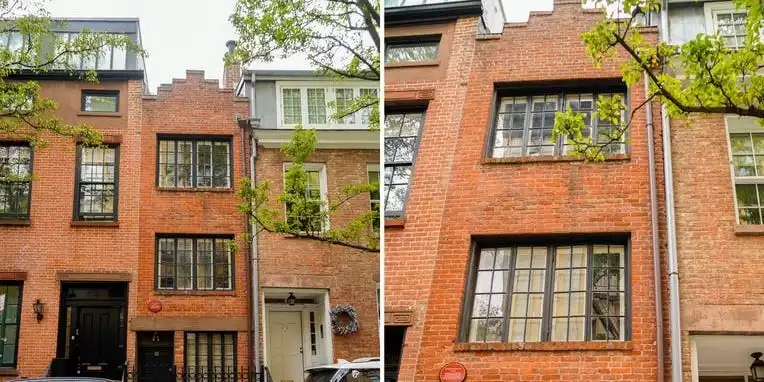
In the labyrinthine heart of the West Village, where cobblestone streets and brownstone facades conjure a cinematic New York, a singular property has returned to market, whispering both history and the future of urban living. The townhouse at 7 ½ Bedford Street, just 9.5 feet wide and spanning 1,000 square feet, is more than an architectural curiosity—it is a bellwether for the evolving economics of scarcity, narrative, and design in Manhattan real estate. Priced at $4.195 million, the home’s slender silhouette belies its outsized influence on market psychology and investment strategy.
Scarcity, Storytelling, and the Experiential Premium
Scarcity remains the most potent currency in Manhattan’s luxury market. As new listings in the prime West Village fell 11% year-over-year in Q1, properties with authentic narrative capital—think literary provenance, celebrity tenants, or Instagrammable proportions—have become their own asset class. The Bedford Street townhouse, once home to poet Edna St. Vincent Millay, is emblematic of this shift. Its price-per-square-foot rivals that of new construction penthouses, demonstrating that buyers are willing to pay a premium for the intangible: history, uniqueness, and the promise of an experience unavailable elsewhere.
- Cash buyers dominate: With 64% of $3 million-plus Manhattan deals in 2023 transacting in cash, the market for rare townhouses is largely insulated from the Federal Reserve’s 5%+ policy rate.
- Portfolio diversification: Experiential real estate, with a 5% CAGR since 2013, is now a favored hedge for high-net-worth individuals seeking assets that move independently of equities and inflation.
- Content dividend: The ability to monetize narrative—through short-term rentals, influencer events, or branded partnerships—has created a new revenue stream, especially for homes whose stories are as valuable as their square footage.
Micro-Scale Architecture and Macro-Urban Economics
The resurgence of 7 ½ Bedford Street spotlights a broader trend: the marriage of micro-footprint living with macro-level urban pressures. With the lapse of New York’s 421-a tax abatement and replacement costs soaring to $900 per square foot, developers are reimagining what constitutes a “desirable” parcel. Adaptive reuse, infill development, and the creative unlocking of sub-15-foot-frontage lots are no longer fringe strategies—they are the new frontier.
- Regulatory evolution: Municipal planners are reconsidering setback and light-plane codes, potentially paving the way for more micro-residences in legacy neighborhoods.
- Valuation benchmarks: Sales like Bedford Street provide critical comps for the valuation of ultra-narrow lots, informing both private and institutional investment decisions.
For developers, the opportunity lies in rarity arbitrage—aggregating micro-lots or assembling historic row houses into branded portfolios that can command cap-rate compression far beyond conventional multifamily assets. The prospect of tokenizing such properties via blockchain, enabling fractional ownership with transparent provenance, is no longer theoretical; it is a logical next step for a market obsessed with both exclusivity and liquidity.
Technology, Design, and the Future of Urban Living
The Bedford Street townhouse is not just a relic; it is a live laboratory for the technologies and design philosophies shaping tomorrow’s cities.
- Smart compactness: Edge-based occupancy sensors and adaptive lighting, piloted in Tokyo micro-flats, can reclaim up to 12% of usable floor area—critical when every inch counts.
- Vertical circulation: Innovations like carbon-fiber composite spiral stairs reduce structural thickness and improve light penetration, directly addressing the challenges of ultra-narrow homes.
- Material science: Bio-based insulation panels, such as mycelium, deliver high R-values with minimal wall depth, maximizing functional space without sacrificing sustainability.
The intersection of heritage and high-tech is also a proving ground for proptech. Augmented and virtual reality “digital twins” can ease buyer anxiety about unconventional layouts, offering immersive pre-purchase experiences. For institutional owners, retrofitting 19th-century structures to meet stringent carbon caps—without erasing their character—will become a case study in ESG leadership.
Strategic Horizons: From Boutique REITs to Digital Collectibles
Looking ahead, the implications of this sale ripple far beyond the West Village. In the near term, “storied scarcity” assets will continue to appreciate, buoyed by constrained supply and insatiable demand for the unique. Boutique REITs and family offices are poised to intensify their pursuit of micro-parcel assemblages, betting that narrative-rich properties will outperform in a volatile macro environment.
In the medium term, regulatory shifts in cities like New York, Boston, and San Francisco could legitimize sub-350-square-foot residences, boosting the value of micro-footprint comps. Proptech M&A will likely accelerate, focused on spatial-optimization tools that help institutional landlords extract margin in high-cost metros.
Over the long arc, carbon compliance will bifurcate the value of historic buildings: those that harmonize heritage with net-zero retrofits will command a premium, while laggards risk obsolescence. The advent of digital collectibles—NFT deeds, AR overlays—will transform unique dwellings into hybrid physical-digital assets, unlocking new revenue streams and redefining what it means to own a piece of New York.
For decision-makers, the message is clear: the future belongs to those who can monetize uniqueness, marry heritage with innovation, and navigate the shifting sands of urban regulation and technology. The narrowest house in Manhattan is not just a home—it is a harbinger.

 By
By
 By
By

 By
By
 By
By

 By
By
 By
By







