

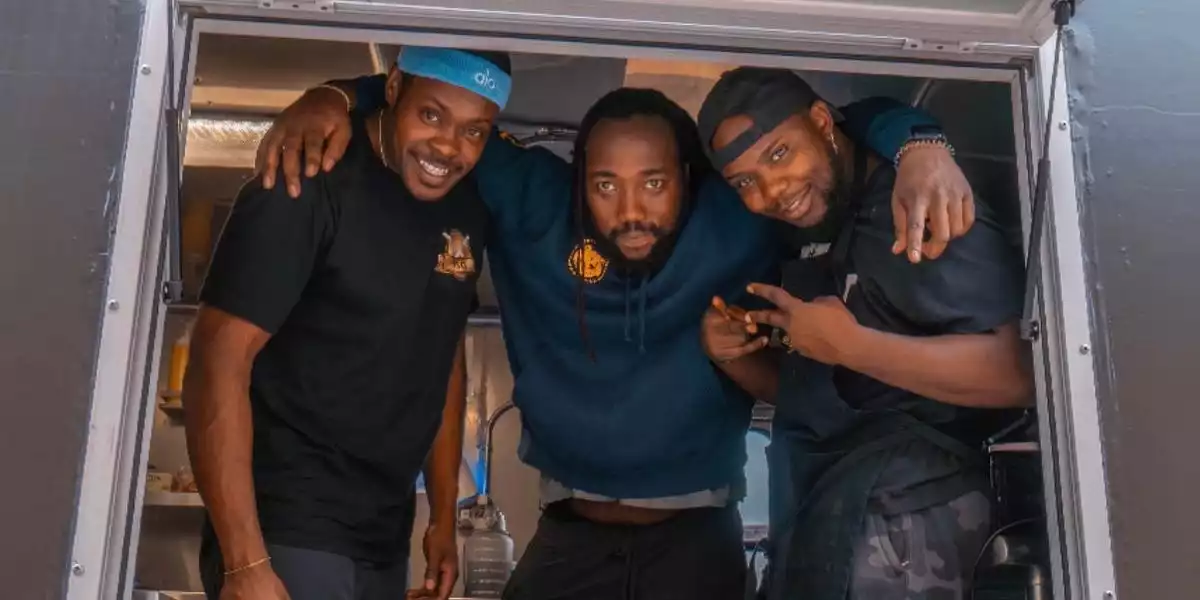

A lean, mobile bet that outperforms the traditional restaurant math
Flo’s Eats, a Southern-comfort food truck launched by Minneapolis natives Eddie Adegeye, JT Tarwai, and Isaac Flomo, reads like a modern case study in capital efficiency. The founders bought a 1996 Winnebago—formerly a mobile dental clinic—for $4,470, then spent roughly $100,000 and two years converting it into a compliant, high-throughput kitchen. The turning point was not a viral moment; it was operational endurance: a $15,000 axle repair, rigorous safety-code upgrades, and the discipline to keep the concept simple until it could scale.
The result is a set of numbers that stand out in today’s food-and-beverage (F&B) environment: $240,000 in first-year revenue, generated across a March-to-November operating season. In an era when brick-and-mortar builds can run into the millions before a single plate is served, Flo’s Eats underscores a pragmatic thesis: mobility can be a financial strategy, not just a lifestyle choice.
From a business lens, the truck’s economics highlight why micro-format ventures are increasingly attractive under inflationary pressure:
- Lower fixed costs than a lease-dependent restaurant model
- Faster capital turn relative to traditional buildouts
- Asset optionality, since a mobile unit can be redeployed, sold, or reconfigured more readily than a fixed location
This is not a rejection of restaurants; it is a recalibration of risk. When consumer demand is volatile and input costs remain elevated, entrepreneurs are looking for models that can survive a bad month without becoming a balance-sheet crisis.
Inflation, “trade-down” dining, and the rise of high-touch convenience
Flo’s Eats is also a signal about consumer behavior. Inflation has reshaped dining into a spectrum of compromises: diners still want quality and experience, but they are increasingly selective about commitment—time, price, and formality. Food trucks occupy a sweet spot: high-touch food with low-friction decision-making.
The truck’s downtown nightlife presence and festival strategy reflect where discretionary spending still concentrates: moments of social density. Instead of competing for routine weekday traffic like many restaurants, Flo’s Eats leans into event-driven demand—a pattern that can be forecasted, staffed, and monetized with less exposure to slow periods.
For city economies and event organizers, this has practical implications. Food trucks are not merely “extra vendors”; they can function as capacity buffers that improve guest experience and increase concession yields. A well-run truck reduces lines, expands menu diversity, and keeps spending on-site—benefits that matter to:
- Festival operators seeking higher per-capita spend
- Downtown business districts aiming to extend evening foot traffic
- Venue owners looking for flexible food partnerships without building kitchens
In this context, Flo’s Eats is less an outlier than a proof point: mobile food is becoming a mainstream response to the same macro forces squeezing conventional hospitality.
Engineering reuse and operational minimalism as competitive advantage
The origin story—repurposing a legacy vehicle built for medical service—also reflects a broader “circular economy” logic: reuse can be a growth lever when new equipment is expensive, delayed, or over-specified for early-stage needs. Retrofitting a former clinic into a food truck is not just thrift; it is engineering adaptation under constraints, and it mirrors what many small businesses are doing across sectors: extracting value from older assets through targeted upgrades.
Operationally, Flo’s Eats leans on a principle that larger enterprises often rediscover the hard way: complexity is a tax. The menu is intentionally tight—buttermilk-fried chicken sandwiches and grilled cheese on garlic bread—which reduces SKU sprawl, compresses prep time, and stabilizes quality during rushes. That modular approach supports throughput, especially when paired with clear labor division during peak periods.
Key operational advantages embedded in this model include:
- Shorter order-to-serve cycles, improving line velocity and customer satisfaction
- Simplified supply chain, reducing waste and stockouts
- Training efficiency, enabling consistent execution even as staffing flexes
For established F&B operators, the lesson is not to shrink menus indiscriminately, but to identify which items create brand identity while preserving speed and margin. For startups, it’s a reminder that “signature” often beats “selection,” particularly when labor is tight and demand is spiky.
Social-first brand building and the next phase: scaling without dilution
A defining accelerant for Flo’s Eats is digital community building. Flomo’s social-media–driven following provided a pre-launch audience and a real-time channel for location updates, demand signaling, and loyalty reinforcement. In effect, the truck operates with a direct-to-consumer marketing layer that many small restaurants still lack—one that can shape demand rather than merely react to it.
The next strategic question—planning a second truck—introduces the classic scaling tension: replication versus dilution. A second unit can expand revenue capacity, but it also multiplies operational variables: staffing, maintenance risk, inventory coordination, and quality control across locations.
If Flo’s Eats moves forward cautiously, the most leverage may come from systems rather than size. Practical enablers include:
- Cloud-based POS and inventory integration to standardize purchasing and reduce variance
- Data-driven scheduling aligned to nightlife peaks and festival calendars
- Mobile pre-orders and dynamic menus to increase average ticket size and smooth demand surges
- Resilience planning, such as maintenance reserves or cooperative service arrangements to reduce downtime from high-impact failures (axles, engines, refrigeration)
Partnerships could also become a growth multiplier without overextending operations—collaborations with breweries, music venues, and sports events can provide predictable foot traffic and co-branded visibility while preserving the truck’s community-rooted identity.
Flo’s Eats ultimately illustrates a broader business and technology narrative: in a volatile economy, the winners are often those who combine asset ingenuity, operational discipline, and digital intimacy—then scale only as fast as their systems can protect the experience that created demand in the first place.

 By
By

 By
By
 By
By
 By
By
 By
By
 By
By
 By
By







