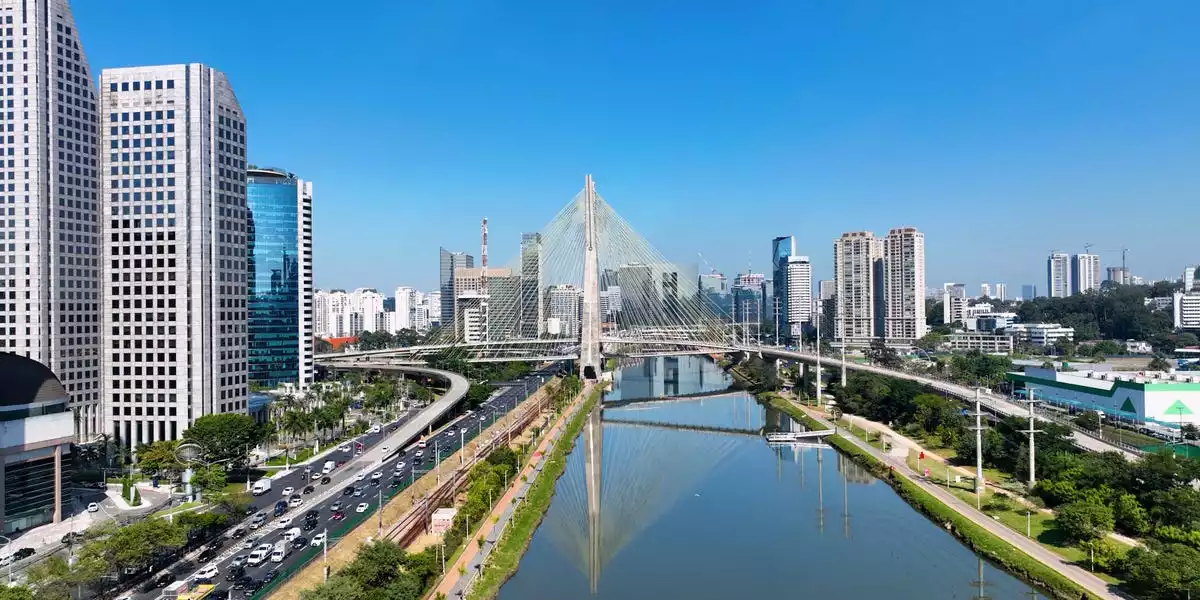

A personal relocation story that mirrors a structural shift in global talent flows
Isaiah Reynolds’ move from Chicago to São Paulo reads, on the surface, like an individual bid for reinvention after job loss. Yet the contours of his experience—navigating a new climate, adapting to unfamiliar food norms, and finding belonging through local openness—map neatly onto a larger business and technology reality: talent mobility is being reshaped by remote work, urban competitiveness, and the growing sophistication of “non-traditional” global hubs.
For employers and policymakers, the signal is less about one expatriate’s adjustment curve and more about what enables such moves to happen at scale. The modern relocation decision is increasingly influenced by a blend of:
- Location-agnostic employment models (remote-first teams, cross-border contracting, distributed startups)
- Urban quality-of-life tradeoffs (cost, culture, safety, healthcare access, community)
- Operational infrastructure (broadband reliability, co-working density, payment rails, language accessibility)
São Paulo’s gravitational pull in this context is notable. It is not merely a lifestyle destination; it is a regional economic engine with deep corporate presence, a large consumer market, and a growing startup ecosystem. Isaiah’s story underscores how cities like São Paulo can convert personal transitions—like displacement from a job market—into inbound human capital when the conditions are right.
Remote work, digital infrastructure, and the new competition for knowledge workers
Isaiah’s ability to treat São Paulo as a viable next chapter reflects the normalization of remote work as a catalyst for talent migration. This is not a soft cultural trend; it is a competitive dynamic with measurable implications for telecommunications providers, HR technology vendors, and real estate developers.
Key technological and platform implications emerge:
- Broadband as a relocation prerequisite: For remote professionals, connectivity is not a convenience—it is core economic infrastructure. This elevates the strategic role of ISPs, fiber deployment, and service reliability in neighborhoods that attract international residents.
- Co-working and collaboration tooling as “city infrastructure”: Co-working spaces, secure video conferencing, and asynchronous collaboration platforms increasingly function like an urban utility layer for distributed labor.
- Cross-border employment enablement: HR-tech and fintech platforms that simplify localized onboarding, payroll, tax handling, and benefits can reduce friction for both workers and employers, effectively expanding the addressable talent pool for companies hiring across borders.
For corporations, the strategic takeaway is that remote work does not eliminate geography—it re-weights it. Cities that pair cultural magnetism with dependable digital infrastructure can become durable nodes in global talent networks. São Paulo’s opportunity is to formalize this advantage through policies and partnerships that make relocation administratively simple and professionally sustainable.
Climate comfort meets PropTech: the overlooked friction in “emerging talent hubs”
One of the most revealing details in Isaiah’s account is not cultural but environmental: humid yet cool springs, and housing without central heating. This mismatch between expectations and lived reality highlights an under-discussed market gap—thermal comfort as a product feature in cities that are newly attracting international residents.
This is where climate, infrastructure, and technology intersect:
- Smart-climate retrofits: Modular heating, efficient insulation, and IoT-driven HVAC controls can be positioned as high-impact upgrades in older housing stock, especially in neighborhoods popular with expatriates and remote workers.
- PropTech differentiation: Developers and property managers can compete on climate-adaptive design, bundling energy efficiency with intuitive comfort controls—features that are often assumed in North American housing but unevenly distributed elsewhere.
- Data-informed real estate marketing: Microclimate awareness (seasonal temperature swings, humidity patterns, building thermal performance) can become part of how properties are described and priced, particularly for international tenants who may not anticipate local conditions.
For investors and operators, the business logic is straightforward: as talent migration increases, so does demand for housing that supports productivity and well-being. Thermal comfort is not cosmetic; it influences sleep quality, work performance, and tenant retention—metrics that ultimately shape real estate yield and brand reputation.
Food culture as an innovation surface: from adaptation to consumer-tech opportunity
Isaiah’s culinary transition—from craving Chicago-style pizza to embracing feijoada and acarajé—illustrates how relocation reshapes consumption. Food becomes both a daily negotiation and a gateway to belonging. For the food and beverage sector, this is not merely anecdotal; it is a blueprint for product strategy in globally connected cities.
Several innovation vectors stand out:
- Fusion menus and localized global comfort: Restaurants and chains can design offerings that respect local staples—rice, beans, meat, salad—while introducing “bridge” items that help newcomers acclimate without flattening authenticity.
- Delivery platforms and curated discovery: Food-delivery apps and ghost kitchens can build AI-driven recommendation engines that track evolving preferences—moving consumers from familiar tastes to regional specialties through guided discovery.
- Supply chain and premium neighborhood assortment: As expatriate populations grow, supermarkets and distributors can explore import-substitution strategies, targeted inventory, and improved cold-chain logistics to diversify offerings without inflating costs.
Food, in this framing, becomes a measurable indicator of integration—and a commercial opportunity for platforms that can translate cultural curiosity into repeat behavior.
Isaiah ultimately found community through Brazilians’ openness and pride, a reminder that the “soft” factors—hospitality, social permeability, cultural confidence—often determine whether a relocation becomes a short experiment or a long-term commitment. For São Paulo, the next frontier is to convert that social advantage into a scalable ecosystem: welcome packages that combine housing, connectivity, language learning, and community onboarding, supported by the platforms and policies that make global mobility feel less like a leap and more like a well-designed landing.

 By
By
 By
By

 By
By


 By
By
 By
By