
Tesla at the Crossroads: Navigating Reputational Turbulence and Strategic Inflection
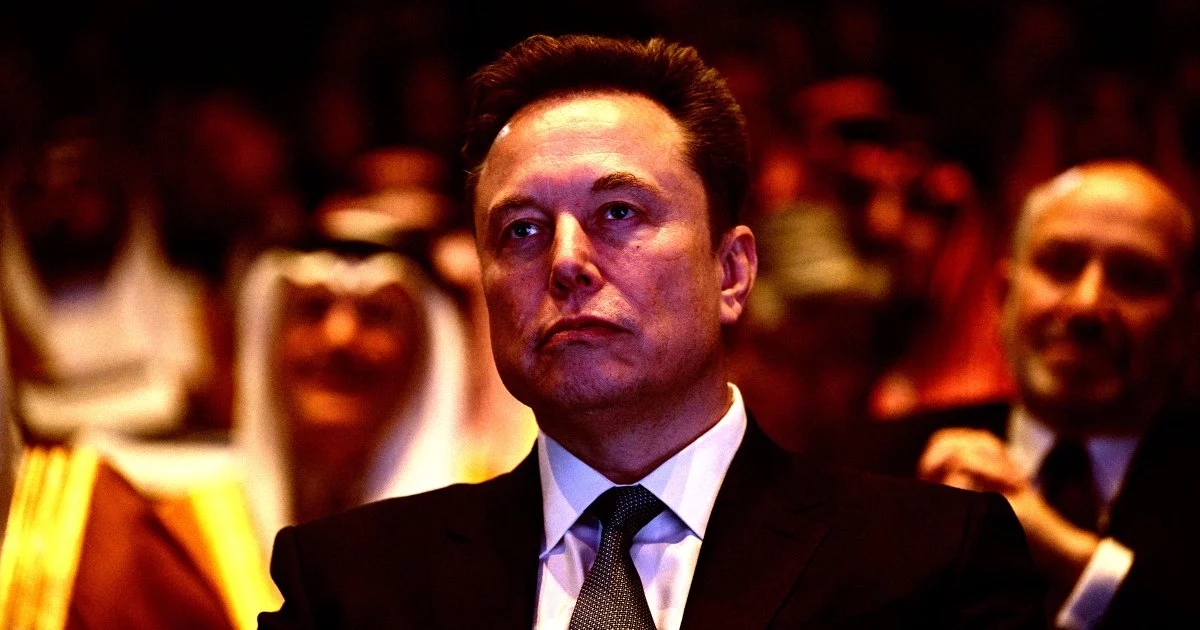
Tesla, the perennial avatar of electric-vehicle disruption, now finds itself at a moment of profound reckoning. Once buoyed by an aura of inevitability—its founder’s cult of personality, its technological bravura, its Wall Street magnetism—the company faces a convergence of existential challenges. The latest tremor: newly released U.S. Department of Justice e-mails more directly linking Elon Musk to Jeffrey Epstein, reigniting governance anxieties and amplifying the company’s exposure to reputational risk. The fallout has been swift, with Tesla’s share price correcting by nearly 8%, a movement that, while not unprecedented, signals a market increasingly sensitive to Musk’s personal and professional bandwidth.
This episode lands atop a year already marked by Tesla’s first annual revenue contraction, a bruising 61% year-over-year profit slide in Q4 2024, and the visible erosion of its EV leadership in both Europe and China. With Volkswagen and BYD now outpacing Tesla in their respective markets, and management’s declared pivot toward humanoid robotics and artificial intelligence, the company’s competitive moats and capital allocation priorities are under sharper scrutiny than ever.
—
The Erosion of Moats: Capital, Competition, and the Musk Premium
Tesla’s equity narrative has always been inextricably linked to Elon Musk—a “Musk premium” that underwrote the company’s meteoric valuation. Yet, as the Epstein correspondence compounds existing concerns over Musk’s public rhetoric and governance, institutional investors and ESG-focused funds are recalibrating their risk models. Tesla’s status as a retail-heavy megacap only exacerbates volatility: sentiment swings now translate rapidly into liquidity gaps, as evidenced by the recent sell-off on above-average volume.
Financially, the 61% profit decline cannot be solely attributed to price wars in China. The discontinuation of the Model S/X, Tesla’s higher-margin flagships, has worsened product mix just as raw-material deflation slows. Meanwhile, Tesla’s once-unassailable cost advantage—rooted in vertical integration of batteries, power electronics, and its Supercharger network—is narrowing. Rivals are internalizing these capabilities or forging advantageous supply chains, particularly in the wake of the Inflation Reduction Act.
Perhaps most telling is the subtle migration of Musk’s net-worth center of gravity toward SpaceX. A potential SpaceX IPO could see Musk’s liquidity and strategic focus shift, raising the specter of Tesla becoming a non-core asset within his portfolio—a reversal of the narrative that once made Tesla the gravitational center of Musk’s ambitions.
—
Strategic Drift: From EVs to Robotics, and the Perils of Overextension
Tesla’s product roadmap, once the envy of the industry, is now conspicuously stalled. Since the lukewarm Cybertruck debut, no new high-volume vehicle has entered the funnel. The abrupt termination of the Model S/X, without an immediate successor, suggests a diversion of R&D and capital expenditure to an as-yet-unannounced Gen-3 platform. But time is not on Tesla’s side: European and Chinese competitors refresh their lineups every 18–24 months, threatening to outpace Tesla’s innovation cycle.
The company’s declared pivot to humanoid robotics and artificial intelligence—embodied in the “Optimus” robot and xAI initiatives—signals ambition, but also risk. These ventures demand capital and expertise far afield from automotive manufacturing. If successful, Tesla could license its AI stack in a manner reminiscent of Nvidia’s CUDA ecosystem, embedding its technology in third-party form factors. Yet, the near-term outlook is capital-intensive and regulatory-heavy, with margin dilution likely before any SaaS-like upside emerges.
A less obvious, but potentially transformative, intersection lies in the integration of EVs, residential energy, and AI. Regulatory frameworks like FERC Order 2222 could enable Tesla to orchestrate a distributed, AI-optimized virtual power plant—leveraging its robotaxi fleet and stationary storage. Here, the company’s AI workstreams may yield algorithms for real-time energy optimization, an area where traditional automakers lack depth.
—
Governance, Talent, and the Shape of What’s Next
Tesla’s board-level independence remains under a microscope, especially following the Delaware court’s rescission of Musk’s $56 billion compensation package. The Epstein e-mails may accelerate calls for a formal succession and risk-mitigation plan, as institutional investors weigh the long-term viability of the Musk-centric model. Moreover, Tesla’s ability to attract and retain top AI talent is increasingly cross-elastic with OpenAI, Anthropic, and Nvidia. Public-image volatility threatens the company’s once-magnetic employer brand, potentially inflating labor costs in premium technical roles.
The next 24–36 months will be decisive. Scenarios range from a re-centering on the core auto platform—requiring an accelerated Gen-3 mass-market vehicle and aggressive supply-chain hedging—to a full-throated AI/robotics re-rating, or even a strategic spin-off of Tesla Energy or Dojo compute services. Each path carries its own risks and rewards, but all demand disciplined capital allocation, credible succession planning, and a technology roadmap that can outpace both regulatory headwinds and geopolitical entanglements.
Tesla, for all its volatility, remains the crucible in which the future of mobility, energy, and AI will be forged—or fractured. The company’s ability to reassert its advantage will shape not only its own destiny, but the contours of the industries it has spent the last decade redefining.

 By
By
 By
By
 By
By
 By
By

 By
By
 By
By
 By
By