

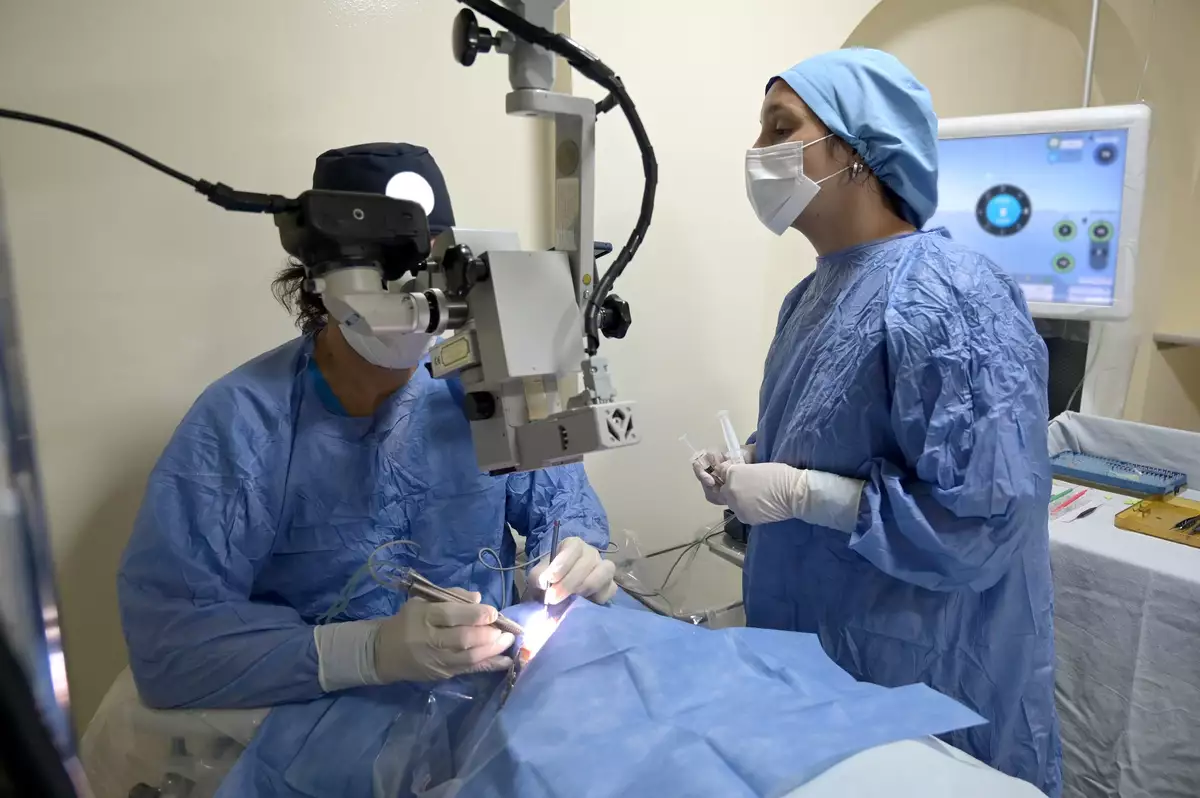

A Paradigm Shift in Vision Correction: The Promise and Mechanics of Electromechanical Reshaping
In the world of refractive surgery, innovation has often arrived with a flash—literally. The dazzling precision of excimer and femtosecond lasers has defined LASIK as the gold standard, its high-tech choreography slicing and sculpting corneal tissue to restore clarity to millions. Yet, in a quiet laboratory at Occidental College and the University of California, Irvine, a different kind of revolution is taking shape—one that eschews the spectacle of light for the subtlety of chemistry and electricity. Electromechanical Reshaping (EMR) may not dazzle, but it promises to disrupt.
EMR’s approach is as elegant as it is radical: a molded platinum “contact lens” delivers a controlled electrical current to the cornea, locally altering pH and softening collagen. Within a minute, the softened tissue is gently molded into a new curvature, correcting myopia without a single incision or pulse of laser light. In recent rabbit trials, EMR corrected nearsightedness in 10 of 12 eyes, sidestepping the collateral damage and post-operative complications that shadow LASIK. The implications ripple far beyond ophthalmology, hinting at a platform technology with the potential to reshape—not just corneas, but the very economics and accessibility of vision correction.
From Laser Suites to Platinum Lenses: Redefining the Value Chain
The technical divergence between EMR and LASIK is profound. Where LASIK demands million-dollar laser suites, sterile surgical theaters, and highly trained operators, EMR’s consumable-centric model could democratize access. The disposable platinum lens, used in gram-level quantities, shifts the cost structure from capital-intensive equipment to scalable, single-use devices. This mirrors the “razor-and-blade” economics that have transformed interventional cardiology and diabetes care, and could, in time, do the same for vision correction.
Key advantages of EMR’s approach include:
- Elimination of thermal and photonic damage: By avoiding lasers entirely, EMR reduces the risk of dry-eye syndrome, infections, and other complications.
- Lower fixed costs: The absence of high-capex laser platforms slashes barriers to entry, allowing clinics to operate with footprints more akin to dental offices than surgical theaters.
- Potential for broader application: EMR’s manipulation of the extracellular matrix, rather than tissue excision, opens doors to cartilage reshaping, scar management, and even reconstructive surgery—expanding its total addressable market well beyond the confines of ophthalmology.
The economic calculus is compelling. As myopia rates surge—projected by the WHO to affect half the world’s population by 2050—the demand for affordable, accessible vision correction intensifies. EMR’s low-overhead model could catalyze the spread of refractive procedures into secondary cities and retail optometry chains, particularly in emerging markets where cost sensitivity is acute.
Navigating Regulatory, Clinical, and Competitive Terrain
The path from rabbit corneas to global clinics is neither short nor simple. EMR must traverse a gauntlet of regulatory and clinical milestones, beginning with rigorous GLP animal studies and, if successful, progressing to human feasibility trials. Its “non-thermal, non-ablative” profile may allow for a streamlined De Novo FDA classification, potentially accelerating time to market relative to traditional surgical devices. Early commercial proof points may emerge in the EU or Asia, where regulatory pathways can be more accommodating to novel modalities.
Strategic factors shaping the competitive landscape:
- Incumbent response: Established LASIK manufacturers, with deep surgeon relationships and service revenues at stake, are unlikely to cede ground quietly. Expect a flurry of licensing overtures, minority investments, and accelerated in-house R&D as they hedge against disruption.
- Supply chain innovation: The use of platinum, while costly, is mitigated by the minute quantities involved and the potential for reclamation and re-plating—an ESG-friendly narrative that may appeal to both investors and regulators.
- Cross-disciplinary talent and IP: The EMR inventors’ expertise spans chemistry, biomedical engineering, and ophthalmology—a convergence emblematic of the future of med-tech. Early intellectual property filings, covering lens geometries, electro-stimulus waveforms, and adjunct pH modulators, will be pivotal in shaping competitive moats.
Beyond the Cornea: Platform Potential and Strategic Signals
EMR’s most profound impact may lie in its platform potential. By enabling non-invasive reshaping of collagen-rich tissues, the technology could extend to:
- Scar contracture release in burn victims, offering a gentler alternative to Z-plasty.
- Cosmetic cartilage contouring for rhinoplasty or otoplasty under local anesthesia, unlocking new cash-pay markets.
- Integrated drug delivery, with electrochemical lenses that elute anti-inflammatory agents, creating dual-purpose therapeutic devices.
For executives and investors, the signals are clear: monitor public funding flows, track venture activity in adjacent tissue-modulation startups, and watch for early adopter sentiment among high-volume refractive surgeons. The publication of long-term biomechanical stability data and device durability studies will be critical inflection points.
EMR embodies a broader movement toward “electroceutical” interventions—technologies that re-engineer biology without the trauma of cutting or burning. By decoupling vision correction from expensive infrastructure, it may democratize access and catalyze growth in under-served markets, even as mature LASIK volumes plateau. For those attuned to the undercurrents of med-tech disruption, EMR is less a distant promise than a signal—subtle, but unmistakable—of a new era in surgical innovation.

 By
By
 By
By

 By
By


 By
By
 By
By







