
A backyard shed becomes a signal flare for the micro-office economy
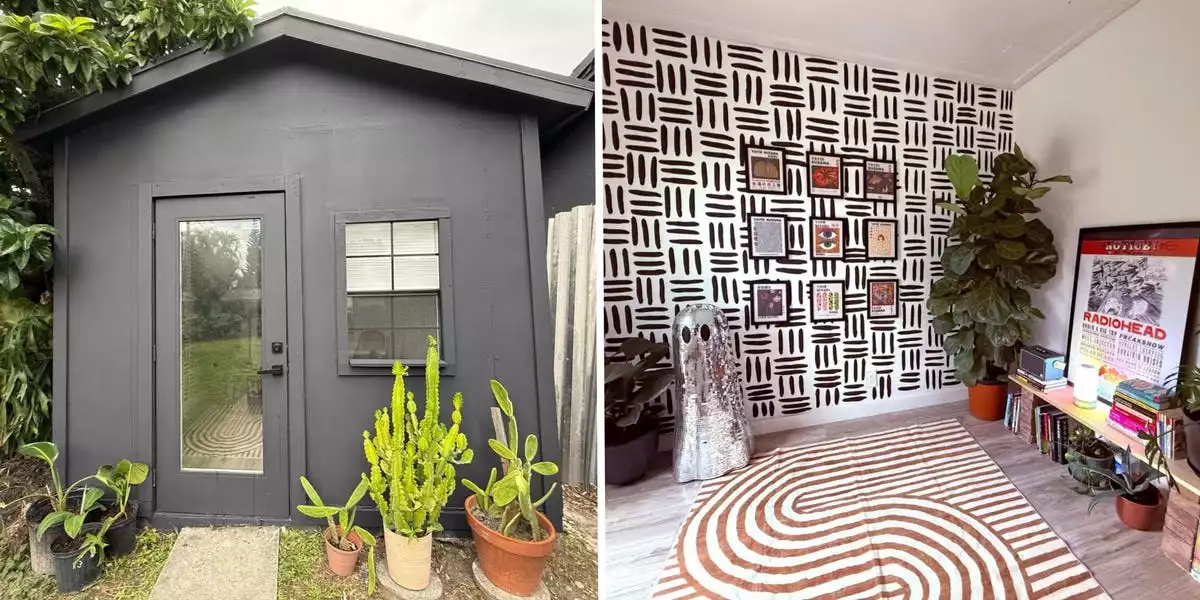
Marisa Todaro-Roman’s six-week conversion of a neglected backyard shed into a bespoke home office—completed for roughly $2,500—reads like a personal renovation story. Yet it also functions as a compact case study in how the remote-work economy is reshaping consumer behavior, residential real estate priorities, and the home-improvement market.
The project’s details matter because they mirror what millions of knowledge workers now want: a dedicated, separate workspace that preserves the psychological boundary between “home” and “work” without the cost and complexity of a full addition. Todaro-Roman’s approach—repairing rot and leaks, adding insulation and drywall, upgrading electrical wiring (about $750), and finishing with design-forward touches like a geometric accent wall, salvaged shelving, and greenery—highlights a pragmatic middle path between pure DIY and fully outsourced construction.
For business and technology observers, the most telling takeaway is not the aesthetic transformation; it’s the cost-to-function ratio. Traditional home-office additions often land in the $10,000–$20,000 range, especially once permitting, foundation work, and contractor schedules enter the equation. Micro-renovations of existing outbuildings—sheds, garages, detached studios—offer a faster, more accessible route to “new” square footage, and they do so at a time when households are recalibrating spending under inflationary pressure.
The economics behind DIY workspaces: labor inflation, circular materials, and value retention
Todaro-Roman’s shed conversion sits at the intersection of three economic forces increasingly visible in the home-improvement sector:
- Construction labor-cost inflation and scarcity: With U.S. construction wages rising meaningfully in recent years and skilled trades facing persistent shortages, homeowners are incentivized to self-manage projects or selectively hire specialists (as with electrical work) rather than outsource end-to-end builds.
- Supply-chain pragmatism and local sourcing: The use of salvaged boards and locally sourced materials reflects a broader shift toward supply-chain resilience—reducing dependency on long lead times and volatile pricing. This is circular-economy logic applied at household scale: reuse what’s available, buy what’s essential, and avoid delays that derail momentum.
- Property value and “low-friction” upgrades: Real-estate analyses frequently suggest that smart improvements to secondary structures can lift overall property valuations by 5%–7% without triggering the same permitting complexity as major expansions. While outcomes vary by market and quality of execution, the direction is clear: buyers increasingly price in flexible auxiliary space.
This is where the shed-office trend becomes more than lifestyle content. It is a consumer-led response to macro conditions—high labor costs, uncertain material pricing, and a housing market that rewards adaptability. The micro-office is, in effect, a hedge: against commuting, against co-working fees, and against the productivity drag of working at the kitchen table.
Technology’s quiet role: knowledge platforms, remote expertise, and the “prosumer” builder
A striking feature of modern micro-renovations is how often they are enabled by digital knowledge infrastructure. Todaro-Roman’s reliance on podcasts and audiobooks to maintain momentum and troubleshoot challenges is emblematic of a broader “prosumer” shift: consumers increasingly behave like semi-professionals, assembling expertise on demand.
Several technology trends reinforce this pattern:
- On-demand learning as a productivity tool: Instructional content—video tutorials, creator-led guides, long-form audio—reduces the intimidation factor of unfamiliar tasks and lowers the cost of mistakes.
- Remote consultation models: Virtual check-ins with electricians, engineers, or experienced contractors can replace multiple on-site visits. This “tele-service” layer doesn’t eliminate the need for licensed work where required, but it can compress timelines and improve decision quality.
- Tooling and project coordination: Digital project-management apps, budgeting templates, and marketplace platforms for materials and labor increasingly function as the operating system for small builds—especially when homeowners are coordinating work in evenings and weekends.
From a business perspective, this is fertile ground for new product categories: modular micro-office kits, plug-and-play insulation and electrical packages, and bundled services that combine procurement, scheduling, and compliant installation. The shed office is not just a room; it’s a platform for adjacent offerings in home improvement, consumer fintech, and subscription-based maintenance.
What employers, developers, and investors should learn from one small office
The strategic implications extend well beyond a single backyard. As remote and hybrid work mature, the question shifts from “Can people work from home?” to “What conditions make home-based work sustainable at scale?” Dedicated space is increasingly central to that answer.
For employers, this points to a tangible lever in talent strategy:
- Home-office stipends and retention: Workspace quality is a daily experience, not a quarterly perk. Targeted allowances for electrical upgrades, ergonomic setups, or soundproofing can address a top remote-work pain point—distraction and boundary erosion—while potentially reducing turnover.
- Hybrid policy credibility: Companies that expect consistent performance from distributed teams may find it rational to support the physical environments that enable that performance.
For real estate and development, the signal is equally clear:
- Auxiliary structures as premium assets: Properties with sheds, garages, or detached studios are increasingly seen as candidates for micro-offices, creative studios, or rentable work pods—often commanding premium per-square-foot value because they satisfy a specific, high-demand use case.
- Corporate real-estate portfolio evolution: If more work happens in micro-offices at home, organizations may continue shifting from large centralized footprints toward flexible hubs—supplementing office access with home-workspace support rather than forcing a binary choice.
Todaro-Roman’s shed conversion ultimately underscores a modern business reality: productivity is not only a software problem or a management problem—it is also a space design problem. As households keep adapting their homes to the knowledge economy, the most competitive companies and builders will be those that treat the micro-office not as a trend, but as durable infrastructure for how work now gets done.
 By
By
 By
By
 By
By
 By
By

 By
By
 By
By