
Michigan’s Drone-First Response: A New Urban Infrastructure Emerges
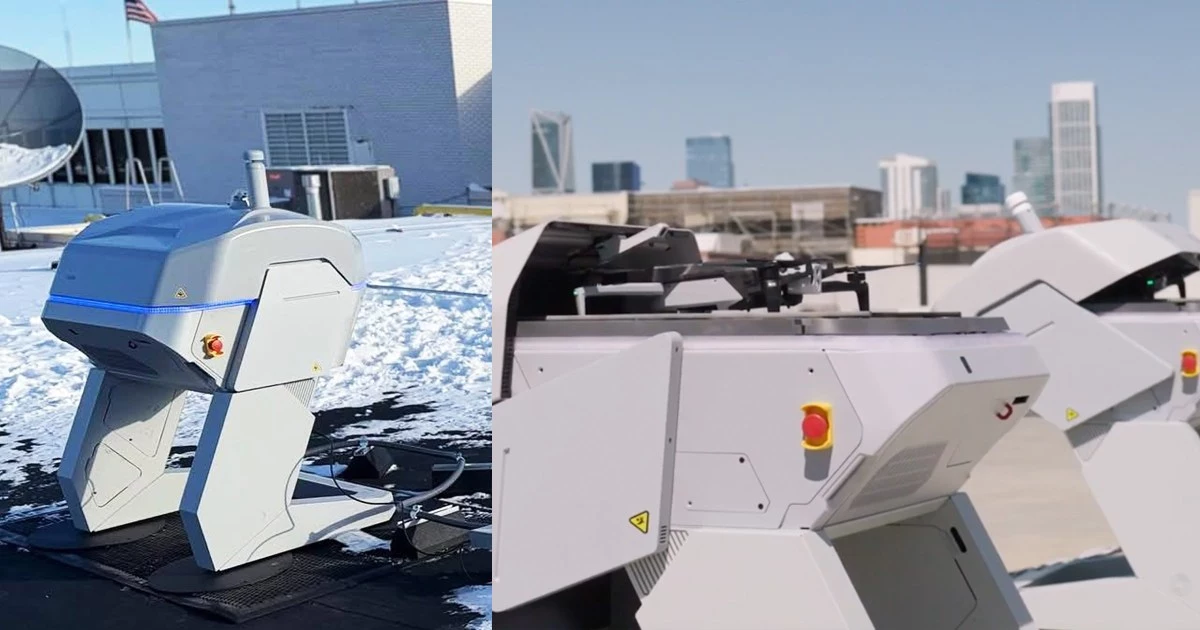
In Dearborn, Michigan, a quiet revolution is taking flight—quite literally—on the city’s rooftops. The launch of the state’s first “Drone-as-First-Responder” (DFR) program marks a pivotal moment not just for public safety, but for the broader urban fabric. Skydio’s autonomous quadcopters, deployed from weatherized “dock hives,” now routinely beat patrol cars to 911 scenes, transforming the cadence and calculus of emergency response. This initiative, arriving on the heels of Detroit’s RoboCop monument, signals a region at ease with the aesthetics of techno-futurism—yet the deeper story is one of infrastructure, economics, and governance.
Edge-AI Aviation: From Sci-Fi to Civic Utility
The maturation of edge-AI aviation platforms is rapidly demystifying what was once the stuff of speculative fiction. Skydio’s drones, powered by onboard computer-vision stacks, operate Beyond-Visual-Line-of-Sight (BVLOS) with minimal human intervention. This leap in autonomy is more than a technical feat; it’s a harbinger of a national regulatory shift. As the FAA moves toward routine BVLOS permissions, the prospect of drones as persistent, reliable first responders becomes less an experiment and more a new normal.
But the real breakthrough may be architectural. Rooftop “dock hives,” coupled with robust LTE/5G backhaul, form a distributed micro-airport network. This infrastructure layer echoes the rise of CCTV poles in the early 2000s, embedding aerial robotics into the city’s nervous system. The result is not just faster response times, but the generation of a high-frequency, real-time data stream—a resource with implications far beyond policing. From traffic analytics to infrastructure inspection, municipalities are poised to become stewards of valuable urban data assets.
Fiscal Pressures and the Shifting Economics of Policing
Behind the technological dazzle lies a pragmatic response to mounting fiscal and staffing pressures. Early data from pilot programs—such as Lakewood, Colorado, where a single drone hive responded to 1,200 calls in 22 weeks, arriving first on scene 80% of the time—suggests a compelling force-multiplier effect. For the cost of one fully-burdened officer, a city can deploy a drone system that handles routine, low-acuity incidents, freeing sworn personnel for higher-stakes tasks.
This shift is catalyzing a migration in municipal budgeting. Technology operating expenses—encompassing software subscriptions, data plans, and maintenance—are beginning to supplant legacy capital expenditures like vehicles and radios. Vendors who can bundle hardware, software, and compliance services are well positioned to capture recurring revenue streams, while city CFOs must develop new cost-allocation models and depreciation schedules.
The geopolitical dimension is equally salient. Federal restrictions on Chinese-made UAVs, enshrined in the American Security Drone Act, have created a procurement tailwind for domestic manufacturers. Dearborn’s deployment thus serves as both a reference case and a catalyst for reshoring the drone supply chain—a narrative sure to resonate in legislative circles and among public-safety grantmakers.
Civil Liberties, Policy, and the Contours of Public Trust
The arrival of drones as first responders inevitably stirs anxieties about surveillance and civil liberties. The RoboCop iconography, whether embraced or lampooned, underscores the cultural stakes. Jurisdictions such as San Francisco have already moved to restrict certain law-enforcement robotics, and Michigan’s legislators may soon face similar pressures. Transparent audit logs, geofencing, and community advisory boards are emerging as essential tools for building public trust and preempting backlash.
Regulatory evolution is also on the horizon. As the FAA transitions from case-by-case waivers to categorical BVLOS permissions, operational friction will decrease, but new compliance obligations—remote identification, pilot training, and maintenance standards—will come to the fore. Early adopters like Dearborn are not just beneficiaries; they are active participants in shaping the regulatory contours of urban airspace.
Liability, too, is in flux. As drones become the first on scene, risk shifts from vehicular accidents to airspace incidents and data breaches. Insurers are already crafting specialized public-safety UAV policies, and risk managers must stay ahead of these developments to avoid costly surprises.
The Road Ahead: Data Strategy, Security, and Workforce Transformation
The implications of DFR extend far beyond emergency response. Municipal leaders are advised to view drone fleets as multi-domain data platforms, capable of supporting environmental monitoring, infrastructure inspection, and more. Building robust data-sharing frameworks now will enable cities to monetize cross-department insights in the future.
Security, both at the edge and in the cloud, is paramount. The attack surface expands with each airborne node, demanding zero-trust architectures, end-to-end encryption, and rigorous supply-chain attestation—especially as federal grant eligibility becomes contingent on compliance.
Finally, the workforce of public safety is set for transformation. As autonomy advances, demand will grow for data analysts, UAS maintenance technicians, and AI ethicists. Public-safety academies and private certification providers alike must adapt curricula to meet these emerging needs.
Dearborn’s DFR program is not simply a spectacle of robotic modernity; it is a structural re-engineering of urban emergency logistics. The interplay of autonomy, policy, and fiscal strategy now shapes the frontier of public safety—a frontier where those who anticipate, rather than merely react, will define the next era of city life.

 By
By
 By
By
 By
By
 By
By

 By
By

 By
By