

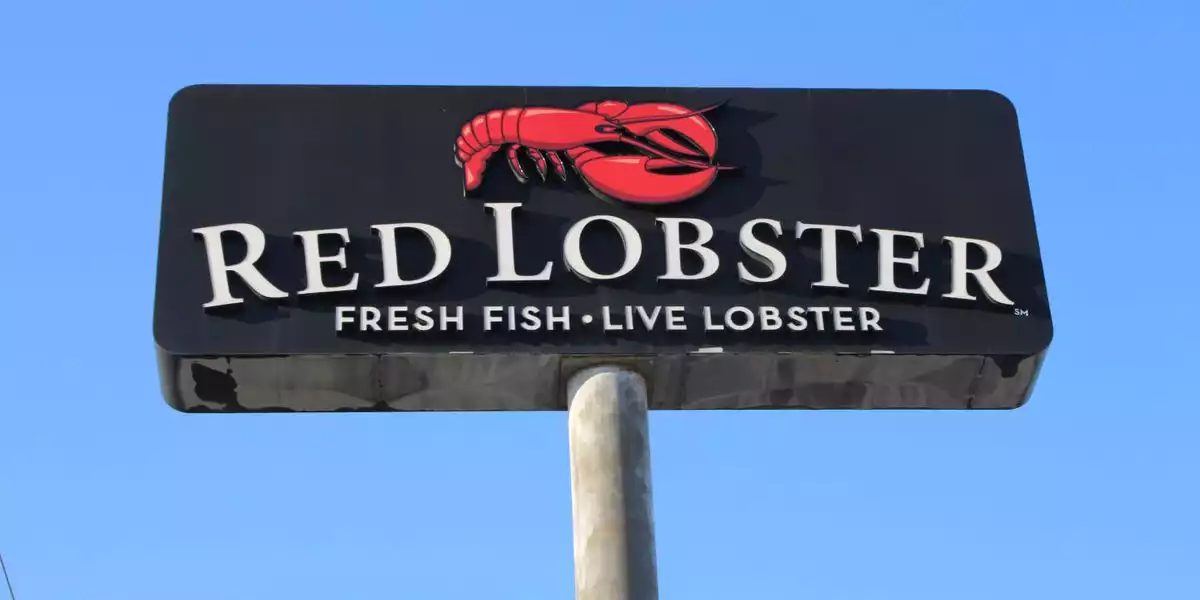

A post-bankruptcy CEO tests a different private-equity playbook
When Damola Adamolekun, 37, stepped into the CEO role at Red Lobster after the chain’s Chapter 11 bankruptcy in 2024, the market could reasonably have expected a familiar private-equity turnaround script: aggressive cost extraction, rapid footprint rationalization, and a narrow focus on near-term cash flow. Instead, Adamolekun is advancing a thesis that feels both contrarian and timely for casual dining—that brand recovery is best financed by restoring demand, not merely shrinking the expense base.
This matters because Red Lobster is not simply another distressed restaurant asset. It is a legacy consumer brand with deep cultural recognition, yet one that had drifted toward the industry’s most dangerous zone: commoditization, where diners see little difference between one chain and the next beyond price and convenience. In that environment, “efficiency” alone rarely creates a durable moat; it can even accelerate decline if it erodes the very experience customers remember.
Adamolekun’s background—private equity discipline paired with a track record at P.F. Chang’s, where he helped drive roughly $1 billion in incremental revenue—positions him as a hybrid operator: financially rigorous, but oriented toward top-line revival. The strategic signal is clear: Red Lobster’s recovery will be judged not only by margin repair, but by whether the brand can once again feel like a destination rather than a default.
—
From cost triage to customer-led growth: what’s changing inside Red Lobster
At the center of the turnaround is a deliberate reframing of the CEO’s role—from “financial engineer” to brand steward. That shift is expressed in two operational choices that are easy to underestimate but difficult to execute.
First, menu innovation is being treated as the primary growth lever. Rather than chasing complexity or premiumization for its own sake, the approach emphasizes value-focused design that aligns with inflation-weary consumers:
- Bundled meals and tiered pricing to meet different budget thresholds without diluting perceived quality
- Simplified seafood options that reduce decision friction and improve kitchen execution
- Limited-time offers that create urgency and give marketing a recurring narrative engine
In casual dining, the menu is both product and messaging. A well-constructed value platform can do multiple jobs at once: rebuild traffic, improve mix, and re-anchor the brand promise in plain language customers can repeat.
Second, change management is intentionally visible and paced. Adamolekun has made himself the public face of the revival, spending social capital on each pivot and creating a coherent storyline for employees, franchise-adjacent stakeholders, and consumers. Just as important is the decision to avoid “move fast and break things” in a business where broken execution shows up immediately in guest experience. A measured rollout of menu changes, technology upgrades, and marketing reduces operational whiplash—preserving institutional knowledge while still signaling momentum.
The broader bet is that emotional brand equity—nostalgia, trust, and the sense of “this place still knows what it is”—can be rebuilt with the same seriousness as a balance sheet.
—
Data, digital ordering, and loyalty: the quiet infrastructure behind the comeback
A customer-centric strategy in 2026 is inseparable from technology. Red Lobster’s revival narrative is being supported by a modern operational backbone—less glamorous than a menu relaunch, but often decisive in sustaining gains.
A key element is data-driven decision-making, where point-of-sale and margin analytics turn the menu into a kind of real-time laboratory. With integrated systems, leadership can:
- Forecast demand more accurately and optimize staffing to protect service levels
- Evaluate promotions with clearer visibility into traffic vs. profitability trade-offs
- Adjust offerings based on performance by region, daypart, and customer segment
This is where private-equity rigor becomes an advantage when applied constructively: not as a blunt instrument for cuts, but as a tool for unit-economics transparency that helps managers balance guest satisfaction with financial outcomes.
Equally important is omnichannel engagement. Upgrades to online ordering, curbside pickup, and mobile loyalty functionality do more than add convenience—they create data touchpoints that enable personalization and retention. A unified CRM and loyalty engine can support:
- Targeted incentives for lapsed guests
- Social-media-driven storytelling that resonates with Gen Z and millennials
- More consistent communication that doesn’t alienate core patrons who value familiarity
In a sector where consumers increasingly expect frictionless digital experiences, these systems are not optional. They are the rails that allow a brand to test, learn, and iterate without losing coherence.
—
Why this turnaround resonates beyond one chain: capital markets, competition, and the next PE operator archetype
Red Lobster’s trajectory is unfolding against a macro backdrop that raises the stakes. Consumer discretionary spending remains pressured, and diners are more selective, more promotion-aware, and less forgiving of inconsistent experiences. A value proposition can win traffic, but only if it is paired with execution that feels dependable.
At the same time, private markets are flush with capacity. With trillions in private-equity and credit capital seeking deployment, distressed and under-optimized restaurant chains remain a tempting hunting ground. What Adamolekun is demonstrating—if the early momentum holds—is a template for how sponsors may underwrite the next wave of consumer turnarounds:
- Experience design and brand storytelling as defenses against commoditization
- CEOs selected for dual fluency in marketing-led growth and financial discipline
- Technology and loyalty systems treated as core assets, not side projects
- A more explicit attempt to measure emotional ROI alongside conventional KPIs
There is also an industry-specific pressure point that will increasingly shape seafood brands: supply-chain traceability, sustainability, and regulatory scrutiny. A revitalized Red Lobster, operating at scale, has an opportunity to turn procurement discipline into differentiation—provided it communicates those standards credibly and avoids performative claims.
Red Lobster’s comeback effort under Damola Adamolekun is ultimately a referendum on a bigger idea: that the most resilient turnarounds in consumer businesses are built by leaders who can restore belief—among customers and employees—while still running the numbers with uncompromising clarity. If that balance can be sustained, it won’t just revive a storied chain; it will help redefine what “private-equity operator” means in the next cycle of retail and restaurant reinvention.

 By
By
 By
By
 By
By
 By
By
 By
By
 By
By

 By
By







