
At COP31 in Antalya, Türkiye, on November 16, the COP31 Presidency and the International Telecommunication Union launched the Antalya Artificial Intelligence Pledge, a voluntary international framework meant to do two things at once: push AI into climate action and force more discipline around AI’s own environmental footprint. The significance is practical, not rhetorical. AI growth now depends as much on power, water, grid capacity, cooling and permits as it does on chips and models.
The real question for readers is whether this changes the economics and accountability of AI infrastructure, or simply gives governments and technology companies a climate-friendly vocabulary while power, water and emissions keep rising. The immediate answer is somewhere in between. The pledge is not a treaty, a binding emissions standard or a universal disclosure rule. But it does create a common set of asks that utilities, regulators, lenders, enterprise buyers and local communities can use when deciding who gets electricity, financing, contracts and social license.
A framework, not a rulebook
The pledge asks endorsers to choose at least one voluntary commitment and connect it to measurable implementation using recognized standards. Its four pillars are aimed at the real friction points in AI buildout: powering and building infrastructure sustainably; designing, managing and procuring AI responsibly across its lifecycle; assessing and reporting environmental impacts; and strengthening finance, computing capacity, data and skills for AI-for-climate work, especially in developing countries, least-developed countries and small island developing states.
That matters because the framework reaches well beyond abstract promises to “green AI.” The first pillar goes straight to zero- and low-emission power, cooling, energy and water efficiency, grid integration and the allocation of infrastructure costs such as transmission upgrades. The second reaches procurement and hardware life, including durability, decommissioning, repair, reuse, recycling and e-waste. The third pushes standardized environmental-impact assessment and data sharing. The fourth keeps the climate upside of AI from becoming a rich-country-only project by calling for support on computing access, data, training and concessional finance.
What the pledge does not do is just as important. It creates no new legal obligations, sets no universal clean-power percentage and leaves each participant to choose targets such as disclosure levels, dates, funding amounts and beneficiary counts. The annexes offer examples, not minimum requirements. Annual progress tracking at UN climate meetings through 2030, starting at COP32, gives the initiative a timetable. It does not yet give it teeth.
Why it matters to AI economics
Voluntary frameworks can still matter when they become procurement language or financing conditions. The Antalya pledge’s strongest potential effect is to standardize what a serious buyer, lender or permitting authority asks before approving a data-center expansion or AI contract.
That timing is not accidental. As the Associated Press reported the same day, a Harvard-led study of 403 of the largest U.S. data centers estimated about 82 terawatt-hours of electricity use and about 28.3 million tons of carbon dioxide tied to that electricity over the period from May 2024 through April 2025. Researchers said more than half of the electricity was estimated to come from fossil fuels, and AP said the load was roughly enough to power nearly 7 million homes for a year. Those figures are modeled estimates for a defined U.S. sample, not a meter reading for all global AI infrastructure, but they help explain why this issue has moved onto the COP agenda.
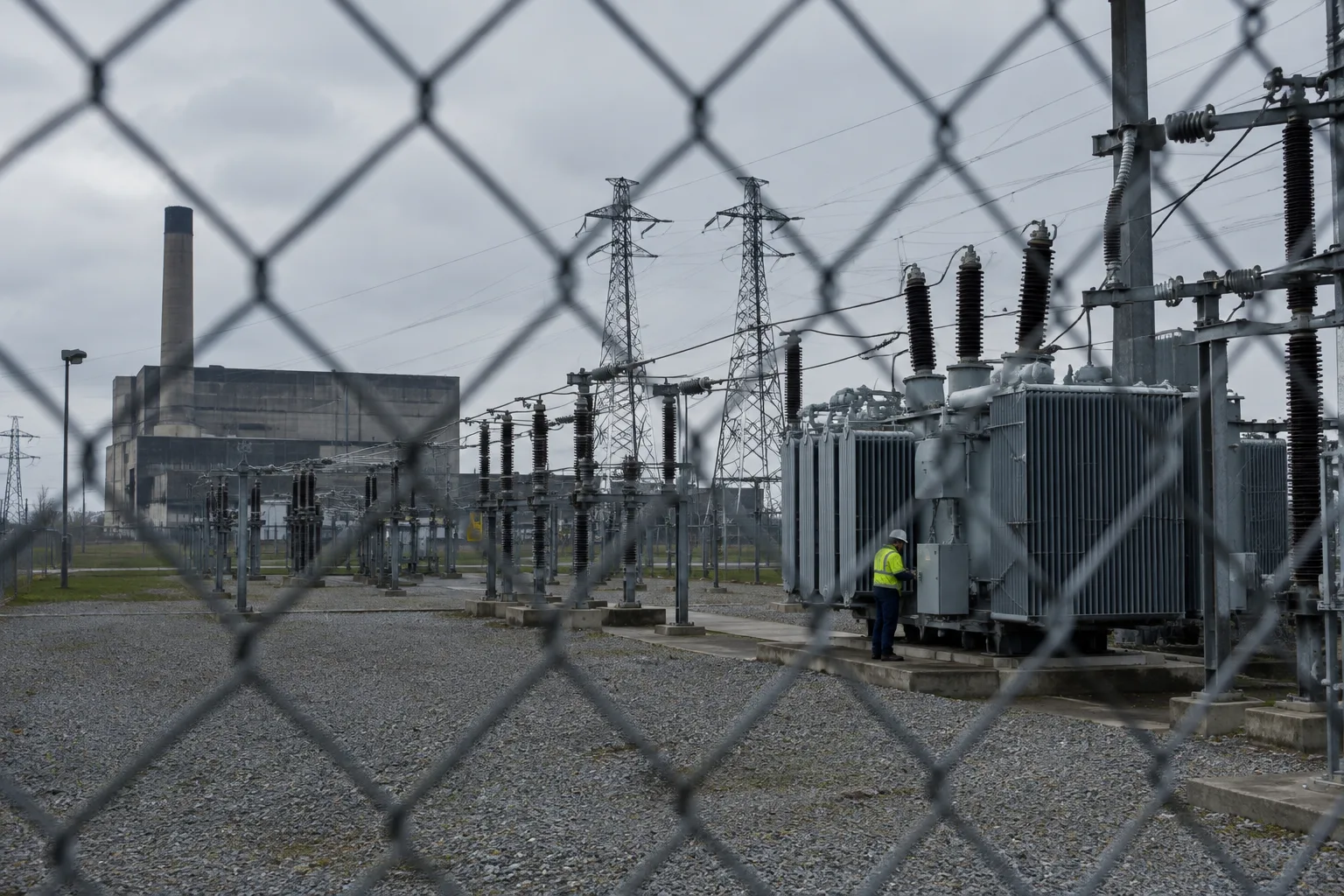
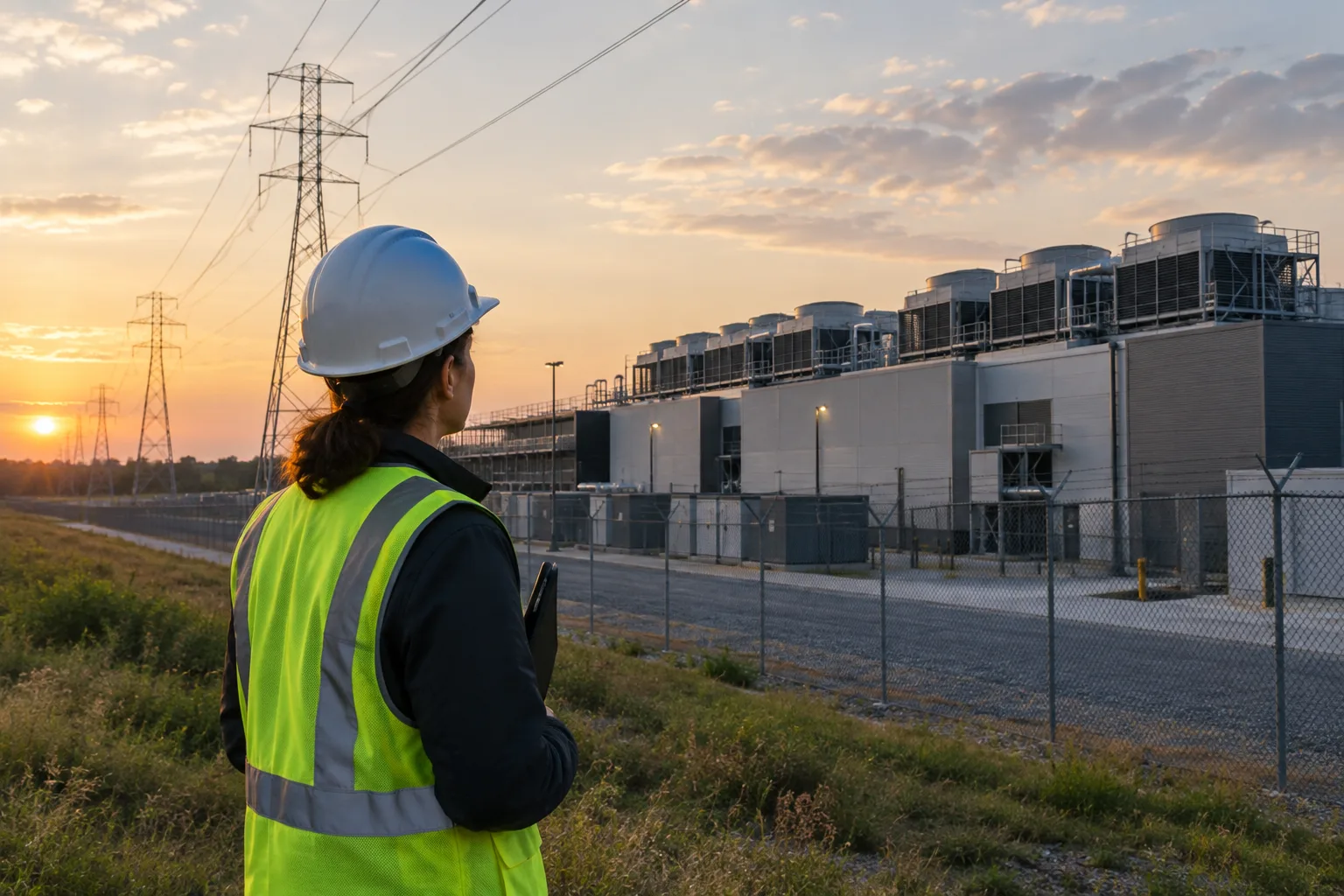
UN climate chief Simon Stiell’s warning sharpened the policy stakes: new data-center demand can strain electricity systems, increase pollution if it pulls in fossil generation, and shift infrastructure costs onto households and other businesses. That is the commercial backdrop to this pledge. A data center is not just a cloud abstraction. It needs land, substations, transmission, generation, cooling systems, water or water-saving technology, fiber, construction labor and large amounts of capital that must earn a return over years.
That is why the pledge’s language on grid integration and cost allocation matters. If a company says a facility is “renewable powered” because it buys annual renewable-energy certificates, that does not answer whether the site is using clean electricity at the hour it draws power. If a developer installs on-site gas generation to work around grid constraints, it may solve an interconnection problem without solving emissions. And if transmission and distribution upgrades are socialized, the public may end up subsidizing private compute growth.
Communities, meanwhile, are not only weighing climate claims. They are being asked to absorb noise, land use, water demand, construction disruption and power-price risk in exchange for jobs, tax revenue and the promise of digital investment. In that setting, “AI for climate” is not a sufficient answer unless the local costs are measurable and the benefits are enforceable.
The scorecard that now matters
The most useful way to read the Antalya pledge is as the beginning of a scorecard. The ITU points endorsers toward standards including L.1801 for assessing AI environmental impact, L.1304 for sustainable-data-center procurement and L.1320 for measuring energy efficiency in data-center power and cooling equipment. If those standards start appearing in cloud contracts, data-center permits, loan covenants and community-benefit agreements, the pledge will have changed behavior even without legal force.
A credible AI-infrastructure scorecard would ask for at least:
- hourly clean-electricity matching, not just annual renewable claims;
- direct and indirect emissions, with clear accounting boundaries;
- water withdrawal and water consumption, because they are not the same thing;
- workload-level energy and carbon intensity where operators can separate AI from storage, networking and other computing;
- cooling efficiency and demand-response capability;
- hardware durability, repair, reuse, recycling and e-waste handling;
- who pays for grid upgrades, backup generation, decommissioning and any stranded-asset risk;
- local commitments on jobs, tax treatment, noise, land use and enforceable community benefits.
That is also where the pledge’s limits are exposed. It does not establish one mandatory methodology that cleanly separates AI from other data-center workloads across countries. It does not yet show how annual progress will be audited or independently assured. The launch materials also do not provide a complete, stable public list of initial endorsers with their selected targets, so readers cannot yet compare ambition with precision.
For businesses, that means the Antalya pledge is less a verdict than a new due-diligence layer. Cloud providers and AI companies can use it to signal seriousness, but only if they publish targets that materially constrain operations or capital choices. Enterprise buyers can use it to push environmental metrics into procurement instead of accepting broad sustainability claims. Utilities and regulators can use it to ask whether new load is flexible, whether clean power is additional, and whether local ratepayers are being asked to absorb private expansion costs.
The deeper shift is that AI’s scarce input is increasingly social license tied to infrastructure facts. The Antalya pledge does not settle the fight over data-center growth. It gives that fight a more standardized vocabulary. By next year, the key test will not be how many organizations endorse the framework. It will be whether anyone with real leverage insists on comparable numbers before approving the next wave of AI infrastructure.

 By

 By

 By

 By

 By


 By