
Bitcoin’s Retreat: When Crypto Volatility Collides with Energy, Hardware, and Institutional Strategy
In the cold calculus of late-2024’s financial markets, Bitcoin’s recent descent from euphoric highs to a sobering US$63,000 has sent tremors well beyond the usual crypto echo chambers. The symbolic breach of the US$70,000 threshold is not simply a chartist’s concern—it is a clarion call for miners, investors, and policymakers to reconsider the underpinnings of a digital asset ecosystem now caught in a crossfire of macroeconomic, technological, and regulatory headwinds.
Mining Margins Erode as Energy and Hardware Economics Shift
The most immediate casualties of Bitcoin’s drawdown are the miners themselves. The industry’s hash-price index—a barometer of mining revenue per unit of computational power—has cratered, compressing gross margins to below 15% for many operators. With the average all-in cost of producing a single Bitcoin now hovering around US$87,000, the economics have inverted: mining is, for the majority, a loss-making proposition.
Several factors have converged to drive this margin compression:
- Hash-price dynamics: Revenues per exa-hash are down roughly 35% quarter-to-date, forcing miners to liquidate reserves and, in some cases, shutter operations.
- Energy arbitrage vanishes: Winter storms have spiked spot electricity prices in U.S. mining hubs by 20–40%, erasing the cost advantages that once fueled the proliferation of mobile-container mining.
- Hardware stasis: Next-generation 3 nm ASIC deliveries, once anticipated as a lifeline, are now deferred. This not only delays operational upgrades but also risks capital impairments on miners’ already strained balance sheets.
The result is an industry in flux, with echoes of China’s 2021 mining ban reverberating through the market. Forced liquidations and a flight from risk assets have led some analysts to identify technical support levels as low as US$30,000—a scenario that would test the resilience of even the most efficient mining operations.
Macro Forces and Regulatory Tides Redefine Digital Asset Flows
Bitcoin’s struggles are not occurring in a vacuum. The broader macroeconomic environment is exerting gravitational pull on all risk assets, particularly those without intrinsic yield. The U.S. yield curve remains elevated, making non-yielding assets like Bitcoin less attractive in relative terms. In crypto markets, this has manifested as negative perpetual-swap funding rates—a sign of persistent bearishness.
Meanwhile, capital is rotating into assets with tangible cash flows or intrinsic use value. Tokenized real-world assets (RWAs) and physical commodities are attracting institutional flows, while gold has retained its perennial safe-haven status. Regulatory developments compound the pressure:
- Basel crypto-exposure caps and MiCA implementation in the EU raise compliance costs for institutional holders.
- U.S. SAB 121 accounting treatment further complicates balance sheet management for corporates engaging with digital assets.
These headwinds reinforce the sell pressure, accelerating a structural reallocation of capital and compute resources.
The AI Compute Pivot: From Hashrate to Hyperscale
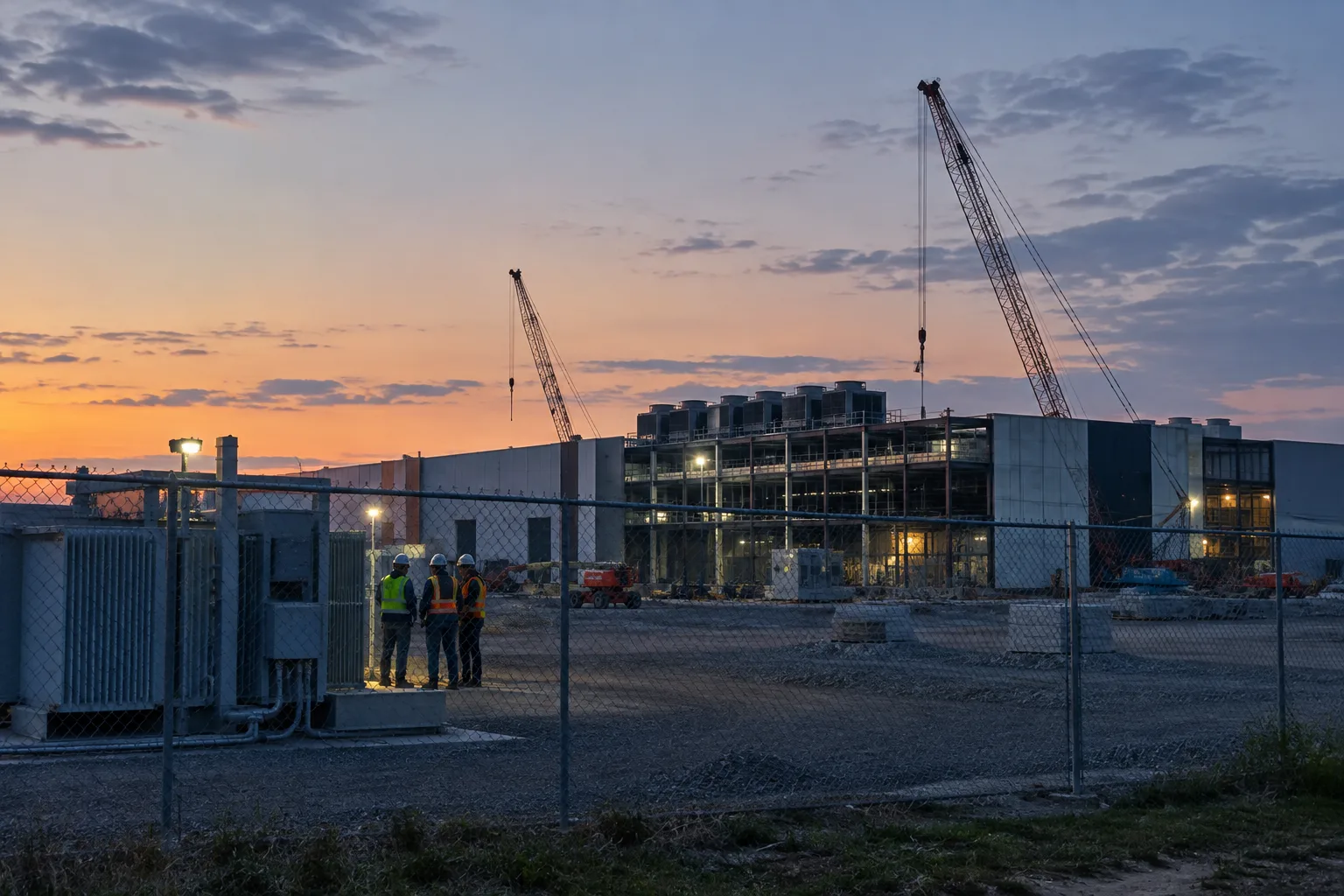
Amidst the turmoil, a quiet but profound transformation is underway. Publicly listed miners, faced with unprofitable Bitcoin economics, are repurposing datacenter capacity to serve the insatiable demand for AI workloads. The numbers are staggering: of the 7–9 GW of global power capacity tied up in Bitcoin mining, even a modest 20% conversion to GPU racks could expand the current hyperscale AI footprint by a third.
This pivot is enabled by the technical congruence between the infrastructure required for ASIC-based mining and that needed for high-density AI compute:
- Immersion cooling systems—originally designed for ASICs—are well-suited for high-TDP GPUs, offering miners a partial capital salvage pathway.
- Datacenter fungibility allows for rapid reconfiguration, though hyperscalers are simultaneously working to compress AI workload requirements through innovations like OpenAI’s Triton and NVIDIA’s TensorRT-LLM.
Yet, the path is not without uncertainty. As AI software stacks become more efficient, the anticipated inflation in compute prices may moderate, potentially tempering the windfall for miners-turned-AI-infrastructure-providers.
Strategic Crossroads: Energy, Hardware, and the Tokenization Paradox
The implications of Bitcoin’s drawdown ripple far beyond the immediate market. As miners exit, their erstwhile role as “implicit demand response” for power grids diminishes, potentially tightening reserve margins and spurring regulators to reconsider capacity-market reforms. On the hardware front, the pause in ASIC demand frees up precious 3 nm fabrication slots at foundries like TSMC and Samsung—slots that may now accelerate the development of next-generation networking and inference silicon.
Perhaps most intriguingly, the juxtaposition of gold’s outperformance and the rise of tokenized assets highlights a paradox: while investors crave asset-backed digitals, the underlying custodial and chain-of-custody architectures remain fragile, as Michael Burry’s recent skepticism underscores. Financial institutions bridging the physical-digital divide face mounting due-diligence demands, especially as regulatory scrutiny intensifies.
For decision-makers, the message is clear. The current environment rewards agility and foresight:
- Hedge funds and treasury desks should rigorously stress-test crypto exposures and consider long-dated put options while volatility remains attractively priced.
- Energy-intensive industries may find near-term opportunities in newly available grid headroom.
- AI inference providers and edge-cloud platforms can exploit distressed mining assets, particularly sites with sub-5-cent-per-kWh power and existing transformers.
- CTOs and data-center architects should monitor wafer allocation trends and leverage immersion-ready facilities for next-generation AI deployments.
As the dust settles, those who can deftly navigate the intersection of energy, compute, and digital assets—adapting infrastructure and capital allocation to shifting realities—will not only weather the volatility, but also shape the contours of the next technological epoch.

 By
By
 By
By
 By
By



 By
By