
A New Era in Space-Based Missile Defense: The “Golden Dome” Ambition
The U.S. Department of Defense’s newly opened competition for a space-based interceptor (SBI) layer marks a watershed moment in the evolution of missile defense. The proposed “Golden Dome” architecture—a vision as audacious as its biblical namesake—seeks to shield the nation, and perhaps its allies, from the specter of ballistic missile attack by deploying constellations of kinetic interceptors in low Earth orbit. Yet, as the Pentagon solicits industry concepts, the initiative finds itself at the intersection of technological possibility, fiscal reality, and global strategic calculus.
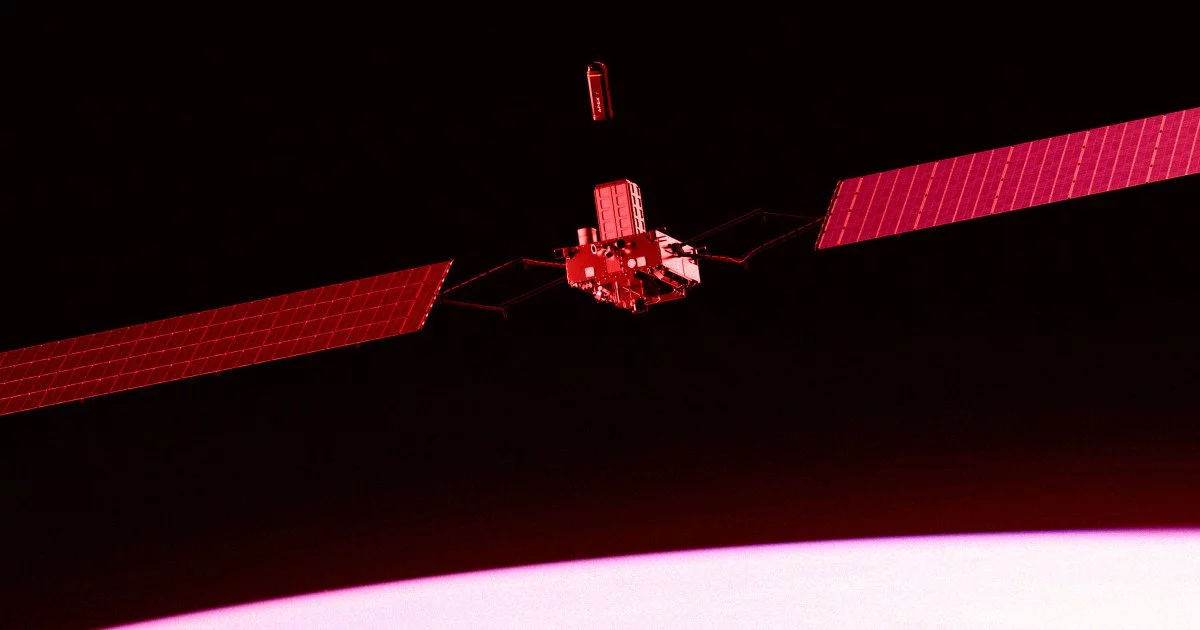
The response from industry has been swift and revealing. Apex, a Los Angeles-based upstart, has unveiled “Project Shadow,” promising to place two interceptors on-orbit by June 2026. Their approach leverages a commercial satellite bus and a self-funded “Orbital Magazine”—a modular platform designed not just for today’s demonstration, but as a scalable backbone for future defensive constellations. In doing so, Apex positions itself against the formidable incumbents—Lockheed Martin and Northrop Grumman—each plotting their own demonstrations on a more traditional timeline.
Technical Frontiers: Modular Platforms and the AI-Enabled Battlespace
Apex’s strategy is emblematic of a broader shift in the defense-industrial landscape. By separating the interceptor payload from the underlying infrastructure, the company mirrors the cloud computing revolution—where hardware is commoditized, and value migrates to software, networking, and orchestration. The Orbital Magazine, with its promise of power, data links, and even re-arming interfaces, is more than a satellite bus; it is an infrastructure play, a potential logistics node for a future where defensive constellations are serviced and upgraded in orbit.
This modularity, however, brings its own set of challenges:
- Integration at Scale: While the critical components—kill vehicles, sensors, command networks—exist in isolation, synchronizing them at constellation scale remains uncharted territory. Latency in low Earth orbit will demand edge AI capable of split-second engagement decisions, raising the stakes for both technical verification and ethical assurance.
- Sustainability Concerns: The proliferation of kinetic interceptors risks exacerbating the Kessler Syndrome, with thousands of debris-generating events threatening the very orbits they seek to defend. Apex’s vision of the Orbital Magazine as a potential debris-removal or de-orbit platform hints at a dual-use solution, but the industry as a whole must grapple with the long-term stewardship of the orbital environment.
Economic Realities and Industry Dynamics
Behind the technical bravado lies a sobering economic debate. Cost estimates for a fully deployed SBI constellation diverge by an order of magnitude—from the Trump administration’s $175 billion over three years to independent projections exceeding $3 trillion across two decades. This delta foreshadows intense budgetary friction as the program moves from R&D to potential operational deployment.
Several factors shape the economic landscape:
- Defense Procurement Reform: The Pentagon’s “buy commercial first” ethos favors agile firms able to deliver on rapid, fixed-price contracts. Yet, recurring costs—fuel, replacement cycles, cybersecurity—often escape headline figures, threatening to undermine the business case.
- Venture Capital Flows: Apex’s $46 million Space Force contract, coupled with private backing, signals a widening capital funnel into dual-use space technology. However, tightening liquidity and rising interest rates may test the sector’s resilience by 2025.
- Supply Chain Vulnerabilities: Rare-earth element shortages and the need for radiation-hardened components intersect with global trade tensions, pressuring even the most innovative firms to rethink their sourcing and resiliency strategies.
Strategic Calculus: Deterrence, Alliances, and the Weaponization of Space
The strategic implications of the Golden Dome project are profound. An operational SBI layer could fundamentally alter deterrence dynamics, eroding adversary confidence in traditional ballistic stockpiles and potentially accelerating investment in asymmetric capabilities—hypersonics, cyber, and counter-space weapons. The very act of deploying such a constellation will reverberate through arms control forums and U.N. debates, particularly as commercial actors blur the boundaries between civil and military space.
For the industry, the competitive landscape is in flux:
- Incumbent Advantage vs. Disruptive Agility: While primes retain scale and classified program experience, the cost curves and technical risk profiles are shifting. Exit paths for companies like Apex range from strategic acquisition to joint ventures or even “Space-Defense-as-a-Service” models leveraging their modular infrastructure.
- Geo-Economic Spillover: Allies lacking indigenous missile-defense capabilities may seek hosted-payload arrangements, diversifying revenue streams beyond U.S. appropriations but raising thorny questions around export controls and technology transfer.
As the FY-26 budget cycle approaches, the fate of space-based interceptors will hinge on the answers to a handful of critical questions: Can modular design and commercial manufacturing compress costs without sacrificing reliability? Who bears long-term liability for orbital debris? And can AI-enabled command systems be secured against the ever-evolving threat of cyber intrusion?
The race to realize the Golden Dome is not merely a contest of engineering or finance—it is a crucible for the future of space governance, deterrence, and the uneasy marriage of commercial innovation with national security. Those who can navigate these crosscurrents will not only shape the missile-defense market, but the very architecture of cislunar security for decades to come.


 By
By
 By
By
 By
By