


The Anatomy of Post-Black-Friday Tech Discounts: Signals Beneath the Surface
As the retail world emerges from the Black Friday crescendo, a quieter but more revealing tableau unfolds in the aisles of portable power, home audio, streaming, and gaming. The latest price drops—Anker’s 25,000 mAh Laptop Power Bank at its historical low, Bose’s SoundLink Home speaker slipping below $180, Roku’s 4K Streaming Stick at a mere $24.99, and Microsoft’s Xbox Series X temporarily undercutting its tariff-bloated MSRP—are more than fleeting bargains. They are, in fact, barometers of deeper currents: supply chain recalibrations, regulatory maneuvering, and the shifting tectonics of platform strategy.
Portable Power: The New Edge of Mobility
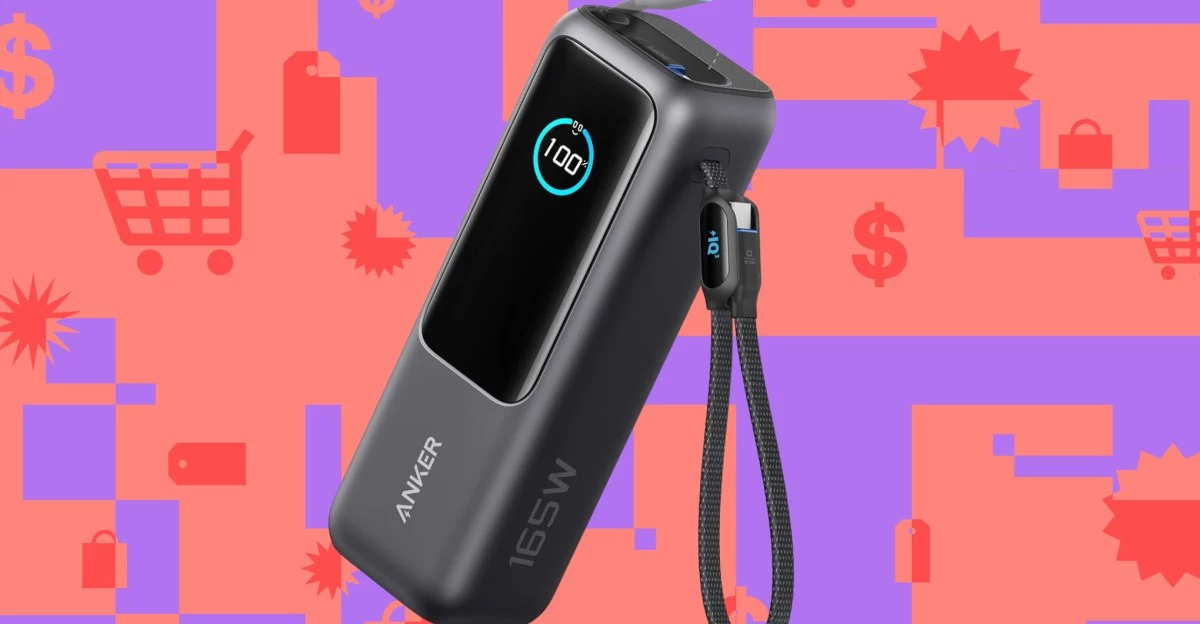
The Anker Laptop Power Bank’s plunge to $87.99, a 39% reduction, is not just a consumer windfall; it is a strategic inflection point for enterprise mobility. Packing 25,000 mAh of energy—yet engineered to remain under the TSA’s 100 Wh limit—this device embodies a new breed of lithium-ion architecture. Here, design is dictated as much by regulatory thresholds as by raw capacity, enabling a generation of field engineers, creators, and distributed teams to operate at the “mobile edge” without logistical friction.
But the real story is the convergence around USB-C Power Delivery 3.1. With 165 W split output, Anker’s flagship blurs the once-clear lines between proprietary laptop bricks and universal power banks. Enterprises, now more than ever, must recognize that external PD ecosystems are not mere accessories—they are becoming essential infrastructure, rivaling OEM chargers in both performance and certification. The steep discount, outside the traditional holiday window, hints at inventory overhangs and the impact of a strong U.S. dollar on global ASPs. For procurement leaders, this is a fleeting window: as commodity prices for cobalt and nickel inevitably swing upward, today’s bargains may become tomorrow’s regrets.
Home Audio and the Post-Pandemic Living Room
Bose’s SoundLink Home, now hovering around $179, tells a story of strategic segmentation. Its lack of water resistance and a modest nine-hour battery life signal a deliberate focus on acoustic purity for indoor environments, ceding the rugged outdoor market to competitors like JBL and Sony. This is a calculated move, as households rationalize their overlapping smart ecosystems—Alexa, Google, Matter—while vendors jockey for a place in the evolving home audio stack.
Discounting legacy models is not mere inventory clearance; it is a tactic to maintain brand presence as interoperability standards mature. As Matter 1.2 adoption accelerates, expect a wave of hardware updates and, potentially, vendor consolidation or cross-licensing. For organizations managing device fleets, the lesson is clear: procurement cycles must anticipate these resets, balancing short-term savings against long-term compatibility.
Streaming and Gaming: Hardware as a Trojan Horse
Roku’s Streaming Stick 4K, now at a rock-bottom $24.99, marks the floor for 4K streaming hardware. This is not a race to zero, but a strategic shift—hardware has become the Trojan horse for OS-level advertising and data monetization. In mature markets, such aggressive pricing seeds refurbished and gray-market flows into emerging economies, quietly expanding Roku’s global footprint ahead of local licensing pushes.
Microsoft’s Xbox Series X, meanwhile, embodies the complexity of hardware economics in a tariff-laden world. The recent MSRP hike, a direct response to Section 301 tariffs on Chinese-assembled consoles, is temporarily offset by a $50 markdown. This is less about immediate profit and more about sustaining install-base momentum—vital for the company’s broader subscription and cloud-gaming ambitions. The timing of these discounts, even as margins are squeezed, may presage a mid-cycle hardware refresh or slim variant, signaling to supply chain strategists that inventory positioning is already underway.
Strategic Imperatives for the Next Hardware-Services Convergence
For decision-makers, these price moves are not isolated events but signals:
- Energy procurement: Now is the moment to secure high-capacity power banks for remote teams, before commodity cycles turn.
- OTT hardware deployment: Legal teams must reassess privacy and data risks as razor-thin hardware margins drive aggressive monetization.
- Supply chain resilience: The Xbox tariff saga underscores the urgency of dual-sourcing and near-shoring for hardware reliant on Chinese assembly.
- Platform convergence: Prepare for USB-C PD 3.1’s mainstream arrival and the interoperability wave from Matter 1.2, both of which will reshape device standards and e-waste policies.
Amid these shifts, the role of hardware is being redefined—not as an endpoint, but as a conduit for services, data, and platform lock-in. The organizations that read these signals, and act with foresight, will find themselves not just keeping pace, but setting it—positioned for the next wave of convergence where the boundary between device and service blurs beyond recognition.

 By
By
 By
By

 By
By


 By
By
 By
By







