
The Quiet Revolution: How Airbus Redefined the Narrow-Body Skies
For decades, the contest between Airbus and Boeing has been the stuff of boardroom intrigue, regulatory drama, and supply-chain brinkmanship. Yet, with the recent news that Airbus’s A320 family has—by a single delivery—overtaken Boeing’s 737 line in total aircraft delivered, a symbolic threshold has been crossed. This is not merely a matter of numbers; it is a signpost marking a fundamental shift in the architecture, economics, and governance of commercial aviation.
Software at Altitude: The Strategic Edge of Fly-By-Wire
The seeds of this milestone were planted in 1987, when Airbus boldly embraced fly-by-wire digital flight controls for the A320. This was not just a technological flourish, but a deliberate bet on a software-centric platform that would enable seamless upgrades and adaptability. The result? A unified flight deck that has allowed Airbus to iterate rapidly—introducing neo, LR, and XLR variants—without the costly, disruptive airframe overhauls that have hampered competitors.
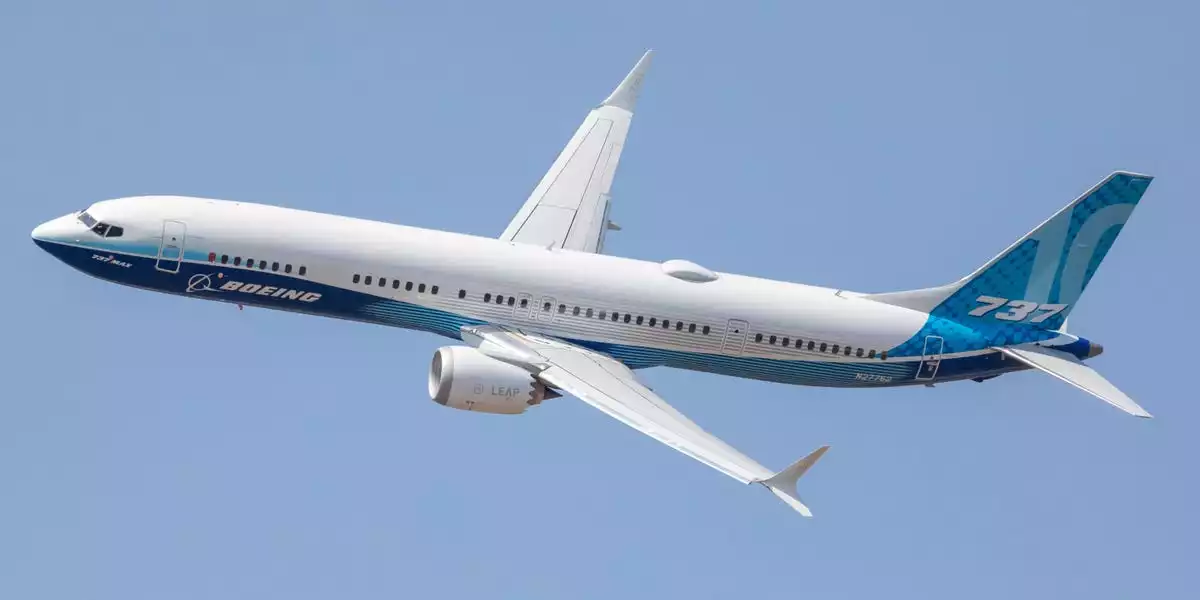
Boeing, by contrast, found itself encumbered by a patchwork of mechanical and digital systems. The 737 Max’s re-engining saga, and the MCAS crisis that followed, exposed the limitations of incremental adaptation atop legacy architectures. Airbus’s approach, meanwhile, has positioned the A320 as a launchpad for advanced pilot-assist features, predictive maintenance, and even the prospect of supervised-autonomous operations—a vision increasingly aligned with Europe’s ambitions for unmanned traffic management.
Key technological differentiators:
- Unified digital architecture: Simplifies upgrades and future-proofs the platform.
- Advanced pilot-assist readiness: Lays groundwork for single-pilot and autonomous operations.
- Predictive maintenance: Enhances reliability and reduces downtime for operators.
Production Realities: The Digital Twin Advantage
Behind every delivery statistic lies a complex choreography of design, manufacturing, and logistics. Airbus’s ability to sustain a production cadence of 57 aircraft per month—far outpacing Boeing’s FAA-limited 38—owes much to its mastery of digital twin environments in Hamburg and Toulouse. These virtual replicas enable tight feedback loops between engineering, assembly, and quality control, minimizing costly errors and accelerating time-to-market.
Boeing’s recent quality-escape investigations have underscored the risks of fragmented, outsourced manufacturing. As regulatory scrutiny intensifies, both OEMs are expected to double down on non-destructive testing automation and, perhaps, reconsider the wisdom of offshoring critical tolerances. The future of aircraft production will hinge on the ability to harmonize digital oversight with physical execution—a lesson Airbus appears to have internalized.
Production and supply chain insights:
- Digital twins: Enable rapid iteration and quality assurance.
- On-shoring of critical processes: Likely to increase as quality demands rise.
- Supplier dynamics: Airbus’s volume leadership may prompt suppliers to reallocate capacity, subtly raising Boeing’s input costs.
Market Power, Regulation, and the New Economics of Aviation
The narrow-body segment, long the cash engine of both Airbus and Boeing, is now the crucible in which the next era of aerospace leadership will be forged. With single-aisle jets representing 70% of projected demand and over 80% of free cash flow, the implications of Airbus’s delivery lead are profound. Airlines, navigating high interest rates and volatile sustainable aviation fuel (SAF) markets, are prioritizing reliability and fuel efficiency over sticker-price discounts—further tilting the playing field toward the A320neo family.
Capital markets have already taken notice: Airbus’s market capitalization now trades at a premium, reflecting investor confidence in its operational momentum. Boeing, meanwhile, faces the prospect of asset sales or equity issuance to fund the clean-sheet designs needed to regain its footing. Regulatory asymmetries—such as the FAA’s production caps—risk entrenching Airbus’s advantage unless harmonized with European oversight.
Strategic implications for stakeholders:
- Airlines and lessors: Must factor delivery reliability into fleet planning, not just acquisition cost.
- Suppliers: May shift capacity toward Airbus, impacting Boeing’s cost base.
- Airports: Should prepare for a future dominated by long-range narrow-bodies and evolving emissions standards.
The Road Ahead: Scenarios and Strategic Imperatives
Looking forward, the industry faces a spectrum of scenarios. The base case sees Airbus maintaining a 10–15% annual delivery lead through 2027, with Boeing focused on incremental fixes rather than bold reinvention. A more optimistic outcome for Boeing hinges on regulatory reconciliation and the launch of a new mid-market aircraft, while the disruptive wildcard is the potential Western certification of China’s COMAC C919—an event that could fracture the duopoly and accelerate technological leapfrogging.
For decision-makers across the ecosystem, the message is clear: agility, digital mastery, and governance are the new determinants of success. Whether through strategic joint ventures, supplier partnerships, or early engagement with regulators on pilot-assist standards, those who align capital and strategy with these vectors will be best positioned to turn today’s headlines into tomorrow’s competitive advantage.
The Airbus milestone is not an endpoint, but a harbinger—a signal that the future of aerospace will be written not just in metal and thrust, but in code, data, and the relentless pursuit of operational resilience.

 By
By
 By
By

 By
By


 By
By
 By
By