
The New Gold Rush: AI’s Capital Supercycle and the Dawn of Compute-Driven Economics
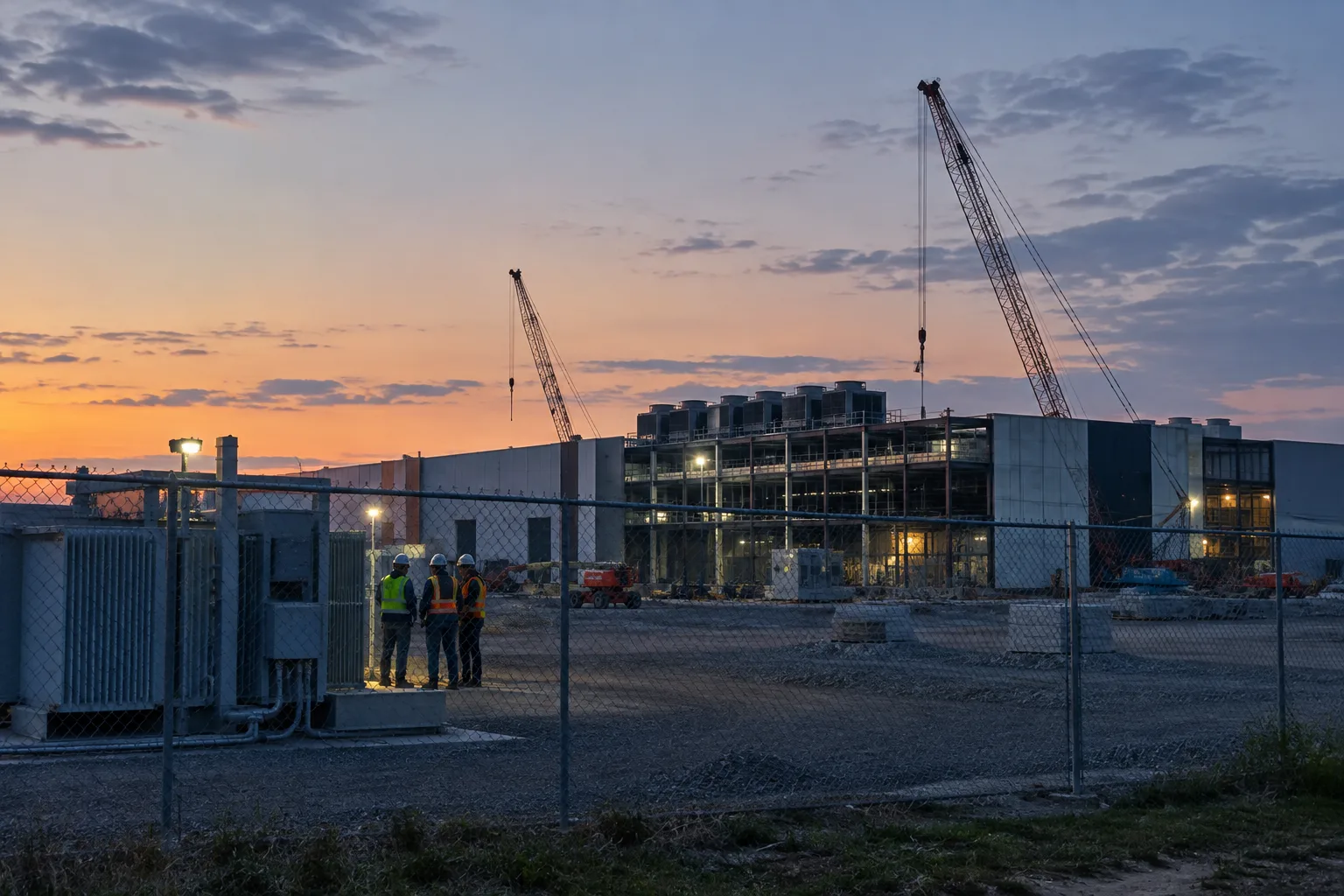
The world stands at the precipice of a technological epoch defined not merely by innovation in artificial intelligence, but by the feverish capital cycle it has unleashed. Over $200 billion—much of it speculative, high-yield debt—has been funneled into the construction of hyperscale data centers, the digital cathedrals of our era. This investment surge, propelled by generative-AI exuberance, is reshaping the landscape of credit markets, energy utilities, and global competition. Yet, beneath the surface, a complex interplay of technological, financial, and geopolitical forces is creating both unprecedented opportunity and latent systemic risk.
Compute Inflation and the Limits of Scale
The economics underpinning this capital supercycle are stark. The cost of training frontier AI models has ballooned, growing roughly tenfold every 18 months—a rate that dwarfs the historical pace of Moore’s Law. This “compute inflation” is the engine behind multi-trillion-dollar capital expenditure forecasts, as firms scramble to secure the hardware and power needed to stay at the cutting edge. Yet, the returns on this investment are already showing signs of diminishing. Academic research and industry experience alike reveal that simply scaling model parameters now yields ever-smaller improvements in accuracy, while the specter of hallucinations and reliability issues looms larger.
Compounding these challenges are the physical realities of infrastructure. Each new 100-megawatt data center is akin to a small utility, requiring years of permitting and construction. The bottleneck is shifting from silicon supply to power density and grid integration—a constraint that no algorithmic breakthrough can easily surmount. The industry’s capital outlay, then, is not just a wager on future AI demand, but on the hope that efficiency gains—whether algorithmic, architectural, or even neuromorphic—will materialize in time to justify these colossal bets.
Credit Architecture: Debt, Risk, and the Shadow Balance Sheet
The financing structures underpinning this build-out are as novel as the technology itself. Hyperscale data centers are increasingly funded by high-yield bonds, leveraged leases, and private credit facilities—echoes of the late-1990s telecom bubble reverberate in every term sheet. Rising interest rates amplify risk: a mere 100 basis point uptick can erase 5–7 percentage points of projected return, pushing breakeven utilization rates to dizzying heights.
Cloud providers, in turn, are locking themselves into multi-year, take-or-pay GPU leases to guarantee capacity for AI start-ups, embedding off-balance-sheet liabilities that are not always visible to equity investors. The specter of credit contagion is real: should utilization falter, the shockwaves could ripple outward from cash-burning AI firms to hardware suppliers and even the investment-grade giants of cloud infrastructure. The capital stack is increasingly fragile, its resilience untested in a downturn.
Geopolitics, Utilities, and the New Industrial Order
The race for AI supremacy is not confined to the private sector. National governments are underwriting domestic GPU farms—witness the UAE’s “Falcon” and France’s “Jules Verne” projects—in a bid for compute sovereignty and strategic autonomy. The competitive logic is reminiscent of the railroad and telegraph booms: secure the scarce nodes of compute and power before business models have even crystallized.
This land grab is transforming adjacent sectors. Utilities anticipate AI-driven demand could add 5% to the U.S. grid load by 2030, with natural-gas peakers and small modular reactors emerging as the backup of choice. Industrial landlords in power-rich regions are seeing data center land values soar to three or four times pre-AI levels. Meanwhile, supply chains for copper, water-cooling systems, and high-voltage transformers—typically the domain of industrial engineering, not Silicon Valley—are tightening, revealing the true cross-sectoral reach of the AI capital cycle.
Navigating the Cycle: Strategic Imperatives for the Next Decade
For corporate boards and CFOs, the imperative is clear: stress-test AI roadmaps against volatile power pricing and rising debt costs, and favor flexible, option-like cloud credits over irrevocable lease obligations. Investors would do well to look beyond headline AI developers, focusing instead on the “picks-and-shovels” providers—grid equipment makers, HBM memory suppliers, and liquid-cooling vendors—whose cash flows may prove more resilient.
Policy makers and utilities face a delicate balancing act: integrating hyperscaler load forecasts into grid planning, incentivizing efficiency R&D, and preparing for the regulatory scrutiny that inevitably follows such concentrated growth. The metrics that matter are shifting—from FLOPs-per-dollar to the tenor of power-purchase agreements, from GPU lead times to the widening spreads on high-yield data-center debt.
The AI infrastructure boom is, at its core, a contest of capital allocation and operational discipline. As the cycle matures, those who secure flexible compute at progressively lower marginal cost—while preserving balance-sheet resilience—will define the next era of digital leadership. The stakes, measured in trillions, are nothing less than the architecture of the future economy.

 By
By
 By
By


 By
By

 By
By
 By
By