

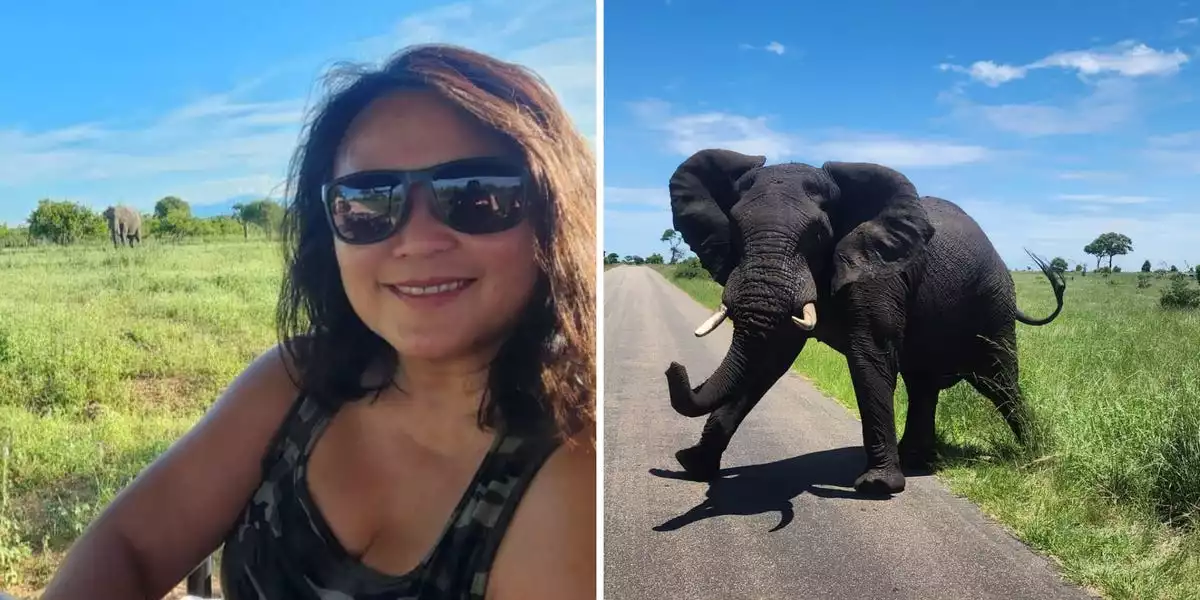

A digitally booked Kruger safari as a case study in modern experience commerce
Ruth’s seven-day South Africa trip—anchored by a three-day, two-night Kruger National Park safari package booked through SafariWithUs for roughly 27,000 ZAR (about US$1,500)—reads like a quintessential post-pandemic travel narrative: immersive, efficiently packaged, and purchased through a platform that compresses discovery, comparison, and checkout into a single consumer journey. The offering bundled transport, lodging, meals, and guided game drives, delivering close-range encounters with elephants, giraffes, buffalo, hippos, and lions, plus the kind of “bush-side dining” that has become a signature of premium safari storytelling.
Yet the most commercially revealing detail is Ruth’s retrospective assessment: one full day of safari drives might have been enough. That single line captures the tension shaping wildlife tourism today—between the emotional pull of curated adventure and the increasingly rational, value-oriented calculus enabled by online research. In business terms, it signals a market where customers can be simultaneously delighted by the product and skeptical about the marginal value of additional days.
For operators and platforms alike, this is not a critique of the safari experience; it is a signal about product design, pricing architecture, and the next wave of technology-enabled differentiation.
Platforms, user-generated content, and the new economics of disintermediation
Online booking platforms such as SafariWithUs illustrate how safari tourism is being reshaped by the same forces that transformed hotels and flights: search transparency, review culture, and dynamic pricing visibility. Consumers now arrive at checkout armed with:
- Peer reviews and trip reports that reduce perceived risk
- Photos and video testimonials that intensify aspiration while sharpening expectations
- Price comparisons that make “all-inclusive” feel measurable rather than mystical
This environment compresses the advantage once held by traditional intermediaries. The platform becomes both storefront and trust layer, while operators are pushed to articulate what, precisely, customers are paying for beyond access to wildlife.
That is where Ruth’s experience becomes instructive. Her satisfaction with the sightings and logistics coexists with a belief that a self-drive or campsite approach could deliver similar wildlife exposure at a lower cost. In a platform-driven market, this comparison is inevitable: consumers can see alternatives, read about them, and benchmark them instantly. The commercial implication is clear: operators must defend premium pricing with defensible, hard-to-replicate value—not just “Kruger” as a destination, but expertise, safety, and narrative depth as a product.
From “one-size-fits-all” packages to AI-personalized, modular safari design
Behind the polished simplicity of a bundled safari lies a major opportunity: data-driven personalization. Many safari packages still resemble fixed templates—two nights here, two drives there—designed for operational convenience. But traveler intent is fragmenting. Some guests want maximum game-drive intensity; others want comfort, photography, conservation learning, or family-friendly pacing.
AI-enabled customization can turn this fragmentation into margin and loyalty. A modern safari product can be assembled from modular components—priced transparently, optimized algorithmically, and tailored to micro-preferences such as:
- Wildlife priorities (predators vs. birds vs. elephants; “Big Five” vs. biodiversity)
- Comfort thresholds (air-conditioned lodge, glamping, or campsite)
- Drive intensity (one “signature day” vs. multi-day immersion)
- Dining and cultural elements (private bush dinner, community visit, conservation talk)
- Budget ceilings and willingness-to-pay for guide expertise
On the operational side, the next frontier is not only personalization but sighting optimization. Real-time telemetry from vehicles, combined with machine-learning models that forecast wildlife movement patterns, can improve route planning and increase the probability of meaningful encounters—an outcome that directly affects reviews, repeat bookings, and platform ranking.
This is where technology becomes more than marketing: it becomes a measurable performance lever. If Ruth felt one day might have sufficed, the industry response is not simply to sell fewer days—it is to design day options that feel complete, and multi-day options that feel qualitatively different rather than incrementally longer.
Pricing tiers, currency dynamics, and why safety remains a premium moat
Ruth’s purchase also sits within a broader macroeconomic context. ZAR volatility against USD and EUR can create compelling cost windows for inbound travelers, effectively turning exchange rates into a demand accelerator. Operators that manage currency risk and communicate pricing clearly can convert this volatility into advantage—especially as travelers remain price-sensitive even at mid-to-premium spend levels.
At the same time, her reflection highlights a structural market bifurcation that is likely to widen:
- Entry-level and DIY-adjacent offerings (self-drive, campsite stays, shorter guided add-ons)
- High-margin premium experiences (fully catered, expertly guided, story-rich, convenience-first)
The differentiator that consistently defends premium pricing is not merely comfort—it is safety and expertise. Ruth still affirmed the value of professional trackers and coordinated logistics for interpretation, navigation, and risk management. In wildlife tourism, these are not superficial amenities; they are core product attributes. Certified guides, well-maintained vehicles, medical readiness, and situational judgment are difficult to replicate in a self-drive model, and they remain a durable moat as long as operators can communicate them credibly.
Layered over all of this is sustainability, which is shifting from “nice-to-have” to competitive requirement. Safari tourism’s legitimacy increasingly depends on transparent conservation funding, community partnerships, and verifiable impact—factors that influence not only consumer choice but also ESG-oriented capital. Operators that publish impact metrics, adopt credible certifications, and demonstrate benefit-sharing with local communities are positioning themselves for both reputational resilience and improved access to investment.
Ruth’s Kruger experience ultimately captures the safari industry’s next chapter: digitally acquired customers, sharper value scrutiny, and rising expectations that the experience be both expertly delivered and ethically grounded. The winners will be those who treat the safari not as a fixed itinerary, but as a configurable, tech-enhanced product—where every additional day earns its price through distinct outcomes, not just additional time on the road.

 By
By

 By
By
 By
By

 By
By









