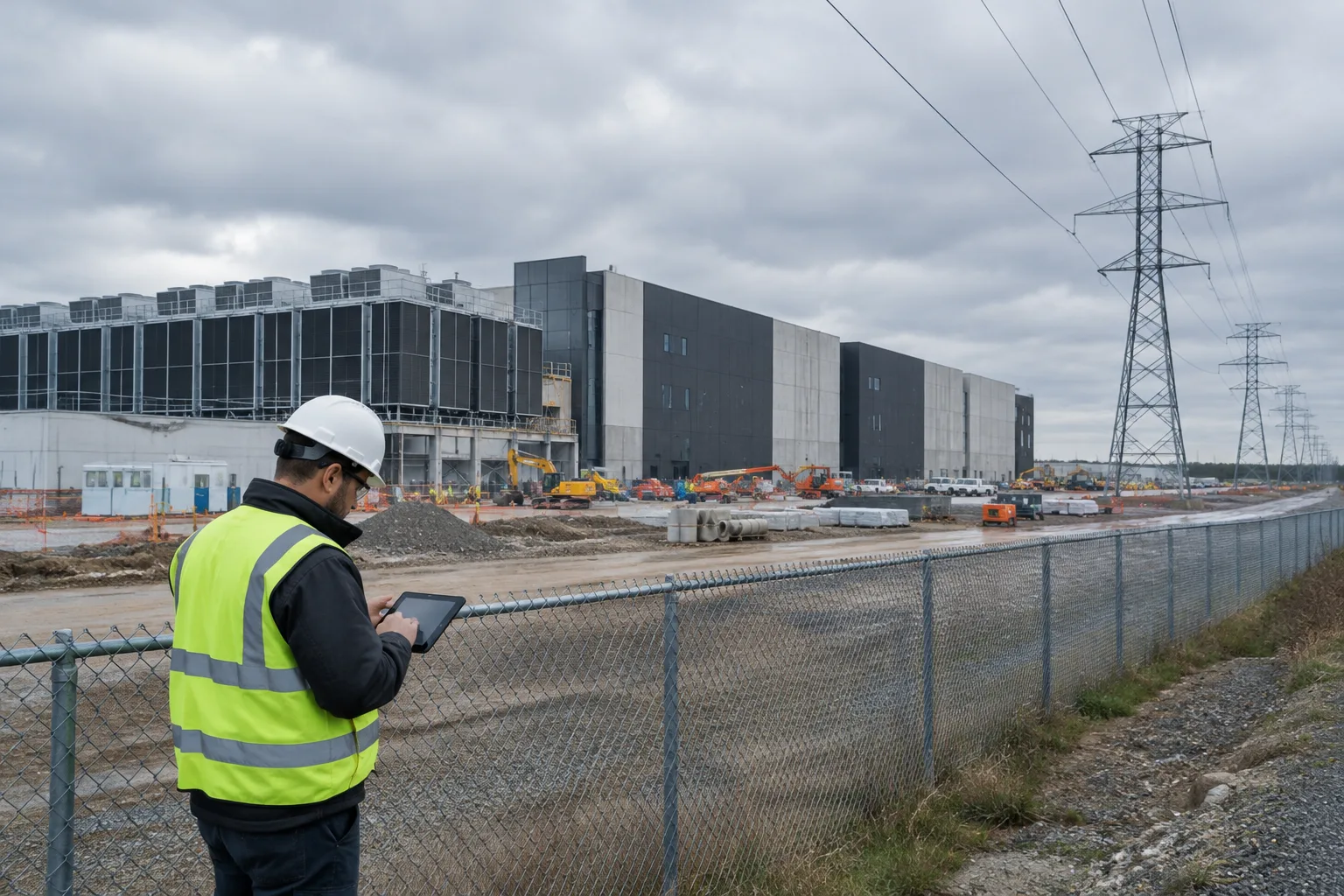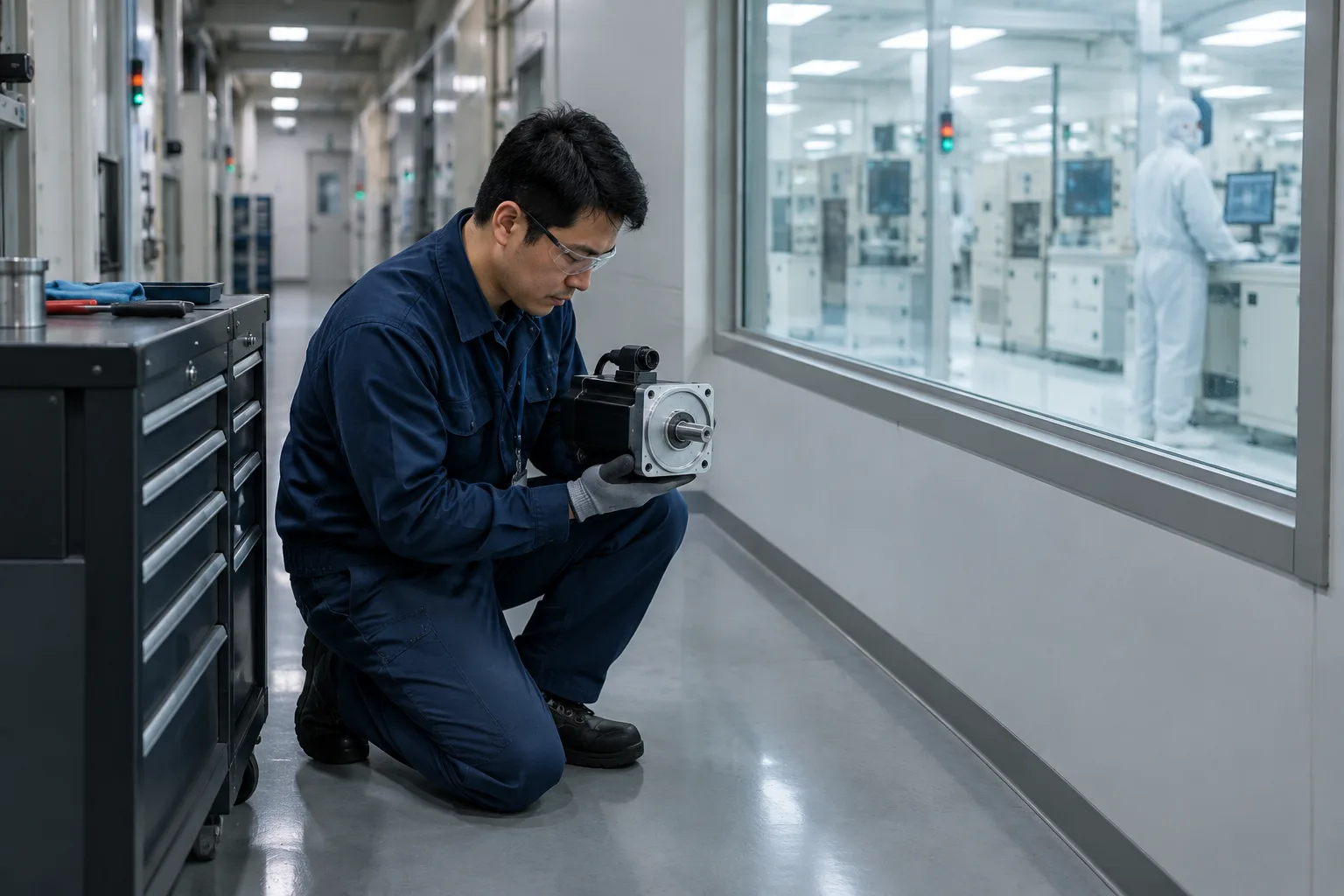

TSMC is quietly probing whether it can remove some Chinese-controlled rare-earth content from the motors inside its fab automation systems, a sourcing move that matters far beyond one component category. According to a Reuters report carried by MarketScreener, the company has surveyed equipment suppliers about rare-earth-free motors after China’s 2025 export-licensing controls on certain rare-earth materials, magnets, and related processing technology. The discussions are early-stage, two sources said there is no broad adoption yet, and TSMC declined to comment.
That makes this less a shortage story than a visibility story. The question for chip buyers, cloud operators, device makers, and investors is not whether TSMC can still ship wafers today. It is whether a hidden component inside factory equipment could slow tool delivery, maintenance, retrofits, or expansion plans at the moment AI demand is already outrunning supply.
The pressure point is one layer below the chip
Rare-earth magnets are a small part of a semiconductor fab’s bill of materials, but they sit in an awkwardly important place: the motors that drive precision motion and wafer handling inside highly automated equipment. If access to those magnets becomes less predictable, the bottleneck does not necessarily show up in the chip recipe itself. It can surface upstream, when an equipment maker has to source a different motor, redesign a subsystem, validate software and controls, plan new spares, and requalify the result before a fab will trust it at volume.
That distinction matters. A replacement motor is not just a substitute part. In a fab, motion systems have to meet demanding requirements for repeatability, vibration, contamination control, thermal behavior, maintenance, and uptime. Even a technically workable alternative can become slow-moving if qualification takes time.
China’s policy is also narrower than the political shorthand suggests. Beijing has described the 2025 regime as licensing, not a blanket ban, and says eligible civil-use applications can be approved. Its April 4, 2025 announcement covered medium and heavy rare-earth items, including samarium-cobalt magnets and terbium- and dysprosium-containing NdFeB permanent-magnet materials. So the business problem is not simply “can material be bought?” It is whether licensing, delivery timing, and supplier planning stay predictable enough for advanced manufacturing schedules.
That is why TSMC’s reported survey is worth attention even without a disruption on the record. There is no disclosed production outage, missed shipment, or confirmed license denial tied to this effort. But if the company is asking suppliers to map alternatives now, it suggests management is treating hidden equipment dependencies as worth stress-testing before they become visible in fab timelines.
Why TSMC is asking now
The timing lines up with the stakes in AI. In TSMC’s October 15 earnings-call transcript, CEO C.C. Wei said AI demand was “extremely robust” and that the company still saw demand as higher than supply. He also said capacity planning had to account for data-center buildout, power, financing, and other component supply.
That last point is the key context for this rare-earth story. When demand is already pressing against supply, even a narrow constraint can matter. A delay in one tool family, one maintenance cycle, or one retrofit program can have effects out of proportion to the value of the component that caused it. TSMC’s chips flow into smartphones, AI systems, data centers, and defense products; the downstream impact of a fab timing slip is measured in server racks, handset launches, procurement schedules, and national-security programs, not in motor invoices.
TSMC’s incentive is straightforward: preserve continuity and add optionality without taking unnecessary yield or schedule risk. Equipment suppliers have a different calculation. They want to keep customers qualified and deliveries on track, but redesigning motion systems can be expensive and disruptive even when alternatives exist. The burden shows up first in engineering time, testing, and spare-parts planning, long before it appears in any headline about chip prices.
Governments are thinking along similar lines. Taiwan’s economy minister said in February 2026 that Taiwan would support the Industrial Technology Research Institute in developing rare-earth technology, with a pilot production line planned within three years and a projected ability to meet half of Taiwan’s domestic demand. That is a strategic development plan, not present-day substitute capacity for TSMC, but it shows the issue is being treated as an industrial resilience problem, not just a procurement nuisance.
What would turn this into a real capacity issue
For now, the most sensible reading is that TSMC is starting a de-risking exercise early enough to avoid a crisis. The current record does not justify calling this an imminent chip shortage, and it does not show that all fab equipment or all TSMC capacity is exposed. Not every subsystem necessarily uses controlled materials, and alternative motor technologies may be available.
Still, this is the sort of risk that can stay invisible until it reaches the schedule. Four milestones matter more than the initial survey itself.
First, whether suppliers move from assessment to named designs. An inquiry is one thing; a committed redesign program is another. Second, whether any alternative motor passes qualification for fab use. That is the step that determines whether optionality is real or still theoretical. Third, whether licensing and delivery lead times for existing materials remain predictable enough that suppliers can support new tools and the installed base without interruption. And fourth, whether there is any sign that uptime, maintenance cycles, or capital spending plans are changing around the issue.
If those markers remain calm, this episode will look like prudent supply-chain management. If they start moving in the wrong direction, the rare-earth question becomes more consequential than its component size suggests.
The broader lesson is that semiconductor resilience is shifting below the headline layers of lithography nodes and wafer starts. Demand is not the only limit on AI infrastructure. Neither is fab construction. Increasingly, the constraint to watch may be whether the hidden electromechanical parts inside factory automation can be licensed, redesigned, and qualified fast enough to keep expansion plans intact. TSMC’s survey does not prove that problem has arrived. It does suggest the company is no longer willing to assume it never will.

 By

 By





 By