
Amazon CEO Andy Jassy delivered one of the clearest infrastructure-demand signals of the AI boom this week, saying in an a16z Show interview that AWS capacity for 2026 is sold out, 2027 is largely sold out, and a good chunk of 2028 is already spoken for. The remark lands alongside Amazon’s plan to spend roughly $220 billion in 2026 on AI and other technology, a scale that matters because AWS is the world’s largest public cloud and because customers and investors are now asking whether AI infrastructure demand is real, financeable, and durable.
The useful question is not whether demand exists. It plainly does. The harder question is what exactly has been committed: profitable usage, or scarce infrastructure slots in a market where power and construction move more slowly than software.
A strong demand signal, but not a revenue report
Jassy’s comments are best read as evidence that large customers are reserving future cloud capacity years ahead, not as a formal backlog disclosure. AWS still keeps some capacity for on-demand usage and services such as Bedrock and EC2. The Information separately reported the same point, noting that Amazon sells most large blocks in advance while holding back some pool for general availability.
That distinction matters. Sold-out capacity can reflect long-term commitments, internal allocation, and planned service pools with different economics and different timing. It does not by itself reveal utilization, contract terms, cancellation rights, regional mix, or when booked infrastructure turns into recognized revenue.
Still, the scale of the claim should not be waved away. AP reported after Amazon’s second-quarter results that the company had raised its 2026 capex plan from $200 billion announced in February to about $220 billion, versus $128 billion of capital spending in 2025. AP also reported that AWS sales rose 37 percent year over year in the April-to-June quarter, the fastest growth in 18 quarters at that point, and that Amazon said its AI and chips businesses each topped a $25 billion annual revenue run rate. Those are hard operating signals, not just aspiration.
Jassy had also warned investors in July that Amazon would not have enough capacity to meet all demand in 2026 and expected a similar pattern in 2027, with visible demand already forming for 2028. The podcast remark extends that earlier warning from shortage language into a clearer timetable.
The bottleneck is not just chips
The headline temptation is to read this as proof that AI demand will keep absorbing whatever Amazon builds. The better reading is narrower and more useful: hyperscale cloud has become a multi-year supply chain problem, and the tightest links are not equally flexible.
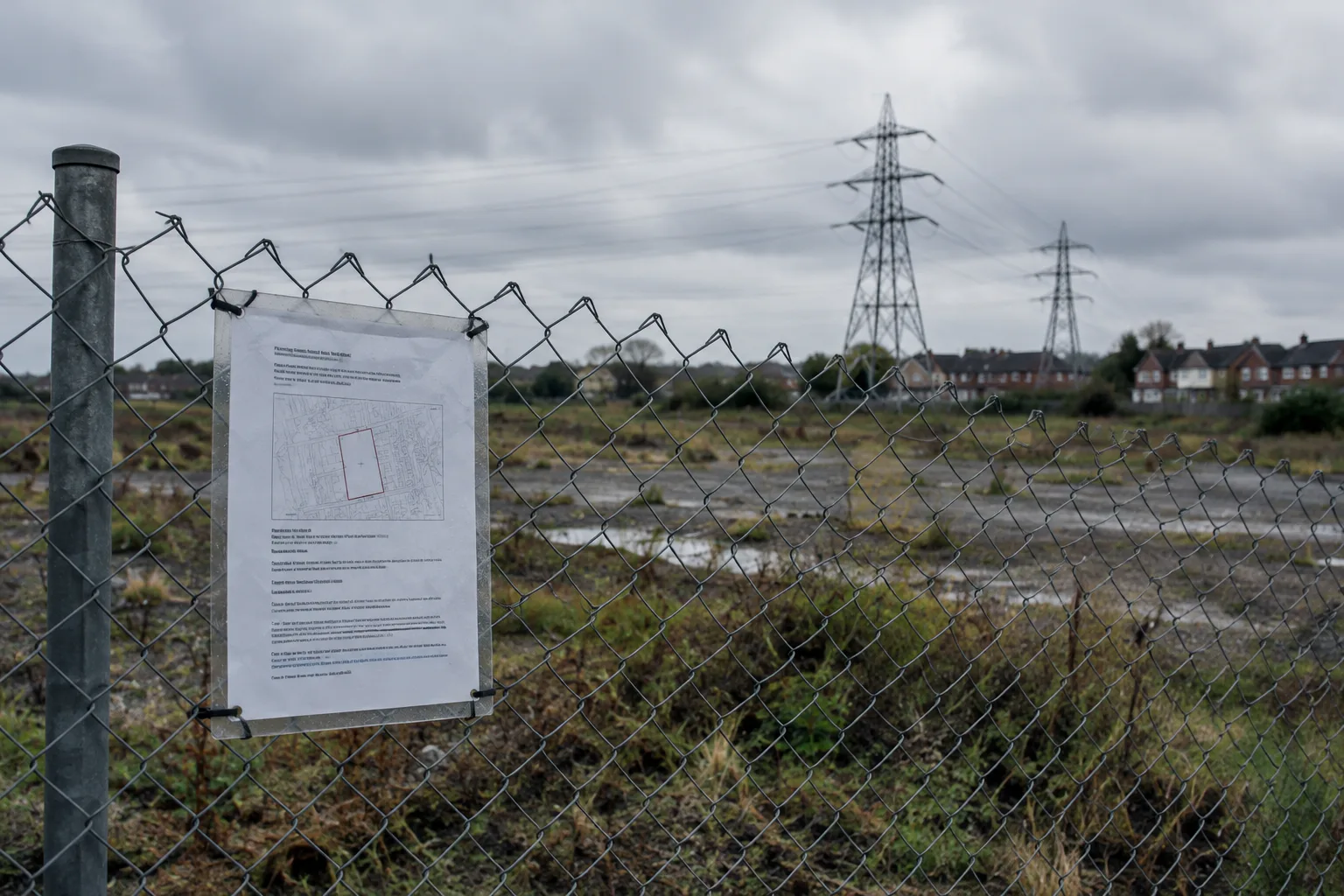
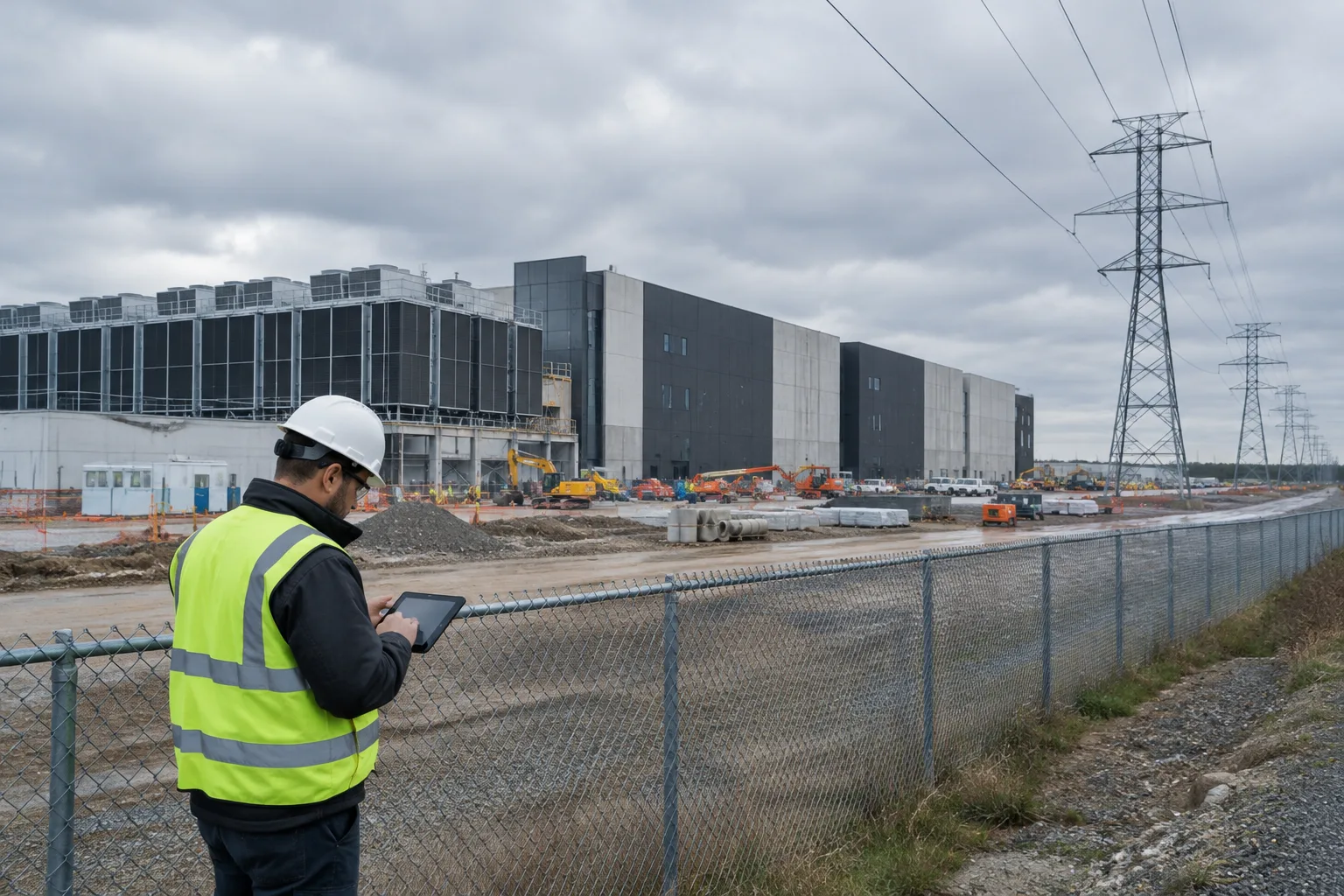
Capacity starts with land, permits, grid interconnection, power generation, buildings, cooling, and fiber. Only after that come the chips, servers, networking, software, and operating staff that turn a shell into a sellable cloud service. Jassy said Amazon can adjust server and networking purchases a few months before deployment if demand slows. That is meaningful flexibility at the equipment layer. It does not solve the slower layers underneath.
A substation, transmission link, or data hall cannot be summoned on the same timetable as a server order. If the AI market cools, Amazon may be able to trim some hardware purchases. If the market stays hot, the long-lead bottlenecks are still power, construction, and skilled operations. That is why sold-out capacity through 2027 matters even without a megawatt figure: it suggests the scarcity has moved beyond a short GPU queue and into infrastructure planning windows.
For customers, that changes procurement behavior. A startup or enterprise team that assumed it could shop for frontier compute near launch time may now need to secure capacity much earlier, accept regional constraints, or redesign workloads around what is available. Some will pay higher prices or accept quotas. Others will spread commitments across providers or chip types to reduce single-point exposure.
Why custom silicon matters — and why it is not a shortcut
Amazon’s custom chips are part of its answer to both capacity and economics. Jassy used the interview to emphasize Trainium and Graviton, and he described the Anthropic relationship as supporting both Anthropic’s workloads and Amazon’s silicon effort. In theory, better price-performance on in-house chips could let AWS add usable AI capacity with less dependence on the scarcest third-party accelerators.
But that only helps if customers can actually use the hardware efficiently. Compiler maturity, model porting, networking, memory, utilization, and support determine whether lower theoretical chip costs become lower workload costs. That is especially important as the market shifts from training to inference. Amazon’s thesis is that cheaper inference can unlock broader enterprise adoption. The open question is how quickly lower model-serving costs translate into applications that customers will use enough to justify reserved infrastructure.
That is why sold-ahead capacity is strong evidence of contracting power, not final proof of returns. A provider can have demand and still face margin pressure if utilization lags, pricing falls faster than costs, or customers lock up supply before their own business models are tested.
What buyers and investors should watch next
For cloud buyers, the practical response is less philosophical than operational. Ask what is truly reserved, where it sits, which accelerator and interconnect are guaranteed, what happens if a build is delayed, and whether commitments can shift across models or services. A cheap GPU-hour on paper can become an expensive project if the networking, memory, or regional availability do not match the workload.
For investors and suppliers, the next checkpoints are not more dramatic adjectives about demand. They are conversion metrics: how much power is actually delivered, how much equipment is installed, what mix lands on custom silicon versus other accelerators, whether billable utilization stays high, and how free cash flow behaves as the buildout proceeds.
Jassy’s update is meaningful because it comes from the biggest cloud operator at a moment when the market is testing whether AI capex is outrunning demand. His answer, for now, is that AWS cannot build fast enough. But the deeper lesson is that reserved capacity is not the same thing as productive capacity, and productive capacity is not the same thing as profitable AI. The companies that treat those as separate questions will make better decisions than the ones that mistake a sold-out calendar for a settled market.

 By
 By
 By

 By


 By