
Global bond yields jumped again on Oct. 1, unsettling stock markets from New York to London and sharpening a practical question that has been lurking beneath the AI boom: can strong demand for chips, memory, cloud capacity, and software outrun a much higher cost of capital?
In late-morning U.S. trading, the 10-year Treasury yield was still around 5.32% after reaching 5.3445% earlier in the session, its highest intraday level since 2002, according to the Associated Press and a same-day Reuters report. The 30-year Treasury yield touched 5.66%. The S&P 500 fell 0.2% after giving up an early gain, the Dow Jones Industrial Average dropped 191 points, and the Nasdaq slipped 0.1%. In Europe, London and Paris fell 1.6% and 1.3% as the U.K. 10-year government yield swung as high as 5.53%. Brent crude rose 3.3% to $101.24 a barrel.
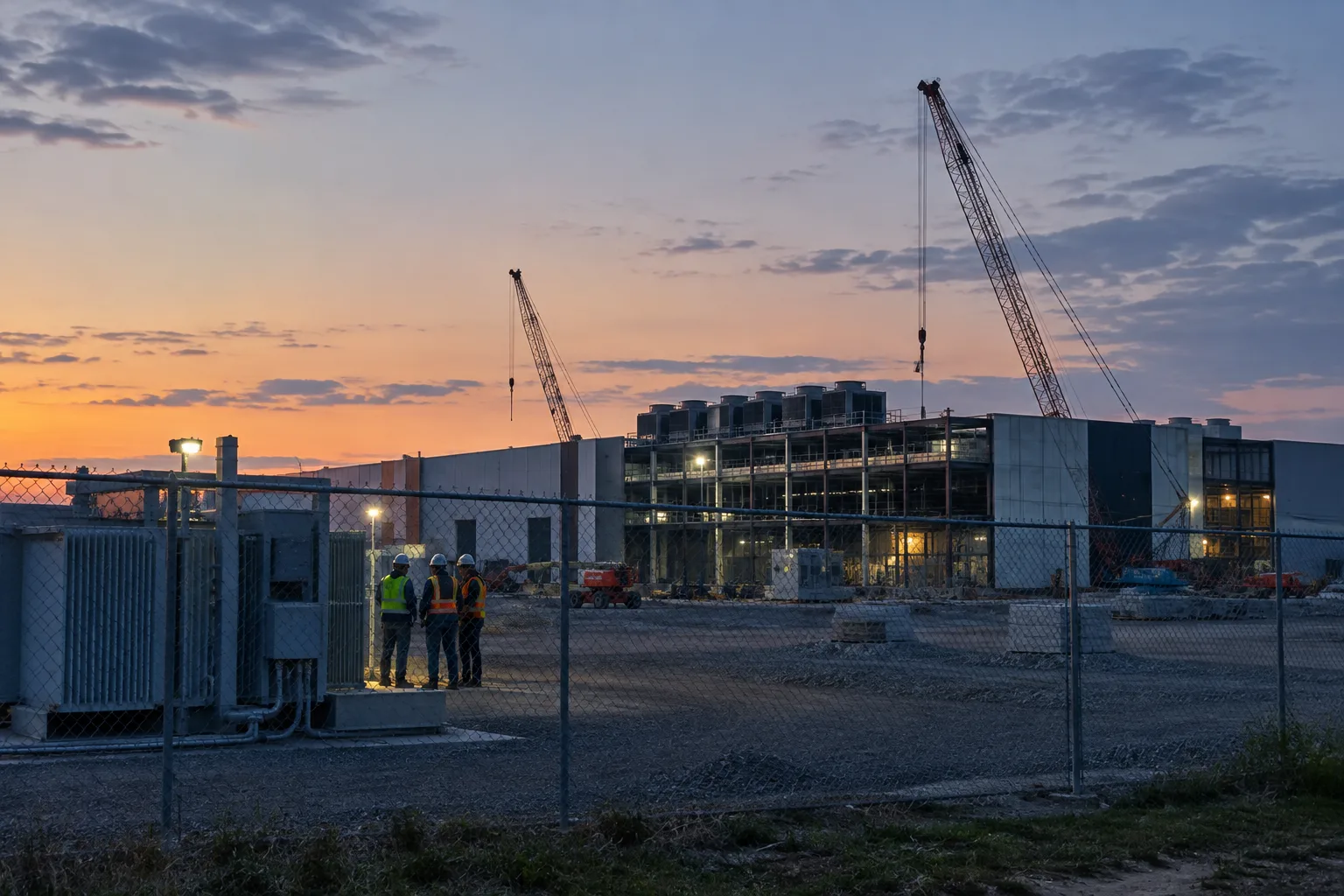
The market move matters for more than one uneasy day on Wall Street. A 10-year yield above 5% resets the price of money across the AI economy. It raises the borrowing cost for data-center developers, increases lease and infrastructure hurdles for neoclouds and chip buyers, and pushes up the discount rate investors apply to software companies whose valuations lean heavily on profits expected years from now.
The simplest answer to the reader’s question is that AI demand looks real, but financing has become the harder test. Companies now have to show not only that customers want AI capacity, but that the returns on new capacity can beat a materially higher hurdle rate.
Why yields matter more than one bad trading session
Bond yields are the benchmark return investors demand for lending to governments. From there, they ripple outward into corporate borrowing costs, mortgages, project finance, and equity valuations. When yields rise, the math changes fast. Debt becomes more expensive. Equity investors demand more return. Distant earnings are worth less in today’s dollars.
That dynamic tends to hit growth-heavy sectors first, especially when valuations already assume years of rapid expansion. It does not mean every AI company is suddenly overvalued, or that every data-center project stops making sense. It does mean the margin for error narrows.
The selloff came after the worst quarter for Treasuries since 1994, with the U.S. 10-year yield rising 87 basis points from July through September, Reuters reported. The drivers are not neatly separable. AP pointed to inflation and oil concerns, a resilient U.S. economy, and persistent government deficits. Reuters also tied the move to elevated energy prices, heavy government borrowing, and the capital intensity of the AI and data-center buildout itself.
That mix matters. A rise in yields can signal stronger growth, more inflation pressure, more Treasury supply, or some combination of all three. Markets do not react to each cause in the same way. A software company with high margins and low capital needs may cope better than a heavily financed data-center project that also faces large power and equipment bills.
The AI trade is splitting, not simply fading
Oct. 1 did not deliver a clean “rates kill tech” story. Parts of the market weakened exactly where rate sensitivity is obvious: Reuters said housing and bank shares fell, and the Cboe VIX volatility index reached 17.23. But some AI-linked and software names held up better than the broad tape.
Micron offered the clearest counterexample. Reuters reported that the company’s stronger revenue outlook and $32 billion in customer commitments reinforced confidence in AI-related demand. AP said Micron shares still fell about 3% on the day, but that drop came after the stock had already climbed more than 270% for the year. Nvidia and Applied Materials rose, according to AP. Reuters also said Accenture’s results helped lift software and consulting shares, including Cognizant and IBM.
That split is the key to understanding what changed. Investors are becoming less willing to pay up for AI exposure in the abstract, while still rewarding businesses that can point to current orders, near-term earnings, or strong balance sheets. In other words, the market is asking three separate questions that often get blended together: Do customers still want AI capacity? Can suppliers earn attractive margins on it? And can the infrastructure be financed at scale?
Micron and Accenture help on the first two questions. They do not settle the third.
What the higher-rate test looks like in practice
For operators and investors, the useful lens is not whether “AI is over.” It is whether new projects still clear their return thresholds once capital costs rise.
A data-center build that looked attractive when financing was cheap may now need higher utilization, firmer customer commitments, better pricing, faster revenue conversion, or lower power costs to justify going ahead. That is especially true for projects leaning on debt, leases, or aggressive assumptions about occupancy. Cash-rich companies may still be able to expand, but higher yields can redirect spending toward those stronger balance sheets and away from smaller or more leveraged rivals.
The same logic reaches software and venture-backed companies, even if they are not pouring concrete or buying transformers. Higher yields compress the value of future profits, which means public software companies need more convincing earnings growth and cash generation to defend rich valuations. For startups, the issue is less a spreadsheet discount rate than the harder realities of refinancing debt, raising fresh equity, or supporting infrastructure commitments before revenue catches up.
There are still live unknowns. The Oct. 1 yield readings were intraday snapshots, not settled end-of-day levels. It is not yet clear how long 10-year yields above 5% will persist, how much of the move reflects inflation versus term premium or government supply, or which AI projects have returns strong enough to absorb the change. Softer inflation data had increased expectations that the Federal Reserve could pause in October, Reuters reported, but a December increase remained possible because inflation was still above the Fed’s 2% target.
What the day did make clear is that the AI boom has entered a more disciplined phase. Strong demand may still support memory makers, chip suppliers, and software firms. But demand alone does not answer whether a new server hall, cloud lease, or startup financing round will earn its cost of capital. As bond markets reprice money higher, that question moves from background assumption to the center of the AI story.

 By
By
 By
By

 By
By
 By
By