
Micron Technology closed fiscal 2026 with record results and an even bigger promise: that AI-driven memory demand will keep climbing fast enough to justify one of the industry’s most aggressive expansion plans. In Micron’s release, the company said fourth-quarter revenue for the period ended Sept. 3 rose to $54.23 billion, up from $41.46 billion in the prior quarter and $11.32 billion a year earlier. It reported GAAP net income of $37.70 billion, or $32.87 per diluted share, and guided fiscal Q1 2027 revenue to about $61.5 billion, plus or minus $1.5 billion.
What matters beyond the earnings beat is that memory is starting to look less like a commodity input and more like contracted AI infrastructure. As Reuters reported, Micron’s customers have increased their financial commitments under 26 long-term supply agreements to $32 billion, up from $22 billion in June, while Micron plans about $25 billion of capital spending in the first half of fiscal 2027. The real question is whether those commitments reflect durable demand for AI systems or the kind of synchronized optimism that often precedes a painful memory downcycle.
Why memory has become the choke point
AI servers do not scale on accelerators alone. High-bandwidth memory, or HBM, is stacked DRAM used alongside leading AI accelerators to supply data at very high bandwidth. Broader server memory and storage also have to rise with cluster size. That means the AI buildout depends on more than end demand: advanced packaging, yields, fab expansion, power, networking and system availability all have to line up.
Micron’s quarter shows how central that stack has become. The company said fiscal Q4 revenue included $16.283 billion from Cloud Memory, $18.002 billion from Core Data Center, and $13.114 billion from Mobile and Client. Its official release also reported gross margins of 83% for Cloud Memory, 90% for Core Data Center and 90% for Mobile and Client. Those are extraordinary levels, and they point to unusually favorable supply-demand conditions and product mix. They do not mean every Micron product line or customer is riding the same AI wave, but they do show that data-center demand is reaching deep into memory economics.
For cloud providers and enterprise buyers, the immediate consequence is practical rather than theoretical. Memory can limit server deliveries even when accelerators are available. If HBM or related memory supply is tight, procurement lead times stretch, pricing stays elevated and the cost of AI capacity rises. That makes memory one of the components that can determine how quickly new AI systems actually reach production.
What the $32 billion really buys
The most consequential number in Micron’s latest update may not be revenue at all. Reuters said customers have increased financial commitments under 26 long-term supply agreements to $32 billion, with most of those commitments taking the form of cash deposits. Reuters also said the agreements represent more than 35% of Micron’s expected revenue through 2030, with some extending into 2031.
That is stronger than a normal booking signal and weaker than locked-in revenue. The public record does not identify the 26 customers or disclose whether the agreements are take-or-pay, how price protections work, or how much of the money is refundable or tied to milestones. But it does show a market behaving as if supply assurance itself has become scarce.
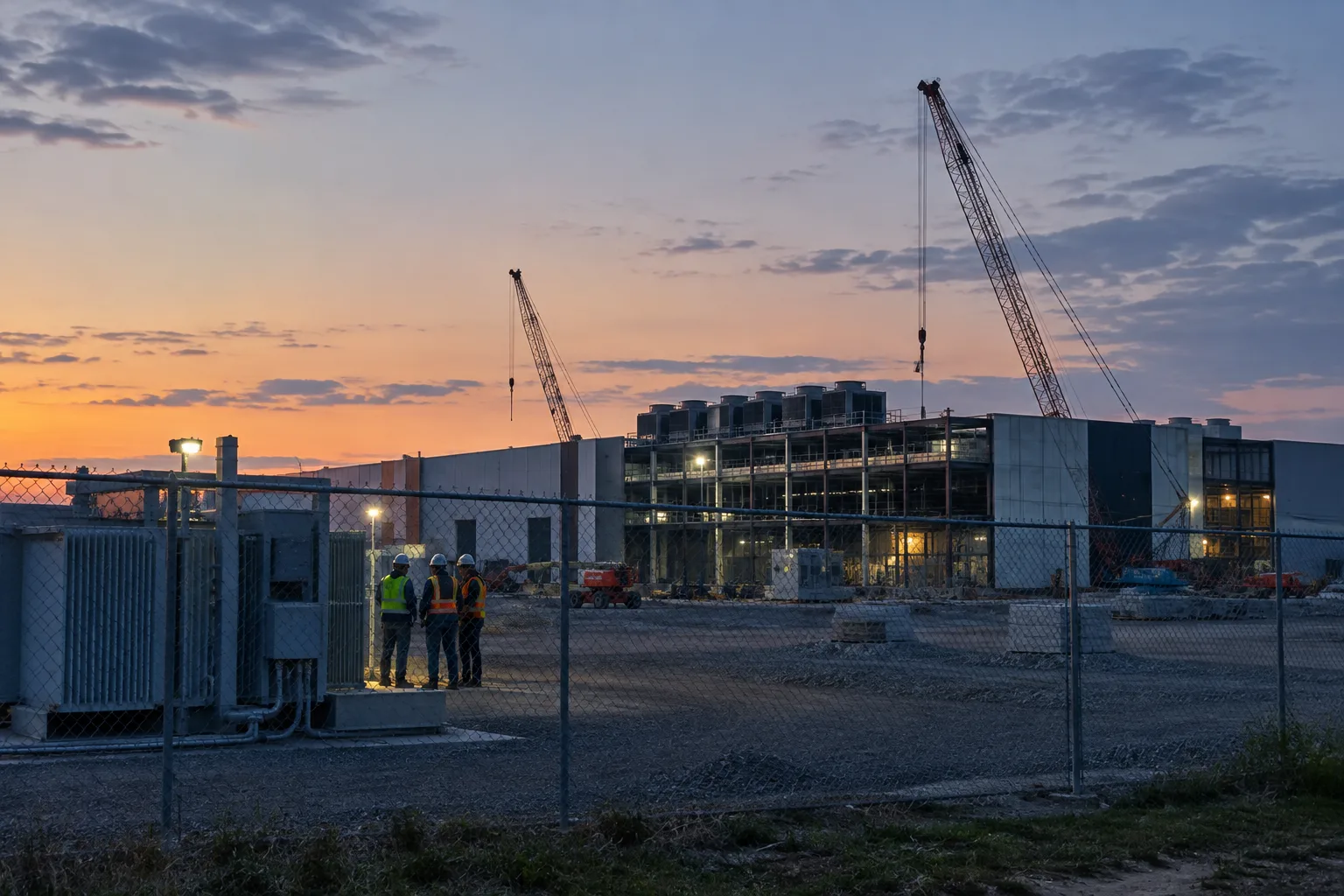
That changes incentives on both sides. Customers are effectively helping finance future capacity in exchange for better access to supply. Micron gets demand visibility and a funding buffer as it ramps. The company ended fiscal 2026 with $73.48 billion in cash, marketable investments and restricted cash, after reporting $27.37 billion of capital expenditures for the year. Even with that cash position, it plans about $25 billion more in capex in the first half of fiscal 2027, including about $11.5 billion in the first quarter, with additional construction spending expected later. Reuters also reported that several fabs are expected to start production over the next two years.
This is why Micron’s quarter matters beyond Micron. When customers begin placing deposits and signing multiyear supply agreements to secure memory, the AI buildout starts to resemble infrastructure procurement rather than ordinary semiconductor purchasing. The upside is better planning and fewer surprise shortages. The downside is that both buyer and supplier are now underwriting assumptions about future AI demand before that demand has been fully tested in the market.
The boom case and the overbuild risk
Micron said memory and storage supply-demand conditions should be much tighter in fiscal 2027 and 2028 than in 2026. Its near-term forecast is formidable: fiscal Q1 2027 revenue of $61.5 billion, plus or minus $1.5 billion, and non-GAAP earnings per share of $38.15, plus or minus $1.00. For the full fiscal year, revenue reached $133.19 billion and GAAP net income totaled $84.97 billion.
Those figures make the durable-demand case easy to understand. Customers are not merely talking about AI capacity; they are committing money to secure critical components. Micron is not merely describing a favorable market; it is converting scarcity into exceptional profitability right now.
The harder question is whether scarcity lasts long enough to justify the construction wave it is financing. Memory has a long history of turning shortages into overcapacity. If cloud customers slow AI deployments, if model or system changes reduce memory intensity, if export restrictions alter demand, or if new fabs ramp into a softer market, the same deposits and capex that look prudent today could magnify the downside tomorrow. A higher revenue outlook can coexist with lower long-run returns if too much capacity arrives at once.
That is the scorecard worth carrying forward after the headline numbers fade. Watch the gap between customer commitments and recognized revenue. Watch whether capacity comes online in step with fab start dates and yield ramps. Watch how much of future growth appears tied to HBM versus more conventional DRAM or NAND, how concentrated demand becomes among a relatively small number of large customers, and whether the operators buying these systems can earn acceptable returns on the AI services they plan to sell.
Micron’s record quarter is strong evidence that AI memory demand is real enough to be prepaid. It is not yet proof that the memory cycle has been repealed. What has changed is that memory is no longer just a beneficiary of the AI boom. It is becoming one of the financed bottlenecks that will determine how far and how profitably that boom can run.

 By
By
 By
By

 By
By
 By
By

 By
By