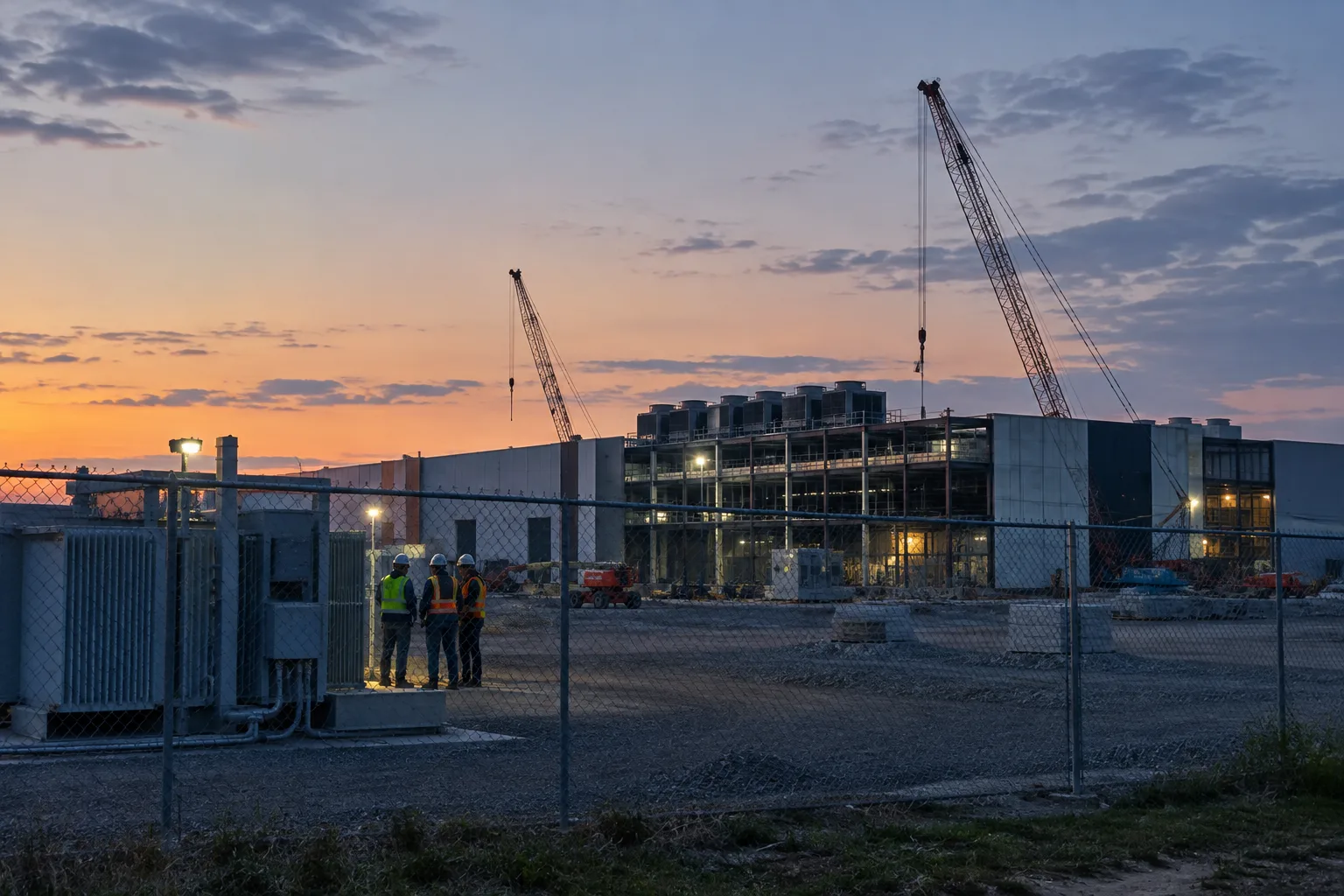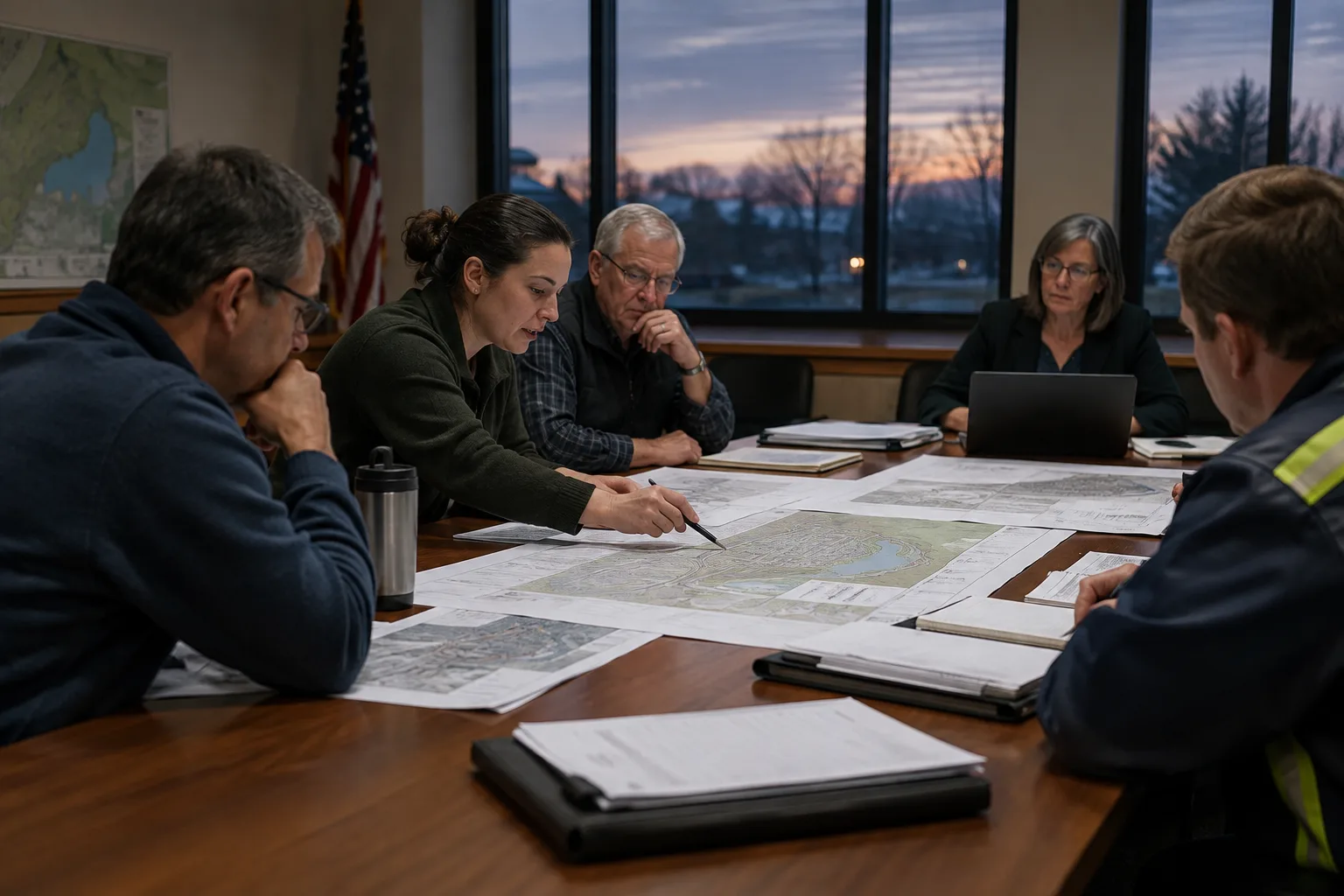

The American Infrastructure Alliance on Sept. 28 launched a new labor-business coalition that brings major building-trades unions together with some of the biggest names in AI, data centers, and infrastructure finance for a coordinated push on “responsible” data-center growth in seven states before the 2027 legislative sessions. That matters because the argument over where AI capacity gets built is no longer just about server demand. It is about who pays for grid upgrades, how much water a project can use, what workers gain from the buildout, and what protections local communities can actually enforce.
The reader’s real question is straightforward: can this coalition turn data-center backlash into durable local bargains, or is it mainly a more sophisticated campaign to keep construction moving and head off broad restrictions? Right now, the most accurate answer is that it could do either. The coalition has assembled serious political and industrial power. What it has not yet published is the part that decides credibility: the rules, the enforcement, and the penalties when a project misses its promises.
A coalition designed for the next round of state politics
According to the coalition’s launch release, inaugural members include IBEW, the International Association of Iron Workers, the United Association of Union Plumbers and Pipefitters, SMART, and HFIAW, alongside QTS, SoftBank, SB Energy, OpenAI, Blackstone, CoreWeave, Prologis, Digital Realty, and other infrastructure and data-center companies. The alliance says it will focus first on Texas, Georgia, Ohio, Iowa, Pennsylvania, Indiana, and South Carolina, with a set of principles to be released in the coming weeks.
That is an important framing detail. This is not a regulator, a government task force, or a national standard-setting body. It is a political coalition trying to shape the terms of state and local approval before opposition hardens into moratoriums or one-size-fits-all restrictions. Its stated priorities are binding water and resource commitments, requiring projects to pay for the energy and infrastructure they need, creating long-term skilled-trades opportunities, delivering visible local benefits such as support for schools and roads, and giving communities clearer accountability and oversight.
The timing makes sense. AI data centers turn software demand into physical infrastructure with visible local footprints: land, substations, transmission, cooling, water, backup generation, roads, fiber, labor, and financing. That means permitting fights are not a side plot to the AI boom; they are part of the business model. A delayed permit can hold up capacity. A fast approval with weak conditions can push costs onto ratepayers or residents. The alliance is essentially trying to write a more build-friendly answer to that tension.
Its members also have overlapping, not identical, interests. AI companies and operators want predictable capacity growth and fewer blanket bans. Infrastructure investors want projects that can get financed and run for decades. Building trades want construction demand, apprenticeships, and a reason to organize politically around these facilities. Utilities and local governments need reliability, transparent cost allocation, and confidence that a large load will not destabilize service or politics. A coalition that can align those interests could shorten some fights. It could also give project sponsors a strong voice in designing the rules that govern them.
Why labor is central to the strategy
Labor is not window dressing here. As Axios reported, the coalition is a multimillion-dollar organizing effort that hopes to head off broad moratoriums, and unions are meant to help mobilize support for projects built under responsible-growth conditions. For developers and investors, that matters because union backing can add political legitimacy and a ready-made ground game in state capitals and local communities.
For workers, though, the substance matters more than the coalition map. “Good jobs” can mean many things, and the alliance has not yet said which definition it intends to fight for. There is a big difference between temporary construction employment and durable operations work. There is also a difference between a general promise of skilled-trades opportunity and a project requirement tied to prevailing wages, registered apprenticeships, local hiring, or enforceable workforce targets. If the coalition’s eventual principles lock those items into permitting, tax treatment, or utility service, organized labor will have converted political support into standards. If not, labor risks becoming the public face of a growth agenda whose hardest guarantees remain soft.
The alliance says its own polling found public support for data-center development can move from deep skepticism to majority support when enforceable guardrails are on the table. That may turn out to be directionally true, especially in places where communities want jobs but distrust opaque deals. Still, polling sponsored by the coalition cannot answer the harder question local officials face when a specific project arrives with a specific load forecast, water plan, tax package, and backup-power footprint.
The test is enforcement, not branding
The coalition has chosen the right pressure points. Power costs, especially, are where abstract AI optimism meets household bills and utility politics. The national stakes were visible this week when the Associated Press reported that a Senate bill on data-center electricity costs failed 57–43 after passing the House 417–3. The bill would have directed utility regulators to consider rates for large power customers that cover system-upgrade costs. Whatever its fate, those votes show this is not just messaging from project opponents. Who pays for expansion is already a live political fault line.
That is why the alliance’s principles will matter only if they move from language to mechanism. A useful scorecard is simple. Do member companies accept transparent load forecasts before approval? Are there utility tariffs or other rules that keep household ratepayers from subsidizing upgrades for large-load customers? Are water use and discharge terms binding and public? Are prevailing-wage and apprenticeship standards attached to projects, and are permanent-job claims measured separately from construction jobs? Are school, road, and community-benefit commitments written into agreements with deadlines, monitoring, and clawbacks? And if a project’s demand exceeds forecasts, benefits arrive late, or ownership changes, who has the power to force a correction?
Those are not procedural niceties. They are the line between a standard and a sales pitch.
The unresolved governance questions are almost as important as the policy ones. The public record does not yet show the coalition’s budget, internal voting rules, campaign structure, or how residents, small businesses, environmental groups, and ratepayer advocates will participate. It also does not yet establish whether the alliance wants model legislation, voluntary community agreements, utility tariffs, or some mix of those tools. Until that is clearer, the coalition remains best understood as an influential organizer of the debate, not a proof that the debate has been settled.
That leaves local officials, utilities, workers, and investors with a practical next step. When the promised principles arrive, they should look past the phrase “responsible growth” and ask three blunt questions: who defines the obligation, who verifies compliance, and who pays when the forecast is wrong? If the alliance can answer those clearly, it may offer a workable template for approving needed infrastructure without socializing the downside. If it cannot, the launch will read less like a new bargain and more like a better-organized campaign against the next round of moratorium politics.

 By
By
 By
By
 By
By
 By
By



 By
By