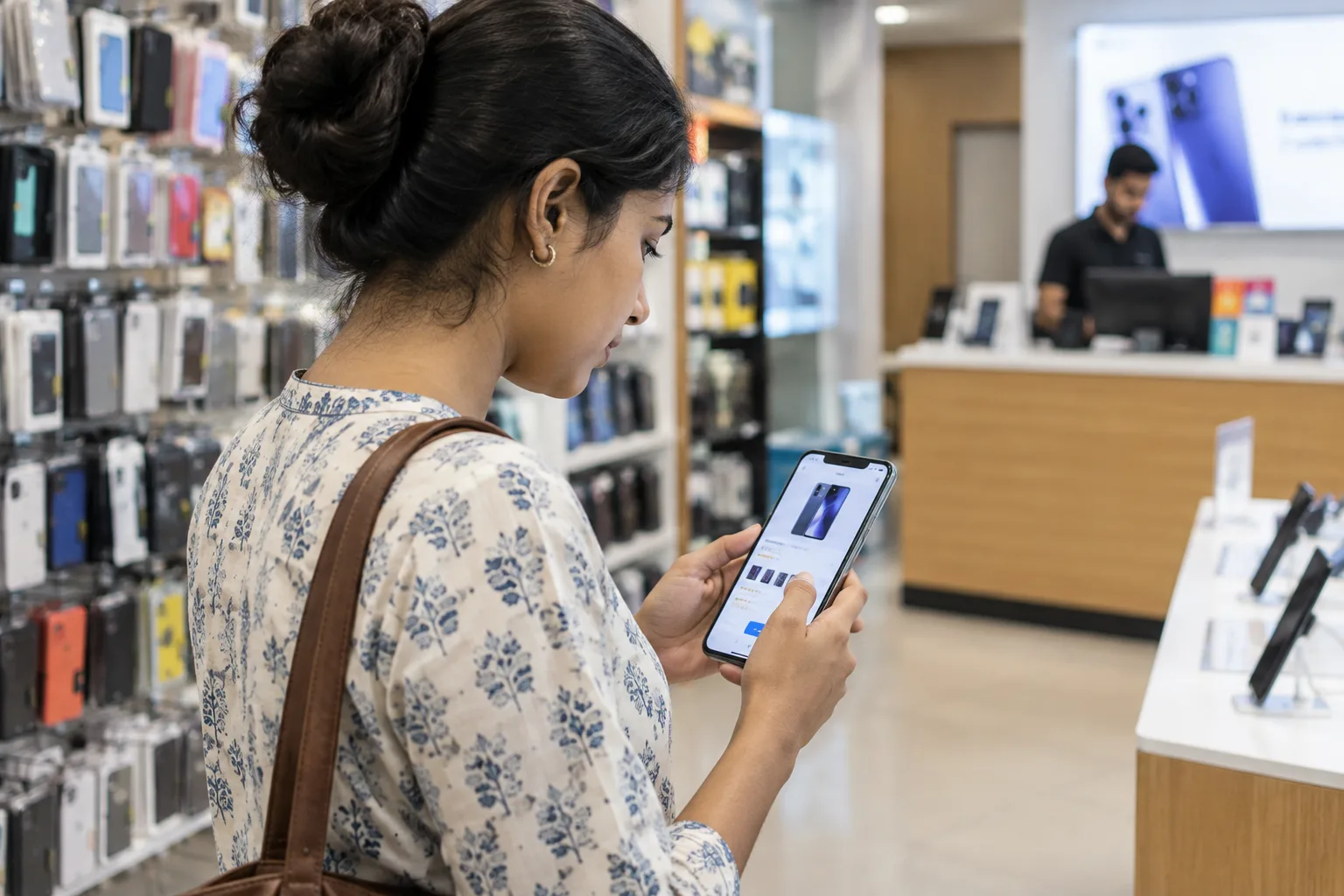

On Sept. 26, TechCrunch reported that Google is testing a ‘Buy’ button for selected Flipkart listings inside Gemini and Google’s AI Mode in India. In the observed test, some users shopping a limited set of smartphones, electronics and mobile accessories could tap through to a Flipkart-branded checkout without leaving Google’s AI interface. The footprint is small, but the shift is important: Google is moving from helping people compare products to sitting closer to the point where browsing turns into a sale.
That is the real question behind this experiment. Google has already spent months turning Gemini and AI Mode into shopping surfaces that can show product listings, comparisons, prices, reviews and places to buy. What changes with a purchase control is not novelty but leverage. The platform that controls the last step before checkout can influence which merchants convert, how attribution is measured, what data is captured, and who takes responsibility when price, availability or returns go wrong.
From product comparison to the last click
Google’s April 7 shopping announcement for India framed Gemini as a place to get shoppable listings, comparison tables, prices from across the web and links to merchants. It described AI Mode in Search as a way to compare products using images, prices, reviews and inventory information. The Flipkart test extends that earlier discovery-and-comparison model by adding a direct purchase step.
The mechanics matter. The observed checkout is Flipkart-branded, which makes this different from Google’s previously described Google-hosted checkout for eligible products. In other words, the current test does not show Google replacing the retailer’s checkout, and it does not show Gemini making purchases autonomously. It shows Google keeping the shopper inside its own interface longer while handing the transaction to Flipkart at the moment of payment.
Google has said only that it regularly tests features that help people discover and connect with businesses. A person familiar with the plan told TechCrunch that Google expects a broader rollout later in October, ahead of India’s festive shopping season, but that timing has not been publicly committed by Google.
What is still missing is almost everything a retailer would need to judge the commercial stakes. Google has not disclosed how the ‘Buy’ button is triggered, how products are selected, whether this specific flow uses its Universal Commerce Protocol, what eligibility criteria apply, or whether Google receives any fee or other economic benefit. In the example observed by TechCrunch, Amazon offers appeared alongside Flipkart listings but did not show the same purchase control. That is not proof of a permanent rule for all merchants. It is, however, a glimpse of how two listings can appear side by side while only one gets the friction-reducing button that converts intent into an order.
Why India is the consequential test market
India is a logical and sensitive place to try this. Flipkart and Amazon compete intensely, and festive-season demand compresses decision-making into a period when small changes in convenience can move large volumes of sales. If Google wants to learn whether AI-assisted shopping can drive measurable transactions rather than product research, this is a market where the answer can arrive quickly.
Google has also been building the underlying commerce infrastructure in public. Its July 9 India marketing update described the Universal Commerce Protocol, or UCP, as a common language for agents and merchants, and said Google was building payments infrastructure for agentic checkout. A Sept. 16 Google Shopping update said UCP-powered checkout was already available for some retailers in Search, including AI Mode, and in the Gemini app. Earlier in September, according to TechCrunch, Google identified Flipkart as one of the merchants partnering on agentic shopping in India.
That makes the Flipkart test look less like a one-off curiosity than the transactional edge of a larger roadmap. Still, the strongest interpretation is not that Google has finished building an AI commerce layer. It is that Google is testing whether it can turn AI shopping from a referral surface into a transaction-influencing destination.
The relationship between the companies adds one more reason to watch merchant neutrality closely. TechCrunch noted that Google invested about $350 million in Walmart-owned Flipkart in 2024 for a minority stake. That does not show unlawful favoritism, and it does not mean other retailers will be excluded. But it does make transparency around ranking, eligibility and equivalent access more than a theoretical concern.
What retailers and shoppers should verify now
For retailers, the immediate lesson is less about Gemini branding than operational readiness. If assistants become a meaningful shopping channel, feeds and policies need to be machine-readable enough to survive summarization and comparison: product titles, specifications, prices, stock status, delivery promises, seller identity, return terms and warranty details. Merchants should test how their products appear across Google’s AI surfaces, ask who gets attribution for the sale, clarify who owns purchase and customer-service data, and measure incremental conversion rather than taking assistant-reported engagement at face value. They should also preserve a human-auditable path for disputes, refunds and order corrections when an AI summary is wrong or a handoff fails.
Consumers need a parallel checklist. A shorter path to checkout can save time, but it does not automatically produce the best outcome after shipping charges, discounts, returns and service are counted. Before approving payment, shoppers should confirm the retailer, final price, delivery timeline, seller, return policy and payment screen they are actually using. They should also know who will fix the problem if the assistant recommended the wrong variant, misstated availability or routed them to a less favorable offer.
That is why the larger stakes sit beyond this limited test. If Google can decide which merchants get a purchase control inside AI responses, it can shape discovery and conversion at the same time. That may create a smoother market, with less friction between product search and purchase. It may also create a new gatekeeper, where eligibility, ranking and the last click are controlled by the same platform.
For now, the Flipkart experiment is evidence of direction, not proof of outcome. It is limited to some users, some products and one country, with retailer-hosted checkout still intact and the economics still undisclosed. But it is a concrete sign that the battle in AI shopping is shifting from who helps you choose to who gets to stand between choice and checkout.


 By
By
 By
By

 By
By
 By
By