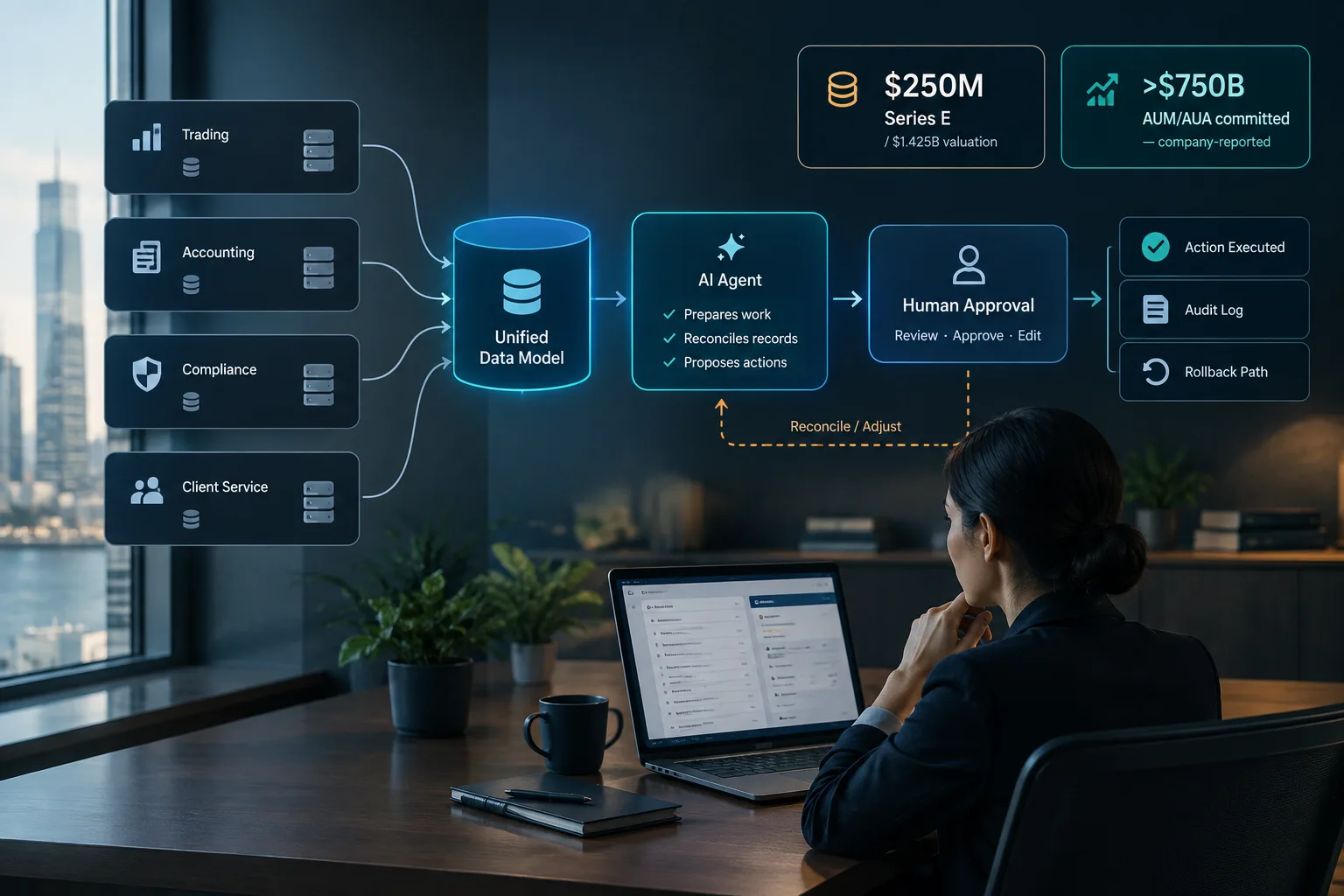

Ridgeline has raised a $250 million Series E at a $1.425 billion valuation, according to the company’s Sept. 16 announcement. Led by founder and chairman Dave Duffield, the round is notable not simply as another AI financing, but as a private-market wager on a specific enterprise thesis: investment managers will replace a patchwork of front-, middle-, and back-office systems with one AI-ready operating platform. Because customers and affiliates participated, the financing is also a signal that some users are willing to invest in the vendor running workflows that touch trading, accounting, compliance, reporting, and client service.
That makes the real question more practical than promotional: does customer-backed capital validate Ridgeline’s claim that unified data and governed agents can improve operations, or is the money mainly backing a compelling idea ahead of independently verifiable results?
Why this round matters beyond the headline
Ridgeline says it will use the new capital to extend AI capabilities, broaden managed services, expand in Canada and Europe, and fund product innovation. Those priorities matter. They suggest the company is trying to sell more than software licenses. It wants to be a deeper operating layer for investment managers that are under pressure to grow service levels and capacity without adding headcount at the same pace.
The structure of the round matters, too. Ridgeline describes it as an invitation-only Series E led by Duffield, who also founded PeopleSoft and Workday. That founder-led backing can be read as conviction. Customer participation can be read as strategic alignment. But neither makes this valuation equivalent to a broad public-market verdict on revenue quality, margins, or durability. Ridgeline did not disclose a public term sheet, dilution, revenue, profitability, customer count, or how the $1.425 billion valuation was set. It is a pricing event in the private market, not a complete operating scorecard.
The AI-native claim investors are buying
Ridgeline’s pitch is more ambitious than adding a chatbot to a legacy workflow. The company presents itself as an AI-native investment-management platform with a unified data model spanning trading, portfolio accounting, compliance, reporting, and client servicing. It says more than $750 billion in AUM and AUA are committed to the platform, and that customers can consolidate an average of six to nine legacy systems.
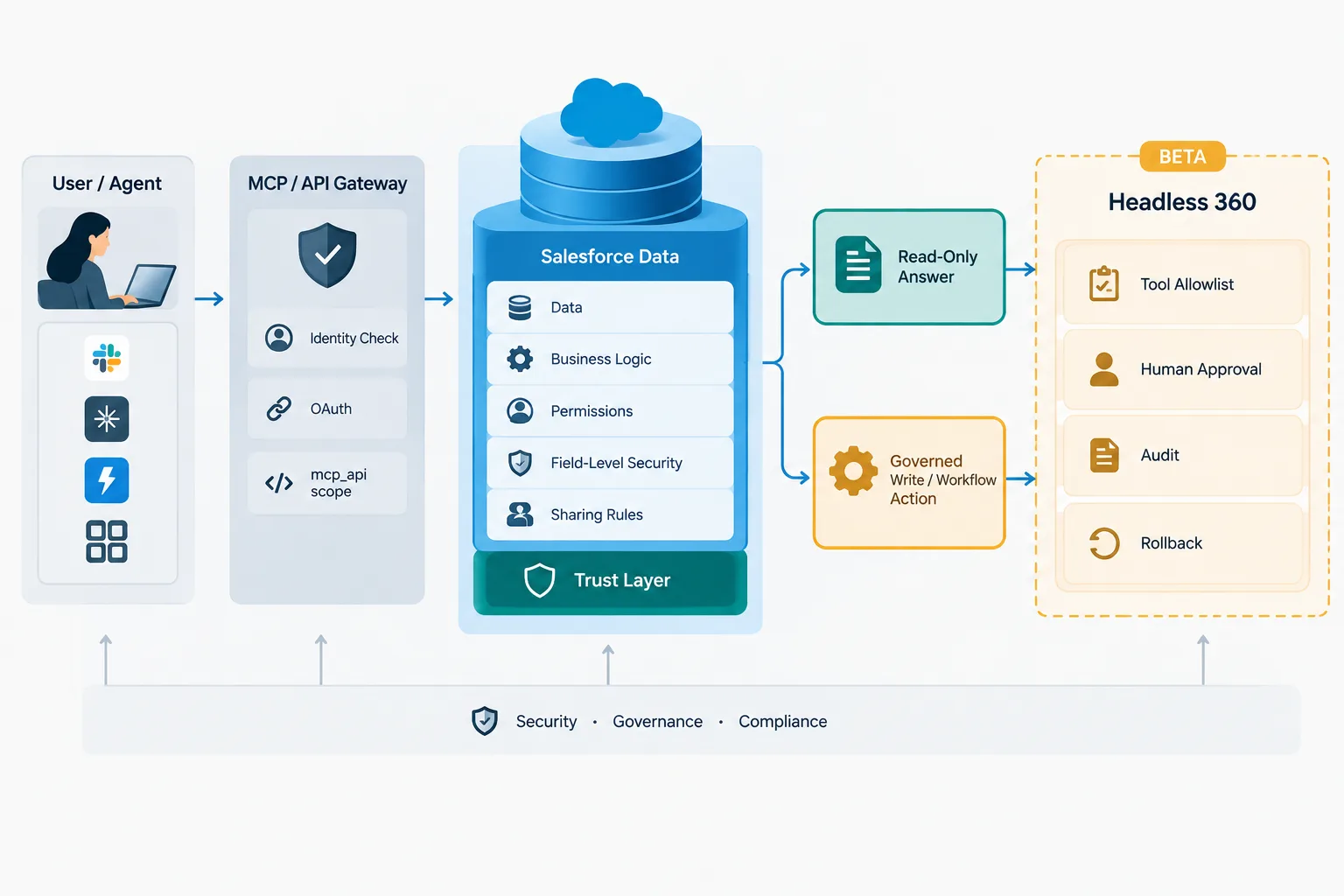
That architecture is the heart of the thesis. In a fragmented stack, an AI tool often sees only a slice of the truth and must cross multiple systems, permissions, and reconciliation layers before it can do useful work safely. In a unified platform, the argument goes, an agent can operate with the same permission model, workflow context, and audit trail as the underlying system of record. That is why Ridgeline talks about agents preparing for client meetings, reconciling accounts, assisting with pre-trade and post-trade compliance work, and taking governed actions with human oversight.
If that model works in production, it is economically meaningful. Investment managers still spend heavily on duplicated integrations, reconciliations, exception handling, and manual review across disconnected tools. Ridgeline’s public materials include customer-reported outcomes such as 33% faster daily reconciliation, 11.4% more time in market each day, and one case of consolidating 10 systems. Those are relevant clues about the kind of gains a unified platform might unlock. They are not, however, an independent benchmark for the full customer base.
What the valuation does not settle
The biggest gap is between “committed” and “live.” Ridgeline says more than $750 billion in AUM/AUA are committed to the platform. That does not tell buyers how much of that asset base is actively administered on Ridgeline today, how much is paying software volume, or how much is running through AI-assisted workflows. A firm can commit assets to a migration path long before every account, book of record, or business line is live.
The same caution applies to AI claims. A governed agent that drafts, reconciles, or proposes a compliance action is only as useful as the controls around it. Investment-management operations carry fiduciary, recordkeeping, cybersecurity, and operational-resilience obligations. Buyers still do not have public answers to some of the questions that matter most: how often agents are allowed to write or trigger actions rather than suggest them; how approvals are enforced; how exceptions are handled; what the audit log captures; whether external model providers can see sensitive data; what rollback looks like after a bad action; and how portable data and workflows are if a customer wants to leave.
That is where the unified-platform story cuts both ways. Consolidating six to nine systems can reduce integration friction, data duplication, and reconciliation drag. It can also increase concentration risk. A manager becomes more dependent on one provider’s data model, release cadence, controls, managed-services quality, and service availability. In other words, the same architecture that could make AI more useful can also make vendor dependency more consequential.
Ridgeline’s plan to expand managed services sharpens that point. For some customers, managed services can accelerate adoption and help turn software into measurable operating change. But without a breakdown between software and services revenue, outside observers cannot tell how much of the business model depends on recurring SaaS economics versus ongoing operational support.
The pilot test buyers should run now
For CIOs, COOs, CTOs, and compliance leaders, the financing is interesting because it narrows the strategic debate. The question is no longer whether AI will appear in investment operations. It is whether a unified system of record delivers better outcomes than layering assistants onto legacy estates.
A serious pilot should require hard measures, not demos:
- live assets processed versus assets merely committed
- which modules are actually deployed, and where legacy systems remain
- reconciliation speed, exception rates, and data-quality errors
- time-to-close, approval latency, and staff-capacity gains
- how often agents can act, not just draft
- permission violations, audit completeness, and rollback performance
- incident history and recovery from an agent mistake
- model and vendor dependencies, including data exposure and portability terms
Ridgeline has clearly found backers for the idea that AI belongs inside the operating core of investment management, not at the edge. Customer participation makes that bet more interesting because it suggests at least some users see strategic upside, not just feature appeal. But until buyers can compare live usage, control evidence, and measurable operating outcomes against the costs of vendor concentration and migration, the round says more about where the market wants the next operating layer to be than about whether that layer has already proved itself at scale.

 By
By

 By
By

 By
By
 By
By
 By
By