
A new corporate archetype: “wisdom without command” at Apple and Berkshire Hathaway
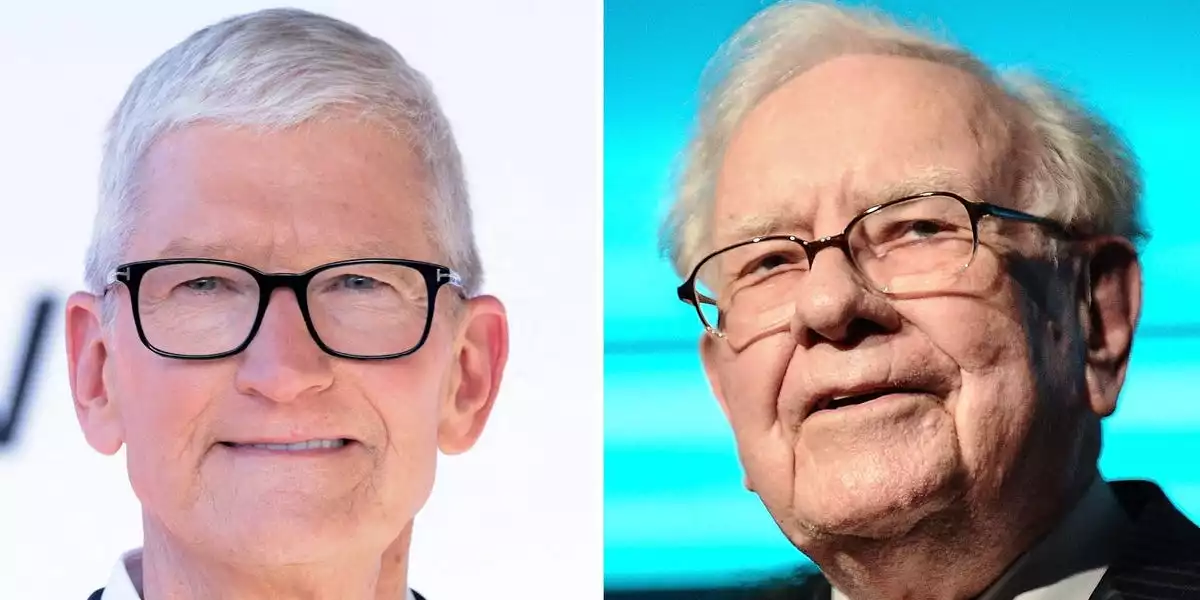
Tim Cook’s move from Apple CEO to executive chair—after a 15-year run that helped propel the company to a $3 trillion valuation—is more than a personal milestone. It signals a maturing governance pattern increasingly visible in the world’s most systemically important firms: the deliberate separation of operational command from institutional stewardship. In parallel, Warren Buffett’s step back from day-to-day leadership at Berkshire Hathaway, while remaining chairman and an active sounding board, reinforces the same template.
This model is not a ceremonial retirement. It is a strategic redesign of leadership for an era where corporate advantage is shaped as much by regulatory navigation, geopolitical risk, and capital-market credibility as by products and quarterly execution. Cook’s projected compensation—reportedly around $45 million in fiscal 2027—underscores how boards increasingly price the value of a former CEO’s relationships, judgment, and reputational ballast.
For investors and policymakers alike, these transitions read as a statement: continuity is being preserved, but the center of gravity is shifting to a new generation of operators—John Ternus at Apple and Greg Abel at Berkshire—who inherit not only businesses, but also the expectations that come with global scale.
Apple’s executive chair as diplomat-in-residence amid trade, antitrust, and supply-chain rewiring
Cook’s tenure was defined by operational discipline and supply-chain mastery, but his next chapter appears designed around a different asset: political capital. Apple’s exposure to cross-border manufacturing, premium Asian suppliers, and shifting U.S.–China dynamics makes external engagement a core strategic function, not a peripheral one. As executive chair and “global envoy,” Cook is positioned to operate where CEOs increasingly spend time but rarely build durable leverage: government corridors, regulatory negotiations, and trade-policy fault lines.
Several dynamics make this role especially consequential now:
- Supply-chain resilience beyond China: Apple has expanded manufacturing and sourcing options while investing in U.S. production capacity and securing semiconductor supply. That diversification is not merely logistical; it is geopolitical risk management.
- Antitrust and platform scrutiny: From competition policy to app-store rules and data-privacy mandates, Apple faces a regulatory environment where outcomes can reshape margins and business models. A chair with deep relationships can influence process, framing, and timing—even when outcomes remain uncertain.
- CEO bandwidth and role clarity: With Cook focusing outward, the operational burden on Ternus intensifies: cost optimization, product cadence, supplier leverage, and execution in an AI-accelerated market. The question is not whether Cook’s presence helps—it likely does—but whether it is structured to enable the new CEO rather than shadow him.
In effect, Apple is institutionalizing a two-track leadership system: the CEO as builder and operator, and the executive chair as strategic diplomat and risk governor. For a company whose performance is intertwined with global trade, regulatory interpretation, and public trust, that division can be a competitive advantage—if the boundaries are explicit.
Berkshire’s continuity play—and what Buffett’s Alphabet bet signals about capital rotation into Big Tech
At Berkshire Hathaway, the succession story has long been less about surprise and more about choreography. Greg Abel’s elevation to day-to-day leadership reflects a planned transfer of authority, yet Buffett’s continued role as chairman preserves the firm’s most valuable intangible: investor confidence in Berkshire’s capital-allocation culture.
Buffett’s presence matters because Berkshire is not simply an operating company; it is a capital engine whose identity is tied to disciplined deployment across cycles. Keeping Buffett as a senior steward signals to markets that the “Berkshire method” remains intact even as execution shifts to Abel.
Equally notable is the strategic message embedded in Berkshire’s reported $38 billion stake in Alphabet. It suggests that traditional value frameworks are increasingly converging with long-duration technology theses—especially where cash flows are reinforced by structural demand for:
- Cloud infrastructure and enterprise software consumption
- AI research commercialization and model deployment
- Data-driven advertising and platform monetization at scale
For the broader market, this is a cue that “value” and “tech” are no longer opposing styles. Instead, large institutional pools may treat dominant technology platforms as durable cash-flow franchises—while simultaneously demanding more governance discipline, clearer capital return policies, and sharper regulatory risk disclosure. Buffett’s ongoing counsel can help Berkshire navigate that tension: leaning into secular growth while maintaining the firm’s cultural skepticism toward hype.
Governance design becomes strategy: the fine line between mentorship and bottleneck
The promise of the executive-chair model is stability without stagnation. The risk is ambiguity—where a revered predecessor unintentionally becomes a second center of power. Corporate-governance experts often warn that iconic leaders can constrain successors simply by being present, even without issuing directives. The market may also misread who is truly in charge, complicating accountability when performance or strategy is questioned.
To make “wisdom without command” work, boards will need to operationalize what is often left implicit. The most effective transitions tend to include:
- Clear charters defining scope: external affairs, risk oversight, capital allocation input, and crisis escalation paths
- Decision rights that remain unambiguous: the CEO owns strategy and operations; the chair advises and represents, without veto-by-proximity
- Periodic role reviews: ensuring the executive chair’s remit evolves as the successor establishes authority
- Conflict-of-interest and disclosure protocols: particularly where policy engagement, lobbying, or cross-border negotiations intersect with corporate strategy
These transitions also hint at a broader shift in what boards will demand from next-generation CEOs. Operational excellence remains table stakes, but leadership metrics are expanding to include the ability to build diplomatic capacity: engaging governments, shaping public-private partnerships, and integrating sustainability and compliance into competitive strategy.
Apple and Berkshire are effectively testing whether modern corporate leadership can be modular—pairing a forward-facing statesman with an execution-focused operator—without diluting accountability. If they succeed, the template may spread across Big Tech and capital-heavy conglomerates alike, not as a retirement perk, but as a new instrument of competitive governance in an era where markets, regulators, and geopolitics all sit at the same boardroom table.

 By
By
 By
By
 By
By
 By
By
 By
By
 By
By

 By
By