
ChatGPT advertising emerges as a material revenue lever—without yet looking like “traditional ads”
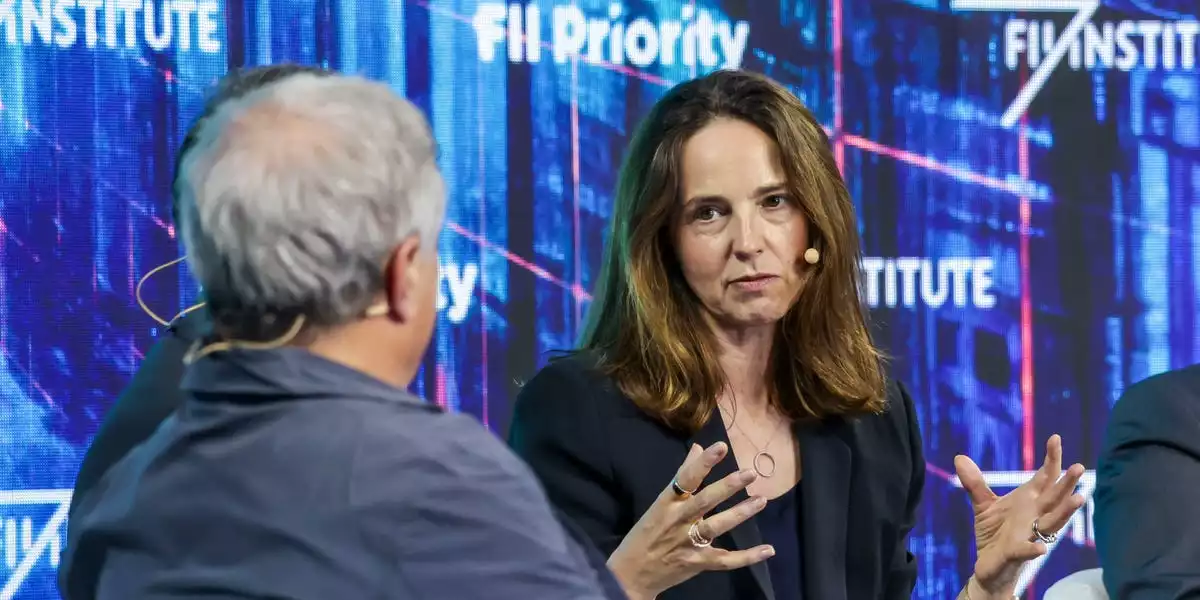
OpenAI CFO Sarah Friar’s comments at Goldman Sachs’ Communacopia + Technology Conference signal that ChatGPT’s early advertising program is already generating “meaningful” revenue, with a trajectory that—if sustained—could approach a $1 billion annualized run rate. That number matters less as a precise forecast than as a marker of strategic intent: OpenAI is increasingly willing to treat ChatGPT not only as a product and platform, but as a monetizable distribution surface with economics that can scale beyond subscriptions and enterprise licensing.
Ads currently appear in the Free and Go tiers, indicating a familiar playbook: preserve premium experiences for higher-paying users while using advertising to subsidize mass-market access. Yet Friar’s framing suggests the company is not simply inserting banner-like units into a chat interface. Instead, OpenAI appears to be exploring AI-native advertising formats—units designed for conversational environments where user intent is explicit, context is rich, and the “page” is effectively a dialogue.
This is a notable evolution for a company historically perceived as advertising-averse under CEO Sam Altman, and it lands amid a widening philosophical split in the frontier-model market. Anthropic’s public rejection of ads in chatbot interfaces positions it as a “utility-first” alternative, while OpenAI is testing whether advertising can be compatible with trust, safety, and product integrity at scale.
—
Why AI-native ad formats could reshape performance marketing—and raise new governance questions
The most consequential part of Friar’s remarks is the implied design direction: ad delivery that blends Google-like high-intent signals with Meta-like personalization and context. In practical terms, ChatGPT sits at an intersection that legacy ad platforms have pursued for years but rarely unify in one place: the user is simultaneously *searching*, *asking*, *planning*, and *deciding*—often within a single session.
Potential differentiators of LLM-driven ad delivery include:
- Intent clarity in natural language: Queries are not just keywords; they are structured problems (“compare options,” “build a plan,” “recommend within constraints”), which can map to commercial outcomes with unusually high precision.
- Session-level context: The conversation itself can reveal constraints (budget, timing, preferences) that improve relevance—if used responsibly and transparently.
- Dynamic creative generation: Ads could become interactive recommendations, product comparisons, or multimedia snippets that adapt to the user’s stated goals rather than a static creative asset.
- Conversational conversion paths: Instead of “click and leave,” users may complete more of the funnel inside the assistant—research, evaluation, and next steps—changing attribution models and measurement norms.
This same “fusion” of intent and context is also where the governance stakes rise. A conversational interface can feel more like advice than advertising, so disclosure, labeling, and user control become central to maintaining credibility. Regulators and watchdogs will likely scrutinize:
- Consent and data minimization (GDPR, CCPA and emerging AI-specific regimes)
- Data retention and training boundaries (what is used for targeting vs. model improvement)
- Manipulation risk (ads that are too persuasive, too personalized, or insufficiently distinguishable from assistant output)
- Fairness and competition (whether certain merchants or partners receive preferential treatment)
If OpenAI succeeds, it will not be because it copied the web’s ad units into a chat box, but because it established new interface norms that balance monetization with user trust.
—
The economic pivot: advertising as a counterweight to compute intensity and IPO expectations
The business logic is straightforward: frontier AI is capital-intensive. Training and serving large models require massive outlays in GPUs/ASICs, data-center capacity, energy, and engineering, and those costs scale with usage. Advertising offers a familiar advantage: it can monetize high-volume, low-paying users without forcing an immediate subscription conversion.
From an investor perspective, a credible path to $1 billion in annualized ad revenue would help answer a recurring question about AI leaders: can they build durable, diversified revenue streams that keep pace with escalating infrastructure costs? OpenAI’s reported $85 billion private-market valuation implies expectations not only of technical leadership, but of repeatable unit economics.
Key metrics that markets will likely focus on as OpenAI moves toward a potential IPO window (with reporting suggesting a confidential S-1 pointing to 2027) include:
- Ad revenue per daily/ monthly active user (DAU/MAU)
- Cost per inference vs. monetization per session
- Conversion and churn dynamics across Free, Go, and paid tiers
- Advertiser ROI benchmarks (CPC, CPA, incrementality)
- Brand safety and policy enforcement performance at scale
The risk is equally clear: if ads degrade the user experience or trigger trust backlash, OpenAI could face a trade-off between near-term monetization and long-term platform defensibility—especially as competition intensifies from Google, Meta, and other AI assistants embedded directly into operating systems, browsers, and productivity suites.
—
Competitive and market ripple effects: pressure on incumbents, divergence among AI labs
If ChatGPT can deliver ad performance comparable to—or better than—Google Search and Meta’s social inventory, it could pull budgets toward what advertisers value most: commercial intent with measurable outcomes. The novelty here is not reach alone; it is the possibility of high-intent conversational audiences where the assistant is present at the moment decisions are formed.
For marketers and business leaders, the near-term playbook is pragmatic:
- Pilot early, measure aggressively: Test ChatGPT placements for conversion efficiency before pricing normalizes.
- Rebuild creative for dialogue: Treat conversational ads as guided experiences—short, specific, constraint-aware—rather than repurposed display copy.
- Upgrade measurement and compliance: Prepare for new attribution patterns and stricter scrutiny around targeting and disclosure.
Meanwhile, the OpenAI–Anthropic split is more than branding. It is a market experiment in two monetization philosophies: one where the assistant becomes an ad-supported gateway to commerce, and another where revenue is expected to come primarily from subscriptions and enterprise contracts. Over time, that divergence may shape partnerships, regulatory posture, and user trust—ultimately influencing which model becomes the default for consumer AI.
OpenAI’s advertising move is best understood as a bet that the next major ad surface won’t be a feed or a results page—it will be a conversation, and the winners will be the platforms that can monetize intent without compromising the integrity of the dialogue.

 By
By
 By
By

 By
By
 By
By
 By
By

 By
By