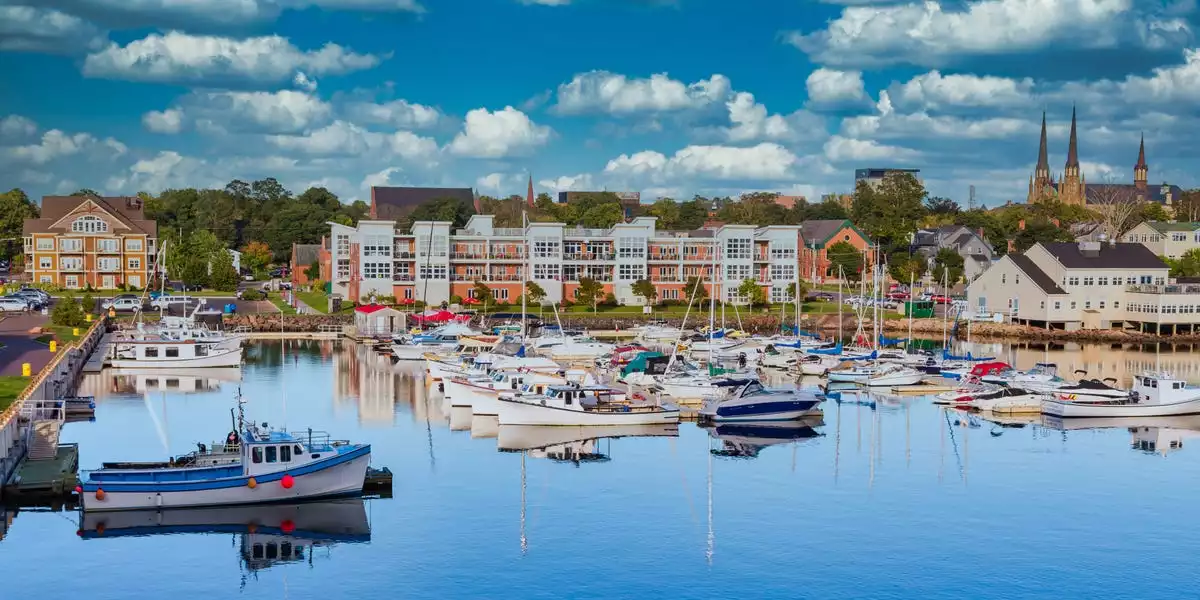

Canada’s under-mapped tourism corridors are becoming a strategic growth story
Canada’s tourism narrative has long been dominated by familiar gateways—major urban hubs and marquee national icons. Yet the country’s most compelling next chapter may be unfolding across lesser-traveled provinces and coastal regions, where geology, agriculture, and marine biodiversity converge into experiences that are both differentiated and economically meaningful.
From the mantle-exposing Tablelands of Newfoundland and Labrador—a rare window into Earth’s deep structure—to Prince Edward Island’s red-sand shores and agrarian heritage, and onward to the whale-rich waters off Vancouver Island, these destinations are not merely scenic alternatives. They represent under-explored tourism corridors with the potential to deliver higher-value travel: longer stays, guided interpretation, premium cultural programming, and sustainability-linked offerings.
Three examples illustrate the breadth of this opportunity:
- Gros Morne National Park (Newfoundland and Labrador): UNESCO-protected fjords and globally significant geology that can support education-forward, conservation-aligned tourism.
- Confederation Trail (Prince Edward Island): A roughly 278-mile cycling network with growing accessibility via e-bikes and guided rides—an ideal platform for low-carbon mobility tourism.
- Vancouver Island and Johnstone Strait (British Columbia): Whale-watching and kayaking strengthened by Tlowitsis Nation–led cultural tours, linking wildlife experiences with Indigenous stewardship and knowledge systems.
Together, these regions suggest a shift in how Canada can compete: not on volume alone, but on experience design, authenticity, and technology-enabled stewardship.
Tourism technology is moving from “booking” to “orchestrating” the experience
The diversity of landscapes and activities creates a natural testbed for digital-first experience platforms—tools that do more than sell tickets. The next competitive edge will come from systems that help travelers understand, navigate, and respect complex environments while giving operators better control over safety, capacity, and ecological impact.
Several technology vectors stand out:
- AR/VR itinerary pre-visualization: Immersive previews can reduce uncertainty and increase conversion for remote destinations. Imagine 3D terrain interpretation of the Tablelands or AR overlays that explain glacial geology in Gros Morne—turning a visit into a guided learning journey even before arrival.
- Real-time marine and weather intelligence: For whale-watching and kayaking corridors, live whale-tracking overlays, sea-state alerts, and route guidance can improve safety and reduce wildlife disturbance.
- Smart infrastructure for trails and fleets: E-bike networks and guided-tour reservation systems can evolve into IoT-enabled ecosystems—supporting predictive maintenance, battery health monitoring, and congestion management on popular segments of the Confederation Trail.
- Dynamic capacity and pricing models: When paired with demand forecasting, operators can shift from static seasonal pricing to adaptive models that smooth peaks, encourage off-peak travel, and protect sensitive areas.
This is where tourism intersects with enterprise technology: geospatial analytics, sensor networks, and digital identity/permissions systems can become core infrastructure—especially in UNESCO sites and marine ecosystems where visitor flow is inseparable from conservation outcomes.
Regional GDP diversification meets the experience economy—and a new skills agenda
For provinces seeking to broaden economic bases beyond resource extraction, tourism is increasingly attractive because it supports distributed micro-enterprises: guides, outfitters, lodges, local transport, artisans, and food producers. The opportunity is amplified by global demand for the “experience economy,” where travelers pay for interpretation, access, and meaning—not just accommodation.
Economically, these corridors can generate value in several reinforcing ways:
- Higher-margin offerings: Guided geology walks, curated culinary stops, and Indigenous-led cultural programming can command premium pricing compared with undifferentiated sightseeing.
- Local supply chain activation: Farm-to-table experiences in P.E.I. can pull through demand for local produce, small-batch processing, and culinary tourism partnerships.
- Seasonality mitigation: Packaging cycling, culture, and remote-work stays can extend shoulder seasons, stabilizing revenue and employment.
The labor implications are equally material. Growth in cycling logistics, marine excursions, and interpretive tourism requires a workforce that blends hospitality with modern operational capabilities:
- Hospitality technology fluency (reservation systems, digital customer service, data-driven operations)
- Environmental stewardship and safety training (marine protocols, trail management, wildlife interaction standards)
- Cross-cultural communication and ethical engagement frameworks, particularly where Indigenous-led experiences are central
This points to a pragmatic policy and industry pathway: partnerships among provincial governments, community colleges, and private operators to build credentialed training pipelines—helping regions scale without diluting quality or safety.
Indigenous leadership, sustainability finance, and digital twins reshape competitive advantage
One of the most consequential differentiators emerging in these corridors is Indigenous engagement designed as leadership, not ornamentation. Tlowitsis Nation–led cultural tours demonstrate how Indigenous stewardship can deepen authenticity while aligning tourism with reconciliation and responsible land-and-water governance. For the market, this can translate into clearer provenance, stronger storytelling, and premium educational value—especially for luxury, institutional, and learning-focused travel segments.
At the same time, the forward-looking investment thesis is increasingly tied to measurable sustainability:
- Digital twins and geospatial monitoring: Creating digital-twin environments of UNESCO sites and marine corridors can support ecological change detection, visitor-flow optimization, and licensing opportunities for education and film—commercializing data responsibly while protecting fragile areas.
- Carbon-neutral travel ecosystems: Electric propulsion for boats, off-grid e-bike charging powered by solar or tidal energy, and verifiable carbon accounting can position these provinces as ESG-aligned destinations rather than carbon-intensive indulgences.
- Remote-work villages: With improved rural broadband, “work-from-nature” hubs can convert short visits into multi-week stays—supporting local services and reducing dependence on peak-season surges.
Risks, however, are not theoretical. Over-commercialization could degrade the very ecosystems that create demand, while cultural commodification can erode trust and long-term viability. The most durable approach will likely combine:
- Real-time environmental impact monitoring and dynamic quotas in sensitive zones
- Revenue-sharing and governance frameworks that protect Indigenous intellectual property and land-use sovereignty
- Flexible product design (virtual experiences, off-peak packages, adaptive pricing) to withstand currency swings, inflation pressures, and discretionary-travel downturns
Canada’s lesser-known provinces are not simply “hidden gems”; they are emerging as a proving ground for what modern tourism can become—tech-enabled, conservation-forward, culturally grounded, and economically distributed—with the potential to set a new benchmark for how destinations grow without losing what makes them worth visiting.

 By
By
 By
By
 By
By
 By
By
 By
By