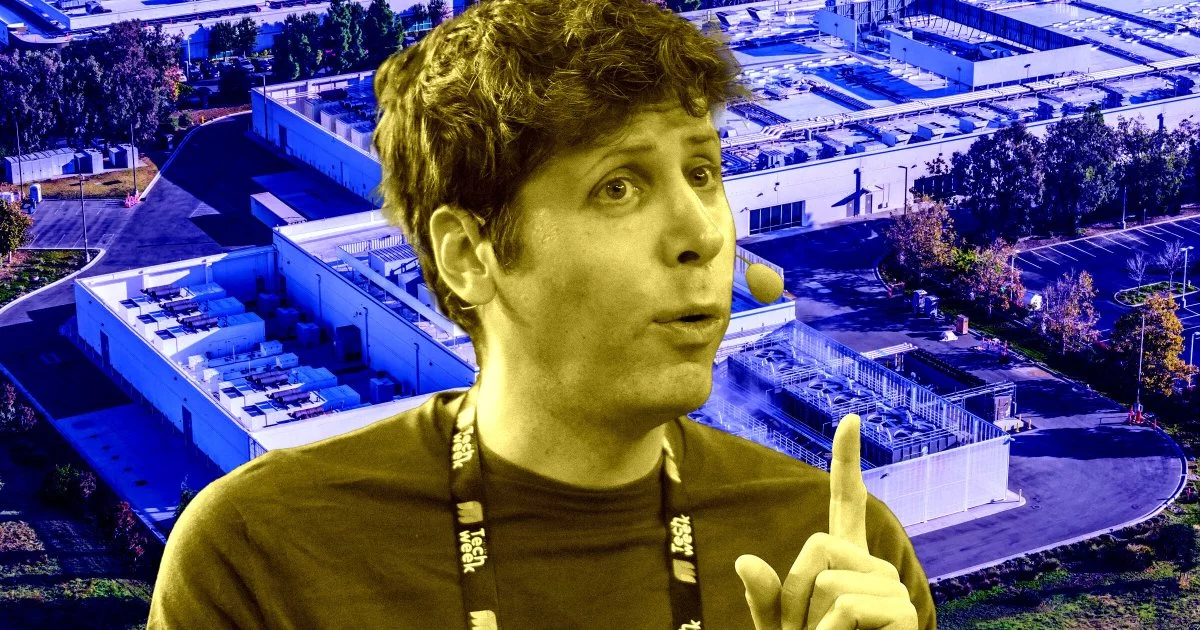

A $130 Billion Stress Test for America’s AI Infrastructure Buildout
Grassroots resistance to data-center construction is no longer a local zoning footnote—it is emerging as a material constraint on the U.S. artificial intelligence supply chain. With roughly $130 billion in planned data-center projects at risk by early 2026, the industry is confronting a reality that Silicon Valley has historically tried to route around: compute is physical, and physical infrastructure requires permission, power, water, land, and durable community consent.
This is why the public narrative is shifting. Where some technology leaders previously warned of AI “falling behind” without rapid buildout, a more optimistic framing is taking hold—one that positions data centers as civic assets enabling fraud prevention, clean-energy optimization, and innovation-led productivity. The messaging pivot is understandable: when projects face permitting friction and political scrutiny, the argument must move from “we need this” to “you benefit from this.”
Yet the stakes are not merely reputational. Delays and cancellations ripple outward:
- Model training timelines stretch when hyperscale capacity is constrained.
- Cloud pricing and availability tighten when supply growth lags demand.
- Regional economic development plans tied to data-center tax bases become uncertain.
- U.S. competitiveness narratives collide with local concerns about grid strain and land use.
The result is an increasingly visible tension between the tech sector’s long-horizon ambitions and the near-term realities of democratic governance, infrastructure economics, and environmental accountability.
From Hyperscale to Hybrid: The Architecture Shifts Under Community Pressure
Hyperscale data centers remain foundational for training large language models and running high-throughput AI workloads. But as opposition intensifies, the industry is being pushed—strategically and architecturally—toward hybrid designs that distribute compute differently and reduce the perceived burden on any single community.
Several technical trajectories are gaining urgency:
- Edge computing and micro-data centers to place inference closer to users, reducing latency and potentially easing backbone congestion.
- Hybrid cloud architectures that blend centralized training with distributed serving, lowering peak demand on hyperscale campuses.
- Hardware-software co-design that improves performance per watt rather than simply scaling footprint:
– liquid cooling and immersion-cooled racks
– on-chip AI accelerators and workload-aware scheduling
– AI-driven power management and demand-response integration
This is where the credibility line is drawn. Communities are increasingly literate about the tradeoffs: a data center is not just “jobs and innovation,” but also transmission upgrades, substation capacity, water usage, diesel backup generation, and land conversion. If the sector’s response is primarily semantic—renaming facilities as “AI factories” or “energy optimization hubs”—it risks being read as public relations rather than engineering progress.
At the same time, the reliability of AI itself complicates the industry’s attempt to sell a benefits-first story. Productivity gains are real in many workflows, but high-stakes domains—finance, healthcare, agriculture, public services—still face unresolved issues around hallucinations, biased outputs, and weak explainability. A public that is asked to host the infrastructure will increasingly ask: *What governance, validation, and accountability come with it?*
Capital, ESG, and the New Metrics Investors Will Demand
The threatened pipeline underscores how data centers sit at the intersection of capital intensity and political risk. With interest rates elevated, supply chains uneven, and critical inputs (advanced silicon, rare-earth elements, high-voltage equipment) facing price and availability pressure, the financing environment is less forgiving than the era when hyperscale expansion felt inevitable.
For investors and lenders, the question is shifting from “how fast can you build?” to “how resilient is the business case under scrutiny?” That means more emphasis on measurable performance indicators, not aspirational claims. Expect heightened attention to:
- PUE (Power Usage Effectiveness) trends and credible pathways to improvement
- site-level carbon intensity, not just corporate-level offsets
- grid interconnection timelines and utility partnership strength
- community benefit commitments that reduce permitting risk
- auditability of green claims, including third-party verification
This is where ESG becomes less a branding exercise and more a cost-of-capital variable. Reframing data centers as enablers of “clean-energy optimization” may resonate—especially as AI is used for grid balancing and forecasting—but it also increases exposure to greenwashing accusations if emissions reductions are not verifiable and local impacts are not mitigated.
The industry also faces a harder truth: corporate net-zero pledges can collide with local grid realities. Renewable intermittency, transmission bottlenecks, and competition for clean power from other sectors mean that “100% renewable” narratives can look clean on a spreadsheet while communities experience the strain in real time.
The Politics of Permission: Community Consent as a Strategic Asset
The emerging NIMBY dynamic around data centers is not only about aesthetics or noise. It reflects broader unease about concentrated corporate power, opaque decision-making, and the feeling that localities bear the costs while distant shareholders capture the upside.
That changes the playbook. Winning approvals increasingly requires co-creation, not announcements. The most durable projects are likely to be those that treat community engagement as a core capability—supported by stakeholder mapping across municipal officials, activists, labor groups, utilities, and environmental organizations—and translate promises into enforceable agreements.
Practical approaches gaining relevance include:
- transparent dashboards showing energy use, emissions, water impact, and local tax contributions
- workforce development pipelines tied to local hiring and training
- infrastructure investments that leave communities tangibly better off (grid upgrades, resilience projects)
- demand-response and storage commitments that reduce peak load stress
Regulators, too, are sharpening their focus. Environmental impact assessments, energy permitting, and data-center approvals are becoming more rigorous, while geopolitical competition—especially with China and the EU’s data sovereignty agenda—raises the national stakes of domestic buildout. That convergence could lead policymakers to condition incentives on demonstrable public-interest outcomes, blending industrial policy with accountability requirements.
The next phase of U.S. AI infrastructure will not be won by the loudest narrative. It will be won by firms that can prove—with engineering, governance, and transparent metrics—that the benefits of data centers are not abstract, not deferred, and not extracted at the community’s expense.

 By
By

 By
By
 By
By
 By
By


 By
By