
A Costco shopping list that doubles as a playbook for modern grocery economics
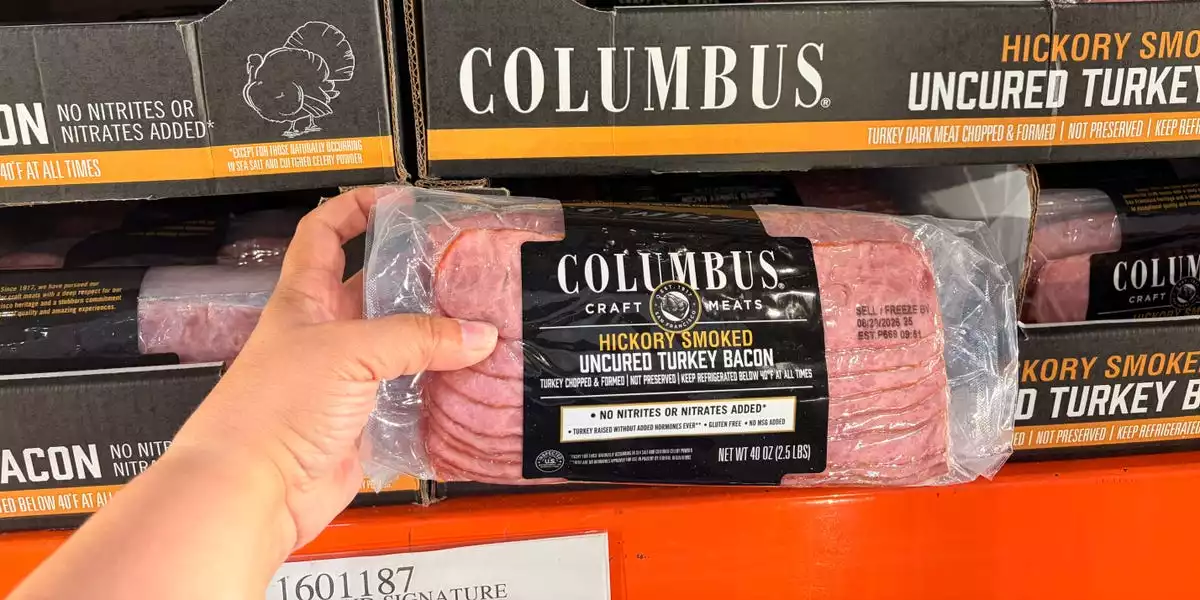
Phoebe Farag Mikhail’s Costco roster reads, on the surface, like pragmatic family meal planning: Kirkland Signature ground beef in bulk chubs, farm-raised tilapia, organic eggs, pita bread, vacuum-sealed turkey bacon, breaded chicken fillets, Amylu Andouille chicken sausages, and a BelGioioso cheese board for entertaining. Yet embedded in that list is a clear signal about where the grocery business is heading—toward high-utility staples, private-label credibility, and operational models that protect value even as food inflation reshapes household behavior.
Her framing—meals landing around $5–$7 per person—captures the current consumer mandate: stretch budgets without surrendering variety, nutrition, or the small “premium” moments that make home cooking feel less like austerity. The mix of proteins (beef, poultry, seafood) and add-ons (pita, cheeses) also reflects a broader shift in how shoppers build baskets: fewer experimental one-offs, more repeatable components that can be recombined across multiple meals.
For business leaders, this is not merely a personal shopping routine. It’s a snapshot of the warehouse-club value proposition at a time when traditional grocers, delivery-first platforms, and consumer packaged goods (CPG) brands are all competing to define “value” on new terms.
Kirkland Signature and the new private-label equation: margin, trust, and loyalty
Costco’s private label, Kirkland Signature, sits at the center of this story because it represents a structural change in retail strategy: private label is no longer a “cheaper alternative.” It is increasingly a brand architecture—one that can match national brands on quality while outperforming them on price-to-performance.
Several forces converge here:
- Value and quality convergence: Strong customer ratings and repeat purchasing behavior suggest Kirkland has crossed the threshold from “generic” to trusted default. That trust is strategically potent: it reduces the perceived risk of buying in bulk and increases willingness to try adjacent categories under the same label.
- Assortment discipline as an advantage: Costco’s limited-SKU model is not just a merchandising choice; it is an operating system. Fewer SKUs can mean higher inventory velocity, clearer demand signals, and better negotiating leverage with suppliers—advantages that become more pronounced in volatile cost environments.
- Private label as margin stabilizer: When consumers trade down, retailers with strong private-label penetration can protect profitability better than those dependent on national-brand promotions. In that sense, Kirkland functions as both a customer loyalty engine and a financial shock absorber.
Mikhail’s list illustrates how private label and select national brands can coexist in a curated “best of” basket—private label for high-frequency staples, national brands for specialty or differentiated items. That hybrid approach is increasingly how value-focused households shop, and it’s how retailers can keep baskets full without eroding trust.
Packaging, cold-chain execution, and why “convenience” is now a supply-chain KPI
Many of the highlighted items—vacuum-sealed turkey bacon, frozen or chilled proteins, bulk meat packaging—underscore a less visible but decisive battleground: packaging innovation and cold-chain resilience. In grocery, “convenience” is often discussed as a consumer benefit; operationally, it is also a lever for waste reduction, shelf-life extension, and labor efficiency.
Key implications for retail operations and CPG supply chains include:
- Vacuum sealing and barrier packaging as waste control: Longer shelf life reduces shrink and gives households more flexibility, particularly for bulk purchases. For retailers, that translates into fewer markdowns and more predictable turns.
- Cold-chain integration as competitive moat: The ability to synchronize procurement, freezing, transport, and in-warehouse storage determines whether low prices remain profitable. Retailers that excel here can offer aggressive pricing on proteins—often the most inflation-sensitive part of the basket—without sacrificing margins.
- Bulk packaging economics: Larger formats can spread logistics and cold-chain costs over more units, improving unit economics. But bulk only works when consumer trust is high and product quality is consistent—another reason private-label credibility matters.
For executives, the takeaway is that packaging and cold-chain capabilities are no longer back-end concerns. They are front-line value drivers that shape pricing power, customer satisfaction, and the feasibility of high-velocity formats.
Inflation, hybrid shopping, and the enduring power of the warehouse experience
Mikhail’s preference for in-warehouse shopping—despite the steady rise of online grocery—highlights a tension shaping the sector: consumers want digital convenience, but they still respond to tactile discovery and immediate utility, especially when buying food.
This is where Costco’s model remains unusually resilient:
- Inflation-induced home cooking pushes households toward repeatable meal components—ground beef, eggs, chicken, fish—paired with flexible “assembly” items like pita bread and cheeses.
- Value elasticity in action: Shoppers may economize on core proteins via bulk and private label while preserving selective indulgences (artisan cheeses, specialty sausages). This “trade down and treat” pattern is becoming a durable behavioral norm rather than a temporary inflation reflex.
- In-store experience as a differentiator: Sampling, visual merchandising, and the sense of “finding” value are difficult to replicate online. Even as e-commerce expands, physical retail that feels efficient and rewarding can retain share—particularly for families optimizing weekly routines.
Strategically, the next phase looks less like a winner-take-all contest between stores and screens and more like a race to perfect hybrid fulfillment: real-time inventory visibility, micro-fulfillment adjacency, and personalization that turns repeat purchases into curated meal solutions. The retailers that win will be those that make value feel both measurable (price-per-meal) and experiential (confidence, discovery, quality)—the same combination Mikhail’s list quietly exemplifies.

 By
By
 By
By
 By
By

 By
By

 By
By
 By
By