
A four‑carbon sugar in the Milky Way’s core—and a sharper lens on cosmic chemistry
Astronomers have reported the first detection of erythrulose, a four‑carbon sugar, inside a dense molecular cloud near the center of the Milky Way—a finding published in *Nature Astronomy* that expands the known inventory of interstellar organics and tightens the link between astrochemistry and prebiotic science. Sugars are not merely biochemical trivia; they sit at the heart of life’s information systems, forming structural backbones and energy pathways that underpin RNA and DNA chemistry.
What makes this result particularly consequential is not only *what* was found, but *how* it was found. The team combined dual radio-telescope observations in Spain with a laser‑vaporization spectroscopic method designed to capture the laboratory “fingerprint” of complex organic molecules. In a field where false positives can arise from crowded spectra and overlapping lines, the ability to isolate a distinctive signature for a specific sugar marks a notable step forward in molecular identification at astronomical distances.
The broader context is equally striking: researchers have now cataloged hundreds of molecules in interstellar environments, and this work—built on a dataset of more than 340 interstellar molecules—signals that the chemical richness of space is not an abstract curiosity but a measurable, mappable domain. For business and technology leaders tracking the maturation of space instrumentation and AI-driven analytics, this is a reminder that astrochemistry is becoming a data-intensive, precision discipline—one increasingly shaped by advances in sensing, computation, and signal processing.
Instrumentation meets AI: why the detection method matters beyond astronomy
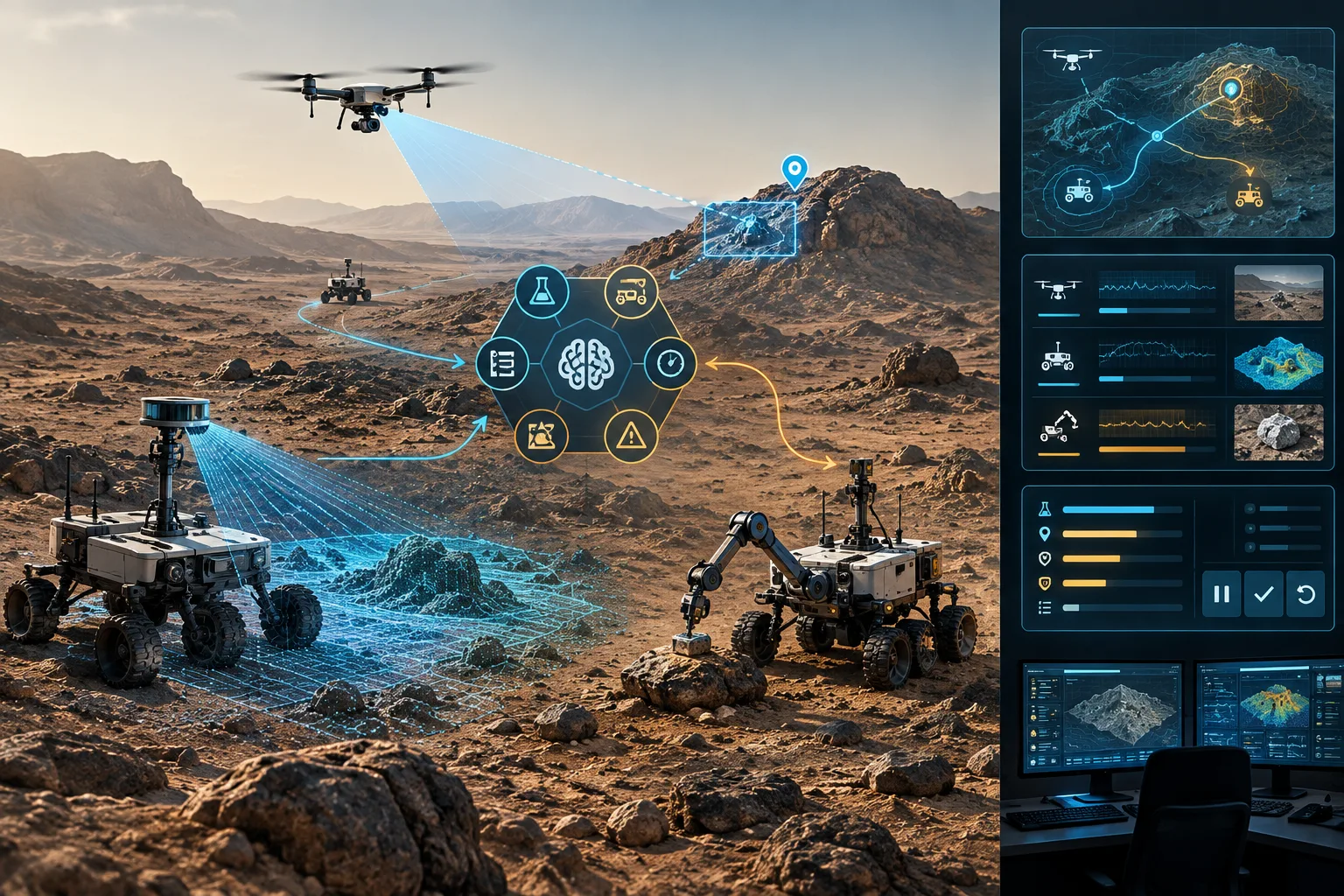
At the center of this discovery is a methodological shift: laser‑vaporization spectroscopy paired with high-sensitivity radio astronomy and machine-learning–assisted spectral deconvolution. The practical challenge is familiar to any industry dealing with weak signals in noisy environments: the “needle” is a faint molecular line; the “haystack” is a dense forest of emissions from many species under varying temperatures and densities.
Several technology implications stand out:
- Remote chemical identification is becoming more exacting and scalable. Laser‑vaporization approaches help generate reliable reference spectra for complex organics—critical for matching telescope observations to real molecules rather than plausible lookalikes.
- AI is moving from optional to foundational in spectral analytics. Machine learning can separate overlapping signatures, quantify uncertainty, and triage candidate molecules faster than traditional manual workflows—an approach analogous to anomaly detection in telecom networks or pattern recognition in medical imaging.
- Data pipelines are the product. As astronomy instruments grow more sensitive, the competitive edge increasingly lies in cloud-native processing, reproducible workflows, and model-driven interpretation—capabilities that map directly onto commercial needs in big-data analytics, edge computing, and high-throughput sensor platforms.
For executives in telecommunications, hyperscale cloud, and industrial sensing, the parallels are direct: the same techniques used to identify a sugar across the galaxy can inform next-generation systems for environmental monitoring, industrial process control, and even biomedical diagnostics where real-time chemical specificity is a premium feature.
A challenge to linear prebiotic models: convergent assembly in the interstellar “factory”
Perhaps the most intellectually disruptive element of the study is what it implies about how sugars form in space. Prevailing models often assume a stepwise growth mechanism—adding carbon atoms sequentially to build larger molecules. Yet the reported absence of three‑carbon sugars alongside the presence of a four‑carbon sugar points toward a different pathway: convergent chemistry, where two C2 building blocks combine to form C4 sugars.
This matters because it reframes interstellar chemistry as something closer to modular assembly than linear construction. In business terms, it resembles a shift from vertically integrated manufacturing to a system where standardized subcomponents combine into higher-order products—often faster, more resilient, and more adaptable to variable conditions.
Strategically relevant analogies emerge for multiple sectors:
- Synthetic biology and advanced materials: Convergent assembly suggests that complex structures can arise reliably from a small set of robust intermediates—an attractive blueprint for designing programmable matter, self-assembling polymers, or modular biochemical pathways.
- Decentralized manufacturing and supply chains: Molecular clouds function like distributed chemical networks, producing complex outputs without centralized control. Companies exploring distributed production, microfactories, or resilient logistics may find conceptual value in how astrochemical systems maintain productivity under extreme constraints.
- R&D portfolio design: If convergent pathways dominate in certain environments, it strengthens the case for investing in platforms that optimize recombination of stable modules rather than chasing long, fragile synthesis chains.
The scientific takeaway is not merely that space can make sugars, but that it may do so through robust, repeatable mechanisms—a property that technology strategists often associate with scalable production systems.
From interstellar clouds to Earth’s early chemistry: investment signals in astrobiology and space resources
The researchers estimate that a cosmic “rain” of up to 50 million tons of erythrulose could have reached early Earth, potentially contributing to the chemical inventory that enabled prebiotic reactions leading toward RNA- and DNA-based life. While such figures inevitably carry modeling assumptions, the directional implication is clear: organic precursors may be widespread and deliverable, not rare and purely terrestrial.
This strengthens the strategic rationale for targeted capability-building across the space economy:
- Spectral-mapping missions and small-sat constellations optimized for organic surveys could become high-leverage infrastructure—useful for science, but also for prospecting and risk reduction in future exploration architectures.
- In-situ resource utilization (ISRU) planning may evolve beyond water and simple volatiles toward capturing and processing extraterrestrial organics for life-support inputs, materials, or fuel precursors—especially relevant for long-duration missions.
- Public-private partnerships gain a clearer narrative: investments in instrumentation, AI analytics, and mission design are not only about exploration prestige, but about building a practical understanding of off-Earth chemical environments.
For markets, the signal is subtle but persistent: as detection improves and molecular catalogs expand, astrobiology becomes less speculative and more operational—a domain where measurement, mapping, and processing technologies can compound into durable advantage. The discovery of erythrulose is, in that sense, both a scientific milestone and a reminder that the next frontier is increasingly defined by those who can turn faint cosmic traces into actionable, high-confidence data.


 By
By

 By
By


 By
By
 By
By