
When personal style becomes professional infrastructure
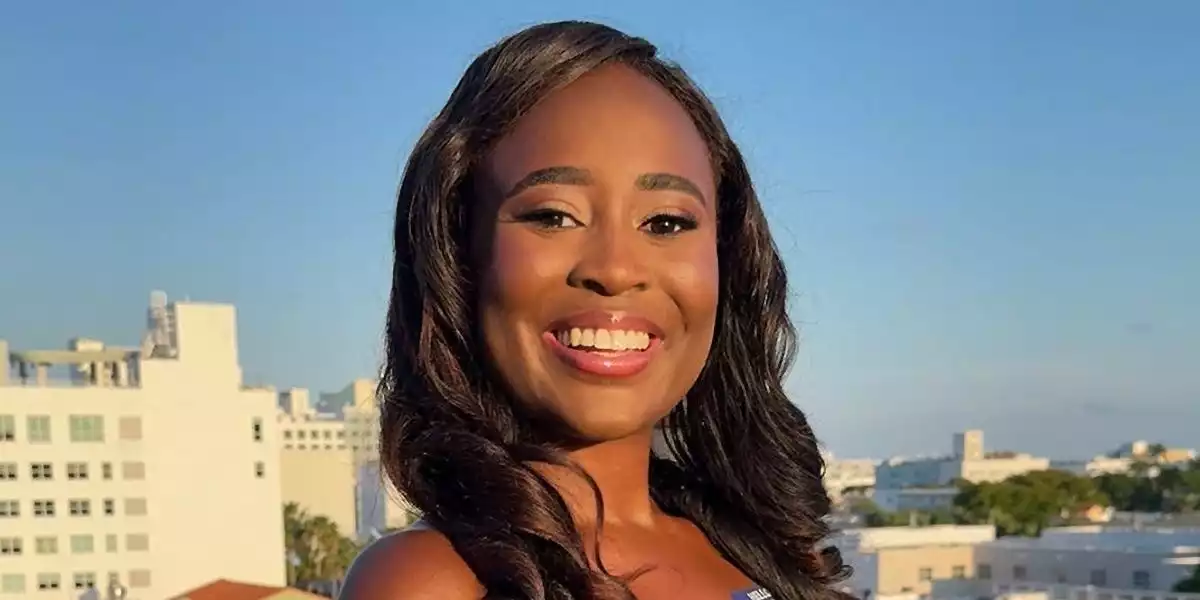
Cierra Desmaratti’s evolution—from a neutral, masculine-coded wardrobe in Deloitte’s Chicago office to an unapologetically feminine presentation in Miami—reads less like a lifestyle anecdote and more like a signal of how the modern knowledge economy is recalibrating around identity, visibility, and cultural fluency. In client-facing industries, “professionalism” has never been purely about competence; it has also been about legibility—how quickly colleagues, clients, and networks can interpret credibility, confidence, and belonging.
What’s changing is the center of gravity. Where corporate norms once rewarded conformity (often aligned with masculine-coded aesthetics), today’s talent market increasingly prizes authenticity as a retention and performance variable. Desmaratti’s choices illustrate a pragmatic reality: personal expression is not merely tolerated; in many environments it is becoming a form of career infrastructure—supporting relationship-building, leadership presence, and psychological safety.
Several dynamics converge here:
- Personal branding is no longer optional in competitive professional services and adjacent sectors; it is a differentiator in crowded internal labor markets.
- Geography and industry microcultures matter: Miami’s social and professional ecosystems can reward expressive style in ways Chicago’s traditional corporate environment may not.
- Visibility carries economic consequences—for individuals funding their own “presentation stack” and for companies that benefit from the downstream brand effects.
The result is a subtle but consequential shift: appearance is increasingly treated as a strategic interface between individual talent and institutional culture.
The “professional appearance economy” and its hidden balance sheet
Desmaratti’s recurring outlay—roughly $2,000 per quarter on hair care, apparel, makeup, and styling education—puts a number on what is often invisible in corporate discussions: the post-tax cost of employability signals. While firms invest heavily in training, tools, and benefits, many professionals privately finance the aesthetic and grooming standards that shape first impressions, client confidence, and perceived seniority.
Scaled across millions of professionals, this becomes a sizable, under-measured market: a multi-billion-dollar professional appearance economy spanning salons, premium haircare, cosmetics, wardrobe services, and image education. For business leaders and investors, the implications are concrete:
- Consumer demand is structurally supported by work, not just leisure. Even in hybrid environments, video calls and in-person events sustain appearance-related spending.
- B2B2C partnership opportunities are underexploited: corporate affinity discounts, employer-negotiated benefits with salons or beauty retailers, and curated styling services could reduce employee burden while strengthening employer brand.
- The market is fragmenting toward specialization—away from one-size-fits-all beauty and toward texture-, tone-, and lifestyle-specific solutions.
Haircare is particularly instructive. Desmaratti’s embrace of natural 4C hair textures after prior workplace barriers highlights how grooming is simultaneously personal and political: it can be an identity anchor, a time-management issue, and a proxy for inclusion. For manufacturers and service providers, 4C-focused innovation—moisture retention, breakage prevention, protective styling support—represents a defensible niche in an otherwise commoditized category. For employers, it underscores a basic truth: when employees feel forced to “manage” identity to be accepted, the organization absorbs the cost through disengagement, attrition, and reduced discretionary effort.
Networking, trust, and the new mechanics of professional capital
The creation of The Rising Visionaries networking series adds a second layer to the story: style is not only self-expression; it can be a social technology. In relationship-driven economies—consulting, finance, tech partnerships, media, real estate—trust is often built through repeated micro-signals: confidence, attention to detail, cultural awareness, and the ability to host or convene.
Experiential networking formats increasingly reward those who can translate personal brand into community gravity. Desmaratti’s approach suggests a model where fashion and beauty are not superficial add-ons but facilitators of rapport—a way to make professional spaces feel more human, more memorable, and more reciprocal.
For corporate leaders, the strategic takeaway is not that employees should spend more on appearance; it is that organizations should better understand how professional capital is formed today:
- Affinity and alumni networks are being supplemented by curated micro-communities built around identity, ambition, and shared aesthetics.
- Employer brand is co-produced: employees’ public-facing presence—online and offline—feeds back into how firms are perceived by clients and recruits.
- Authenticity scales trust: when professionals feel permission to show up as themselves, they often become more effective ambassadors and connectors.
This is also where policy meets culture. Dress codes that default to restrictive norms can inadvertently suppress the very social energy companies later try to manufacture through engagement programs. The more modern approach is an enabling framework: clear standards for appropriateness and safety, paired with broad latitude for self-expression.
Beauty tech, AI styling, and the next wave of workplace benefits
Technology is quietly turning personal presentation into a data-informed, platform-mediated experience. The rise of AI-driven styling, computer vision, and augmented reality “try-on” tools is lowering the friction of experimentation—allowing professionals to test wardrobe, makeup, and hair options before committing time and money. In parallel, digital marketplaces and micro-influencer ecosystems are democratizing image consulting through peer reviews, live virtual sessions, and niche expertise.
This creates a plausible next step for employers competing in tight labor markets: integrating appearance-related support into the broader well-being and inclusion stack, not as vanity, but as confidence and productivity infrastructure. Emerging directions include:
- Virtual styling and AR try-before-you-buy partnerships embedded in employee perks
- On-site or near-site salon services for high-density offices and corporate campuses
- Inclusion analytics that capture sentiment around authenticity and psychological safety, treating “comfort showing up as oneself” as a measurable cultural indicator
- Hybrid event platforms that blend in-person presence with digital layers designed to facilitate introductions and reinforce personal brand
Desmaratti’s case ultimately spotlights a pragmatic reality for the future of work: as the boundary between personal identity and professional performance continues to blur, the organizations that win will be those that treat self-expression not as a compliance problem, but as a talent asset—one that compounds through confidence, connection, and cultural credibility.

 By
By
 By
By
 By
By
 By
By
 By
By


 By
By