
A chicken-salad taste test that quietly rewrites the mayonnaise playbook
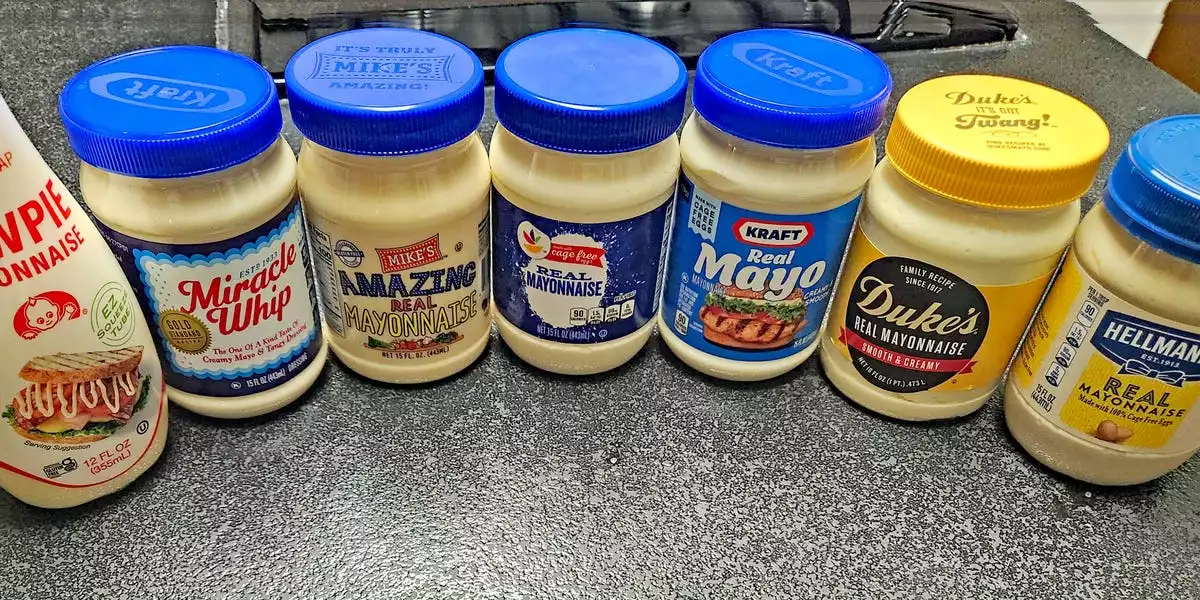
A comparative tasting of seven widely available mayonnaise-style products—Hellmann’s, Kewpie, Mike’s Amazing, Giant’s store brand, Duke’s, Kraft Real Mayo, and Kraft Miracle Whip—might sound like light culinary entertainment. Yet the results, generated in a standardized chicken-salad application, read like a compact case study in consumer packaged goods (CPG) disruption, where legacy assumptions about “category leaders” increasingly collide with value economics, health signaling, and data-driven product design.
The headline outcome was unexpected: Kraft Miracle Whip—often treated as an adjacent “dressing” rather than a pure mayonnaise—ranked first, praised for a tangy-sweet seasoning profile and a lower-fat positioning that aligned with the recipe’s needs. Kraft Real Mayo followed in second, while Giant’s private-label product placed third, underscoring how store brands can compete on sensory performance, not merely price. Meanwhile, incumbents Hellmann’s and Duke’s landed mid-pack, and premium imports Kewpie and Mike’s Amazing trailed—suggesting that bolder, more distinctive flavor signatures can become liabilities when the application demands broad compatibility.
For business and technology leaders, the deeper story is not which jar “won,” but what the ranking reveals about how consumers evaluate taste, value, and brand promises in 2026’s grocery environment—and how quickly those evaluations can shift.
Why “hybrid condiments” are winning: flavor architecture meets modern palates
Miracle Whip’s top placement highlights a growing consumer appetite for hybrid condiments—products that blur traditional boundaries and deliver a “complete” flavor system rather than a neutral base. In a chicken-salad context, a seasoning-forward formulation can reduce the need for additional sugar, acid, or spices, effectively functioning as both emulsion and flavor engine.
This is where technology and sensory science increasingly shape the competitive field. Large CPG players and ambitious private-label programs are investing in:
- AI-assisted sensory analytics to correlate ingredient ratios with preference clusters (sweetness tolerance, acid balance, mouthfeel expectations)
- Predictive formulation tools that simulate emulsion stability and flavor release over time (especially important in refrigerated, make-ahead recipes)
- Micro-segmentation strategies that treat “mayonnaise buyers” not as a monolith, but as multiple cohorts—health-leaning, nostalgia-driven, culinary-adventurous, price-sensitive, and convenience-first
The lower ranking of Kewpie and other premium products in this specific application doesn’t necessarily indicate inferior quality; it suggests a mismatch between distinctive signature flavor and the test’s goal: a broadly appealing chicken salad. In other words, differentiation can be a strength in one use case and a drawback in another—an insight that matters for portfolio strategy, packaging claims, and recipe-led marketing.
Brand equity under inflation: private label credibility and the loosening grip of loyalty
Giant’s strong showing at a fraction of national-brand pricing reinforces a structural shift: private label is no longer a compromise purchase. Retailers have improved formulation capabilities, supplier partnerships, and quality control, while shoppers—still navigating elevated food costs—are more willing to experiment.
This taste test reflects several market realities:
- Elastic brand loyalty: Even devoted buyers of legacy leaders like Hellmann’s or Duke’s may switch when a challenger better fits a specific need (lower fat, sweeter profile, “already seasoned,” or simply cheaper).
- Retail margin strategy: Private label is a lever to protect profitability when national brands raise prices to offset input costs. A high-performing store brand also strengthens retailer negotiating power with CPG suppliers.
- Perceived quality convergence: As store brands narrow the sensory gap, the premium that brand equity commands must be justified with clearer functional benefits—cleaner labels, better oils, improved nutrition, or superior culinary performance in targeted applications.
For national brands, the strategic risk is not a single taste test—it’s the broader pattern of trial behavior. Once consumers learn that a store brand can deliver comparable performance, the category becomes more contestable, and marketing must work harder to re-establish differentiation beyond familiarity.
The economics behind the jar: supply chains, margins, and health-forward reformulation
Mayonnaise-style products sit at the intersection of commodity volatility (oils, eggs), manufacturing scale, and retailer pricing pressure. Large CPG companies benefit from procurement and distribution scale, but they also face the challenge of defending share while managing cost inflation and promotional intensity. Smaller artisan and import brands, meanwhile, can struggle to earn repeat purchase unless they clearly communicate why they cost more—through provenance, ingredient claims, or channel exclusivity.
Health and regulatory dynamics add another layer. Miracle Whip’s lower-fat appeal signals the continuing power of nutrition cues, even in indulgent categories. Looking ahead, competitive advantage may increasingly come from:
- Reformulation with “cleaner” emulsifiers and simplified ingredient decks
- Plant-based or egg-reduced alternatives targeting flexitarian and vegan shoppers
- Transparent labeling and sourcing narratives as regulators and consumers scrutinize additives and processing
The test also hints at a marketing truth: consumers often reward products that reduce decision friction. A condiment that tastes “finished” can outperform a technically superior base product if it makes home cooking feel easier and more reliable.
For CPG portfolio managers and retailers alike, the lesson is pragmatic: the mayonnaise aisle is no longer a stable hierarchy. It is a fast-evolving contest shaped by sensory optimization, value engineering, and health signaling, where even long-established leaders can be outperformed by a product once dismissed as category-adjacent—and where the next disruption may come not from a new brand, but from a smarter formulation and a sharper understanding of what “good” means in the recipe consumers actually make.

 By
By
 By
By

 By
By

 By
By
 By
By