


A rare inland tornado exposes the new geography of extreme weather risk in China
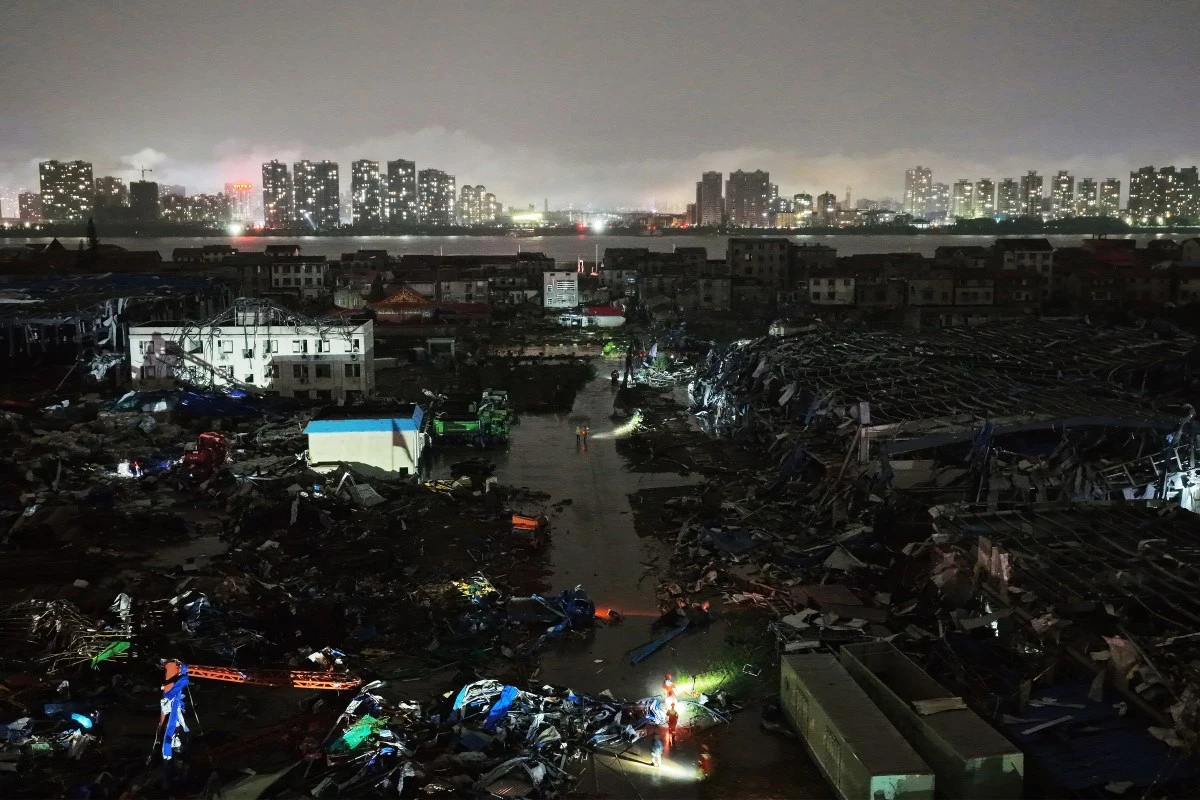
Late Monday night, Huanggang in Hubei province was struck by a powerful tornado with reported winds reaching 93 mph, an intensity more commonly associated with coastal typhoons than inland central China. Authorities reported at least 11 deaths, more than 331 injuries, and roughly 4,800 homes affected—a stark toll amplified by the region’s historically low exposure to tornado events. One extraordinary detail—a 30-year-old man reportedly pulled from a 12th-floor apartment by the wind and surviving—has become a visceral symbol of the storm’s force and the thin margin between catastrophe and chance.
Meteorologically, the tornado was linked to the remnants of Supertyphoon Maysak, underscoring a complex and increasingly consequential pattern: tropical systems do not always “end” at landfall. Their residual energy and moisture can interact with mid-latitude dynamics, generating severe convective outbreaks far from the coastline. For business, technology, and policy leaders, the Huanggang event is less an anomaly to be filed away than a signal that tail-risk weather—low-probability, high-impact events—may be expanding into regions that have not historically priced, planned, or built for it.
This matters because preparedness is not just an emergency-management issue; it is an economic variable. When extreme weather arrives outside traditional risk zones, the damage is often compounded by gaps in detection, warning, building standards, insurance penetration, and supply-chain contingency planning.
The technology gap: detection, alerts, and resilient infrastructure as competitive necessities
Hubei’s experience highlights a familiar challenge in disaster technology: the difference between knowing a storm exists and knowing where it will strike, when, and with what intensity—in time to act. Tornadoes are especially unforgiving because lead times can be measured in minutes, and localization is critical.
Several technology domains stand out as immediate priorities:
- Early-warning and sensing infrastructure
– Integrating radar, satellite feeds, local weather stations, and IoT sensor networks can improve detection of fast-forming severe weather.
– Machine-learning nowcasting models can help translate raw meteorological signals into actionable, neighborhood-level alerts, improving both speed and precision.
– The operational goal is not perfect prediction, but usable lead time—even 10–15 minutes can materially reduce casualties and property loss when alerts are trusted and targeted.
- Smart-grid and building-resilience technologies
– High-rise and dense urban environments require more than stronger materials; they require instrumented resilience.
– Structural Health Monitoring (SHM)—using fiber-optic sensors, wireless vibration sensors, or embedded strain gauges—can provide continuous assessment of wind stress and structural integrity.
– Coupled with building management systems, SHM can enable automated responses such as elevator lockouts, controlled access, localized power isolation, and evacuation guidance.
- Catastrophe modeling and climate analytics
– Events that blend typhoon remnants with inland convective dynamics have historically been under-modeled.
– Insurers, reinsurers, and risk engineers will likely accelerate investment in high-resolution, AI-driven catastrophe models that better capture compound hazards and “non-traditional” tornado geographies.
The broader implication is that resilience technology is shifting from a compliance expense to a strategic asset—one that can reduce downtime, protect labor forces, and stabilize balance sheets.
Economic shockwaves: supply chains, reconstruction demand, and insurance repricing
Huanggang’s location along key inland logistics corridors gives the tornado a significance beyond local tragedy. Central China supports dense networks of manufacturing and distribution—automotive components, electronics, pharmaceuticals, and broader industrial supply chains. When a severe event disrupts transport links, warehousing, and workforce availability, the impact can propagate quickly.
Key economic and industry effects to watch include:
- Regional supply-chain disruption
– Damage to roads, storage facilities, and local utilities can force inventory rerouting, raise short-term logistics costs, and create production scheduling volatility.
– Firms with limited multi-node redundancy may face higher exposure, particularly where just-in-time practices dominate.
- Reconstruction and construction-tech acceleration
– A surge in demand is likely for building materials, prefabricated housing, engineering services, and rapid-deployment infrastructure.
– Procurement may increasingly favor vendors offering turnkey climate-resilient solutions, potentially catalyzing partnerships, joint ventures, and selective M&A in construction technology and materials science.
- Insurance and reinsurance market tightening
– Even in markets where property-loss coverage is still maturing, a high-profile inland wind event can harden underwriting assumptions.
– Expect pressure toward premium increases, tighter terms for wind coverage, and greater scrutiny of building standards and mitigation measures.
– Parametric insurance—triggered by measurable conditions such as wind-speed thresholds or satellite-verified damage proxies—may gain traction as businesses seek faster liquidity and simpler claims pathways.
For CFOs and risk managers, the message is pragmatic: the cost of capital increasingly reflects operational resilience, and insurers are becoming de facto auditors of climate adaptation.
Strategy and governance: from “black swan” framing to institutionalized resilience
The most consequential outcome of Huanggang may be institutional rather than meteorological. Regions that have not historically budgeted for tornado preparedness often lack the governance muscle memory—alert protocols, public drills, resilient zoning, and cross-agency coordination—that reduces loss when minutes matter.
Several strategic shifts appear likely:
- Climate-risk governance embedded into planning
– Provincial and national authorities may expand stress testing for public infrastructure and urban development, reflecting a wider hazard envelope than historical norms suggest.
- Public-private operating models for rapid resilience
– Reconstruction pressure tends to accelerate collaboration between municipalities, engineering firms, and technology providers.
– Platforms such as digital twins and urban-resilience dashboards can help coordinate damage assessment, resource allocation, and restoration sequencing.
- Workforce readiness and scalable training
– Multi-hazard readiness increasingly depends on trained responders and informed citizens.
– VR/AR training simulators can enable repeatable, scenario-based preparation for first responders and community volunteers, improving performance under real-world stress.
Huanggang’s tornado is a reminder that extreme weather is not only intensifying—it is also becoming more operationally surprising. The organizations that treat this as a one-off will rebuild to yesterday’s assumptions; the ones that treat it as a data point in a widening distribution of risk will build the sensing, modeling, and governance capacity to stay functional when the next “unexpected” storm arrives.

 By
By
 By
By
 By
By



 By
By








