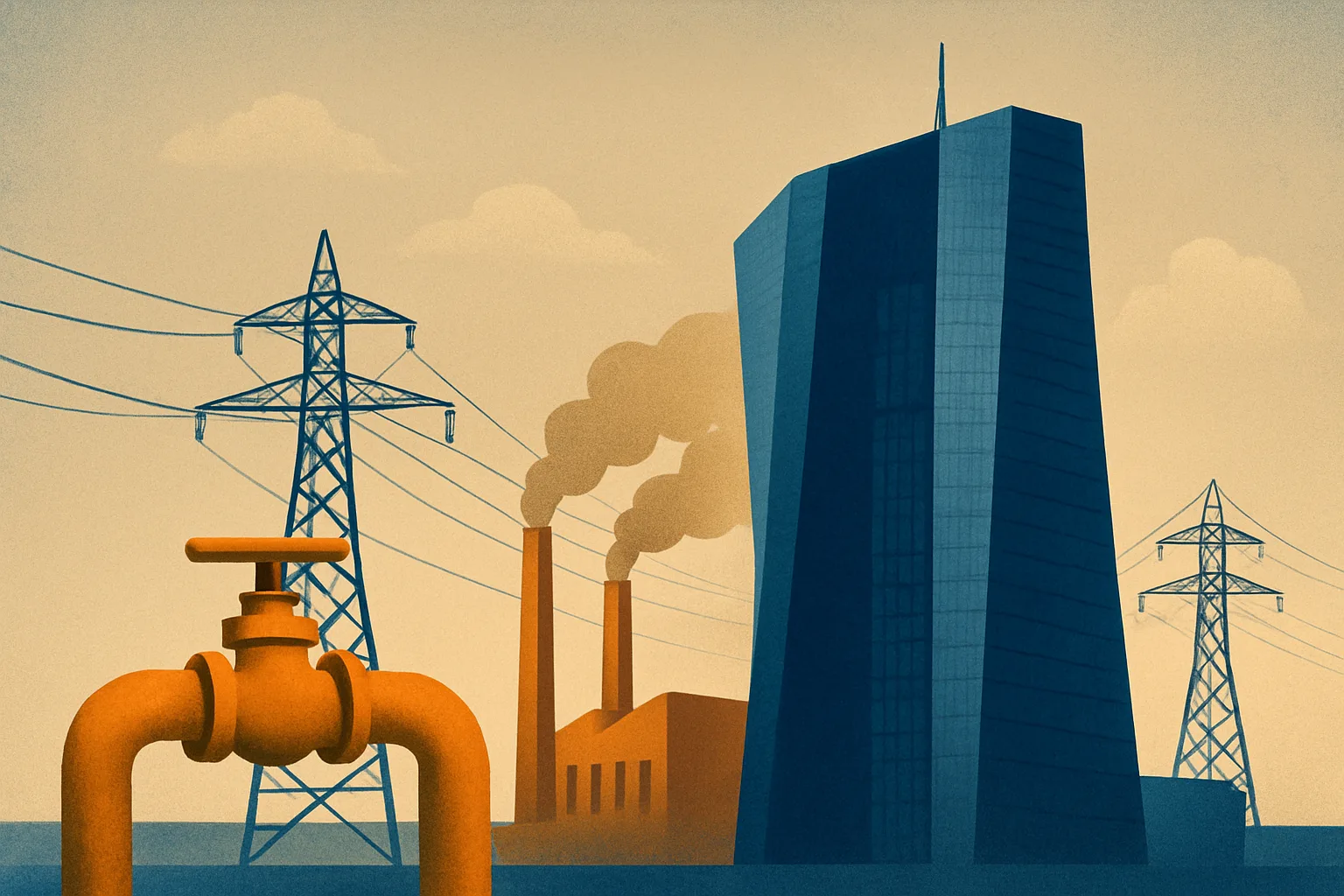

A politically charged entrant tests the economics of the U.S. gas pump
The debut of the Freedom Fuel Network—a privately run venture publicly associated with former President Donald Trump—has landed in a sector where branding typically takes a back seat to logistics, wholesale contracts, and razor-thin margins. With two newly launched stations in Pennsylvania and New Jersey advertising unleaded gasoline at a flat $3.47 per gallon, the company is positioning itself as both a consumer bargain and a symbolic rebuttal to the broader inflation-and-energy narrative dominating U.S. politics.
What makes the move notable is not merely the price point—well below the U.S. average in many recent readings—but the deliberate simplicity of the offer: a single, headline-ready number that travels easily across social media, local news, and political ecosystems. In fuel retail, where price changes can occur multiple times per week (or even per day), a fixed, attention-grabbing rate functions as a message as much as a market signal.
Early evidence suggests the message is being heard. Competitors reportedly adjusted prices quickly in the immediate vicinity, underscoring how even a small footprint can create outsized impact when the product is a high-frequency household purchase and the price is displayed in six-inch numerals at the roadside.
Loss-leader gasoline and the hard math of margin compression
Fuel retail is famously unforgiving: station operators often rely on convenience-store sales, prepared food, beverages, and loyalty programs to generate meaningful profit, while gasoline itself can be a low-margin traffic driver. Freedom Fuel’s pricing strategy, however, appears to go beyond the typical “competitive by a few cents” playbook and into territory analysts describe as loss-leader behavior—common in big-box retail, far less common when the input commodity is globally priced and volatile.
Industry commentary led by GasBuddy’s Patrick De Haan points to the central economic tension: with crude oil and wholesale gasoline costs near multi-year highs, a retail price of $3.47/gal can imply negative gross margins in many regional supply conditions—especially absent:
- Vertical integration (ownership or preferential access across refining, distribution, or terminals)
- Hedging programs (futures, swaps, or structured supply contracts that lock in costs)
- Scale efficiencies (network density that reduces per-site logistics and marketing costs)
This is where the story shifts from “cheap gas” to “who is paying for the cheap gas?” If the pump price is structurally below replacement cost, the gap must be closed somehow—through cash injections, promotional subsidies, cross-subsidization from other revenue streams, or a short-term strategy designed to buy attention rather than profitability.
Freedom Fuel’s public posture adds another layer: it has been promoted through channels associated with Trump’s orbit, yet it is not a government program. Filings reportedly provide limited disclosure about financial backers or subsidy mechanisms. That opacity may be commercially survivable in many consumer categories; in fuel—where pricing is transparent, costs are benchmarked, and competitors can quickly infer economics—it invites scrutiny.
Local price wars, elastic demand, and the convenience-store battlefield
The immediate competitive response—such as warehouse clubs and other nearby retailers adjusting prices—highlights a key reality: gasoline demand is highly price elastic at the margin. Drivers will reroute for savings that can be as small as a few cents per gallon, particularly when the price differential is visible and the purchase is frequent.
If Freedom Fuel sustains undercutting, the likely near-term effects are localized but meaningful:
- Micro-regional price wars that compress margins for incumbents
- Greater reliance on non-fuel profit pools (foodservice, car wash, tobacco, beverages, parcel lockers)
- Increased emphasis on loyalty ecosystems that bundle discounts with in-store spend
- Potential re-acceleration of investments in EV charging and forecourt modernization as retailers diversify revenue
For established chains, the strategic question is whether this is a temporary promotional flare or the beginning of a subsidized, brand-driven network expansion. The answer changes the rational response. Matching a below-cost price for too long can damage earnings; refusing to match can concede traffic and ancillary sales.
This is also where the venture’s patriotic branding and political pedigree matter operationally. In a commodity market, differentiation is hard. A politically resonant identity can function as a loyalty program without an app—at least for a segment of consumers. That dynamic, if replicated, could encourage other high-profile figures to experiment with politically branded commodities and services, shifting competitive pressure from pure price competition toward identity-based purchasing.
Transparency, regulatory exposure, and the emerging playbook of “political commerce”
Freedom Fuel’s arrival also spotlights a broader governance issue: the blurring of public-private perception. Even if the enterprise is legally private, the association with a former president and the use of political-era channels can create expectations—among supporters and critics alike—about accountability, disclosure, and intent.
If questions intensify about whether losses are being financed through donor-linked capital, campaign-adjacent ecosystems, or undisclosed third-party support, the venture could attract attention from entities such as:
- State attorneys general (consumer protection and business practices)
- The Federal Election Commission (if allegations arise about political finance entanglement)
- The IRS (if nonprofit or pass-through structures are alleged to be involved)
For executives watching from the sidelines, the episode is less about one price sign in two states and more about a new competitive archetype: a brand-first entrant using attention economics to disrupt a commodity market. Defending against that kind of disruption increasingly requires capabilities that look more like tech than traditional fuel retail—real-time pricing engines, demand forecasting, inventory optimization, mobile payments, and targeted promotions—because the battlefield is as much data-driven as it is physical.
Whether Freedom Fuel becomes a durable network or a short-lived spectacle will hinge on a single determinant: can it reconcile its headline price with the realities of wholesale cost curves without relying on indefinite external support? Until that mechanism is clearer, the venture will remain a compelling case study in how politics, pricing, and platform-style branding can collide at America’s most visible point of sale.

 By
By

 By
By
 By
By
 By
By
 By
By

 By
By