
A “Chernobyl moment” for AI: why trust is the real critical infrastructure
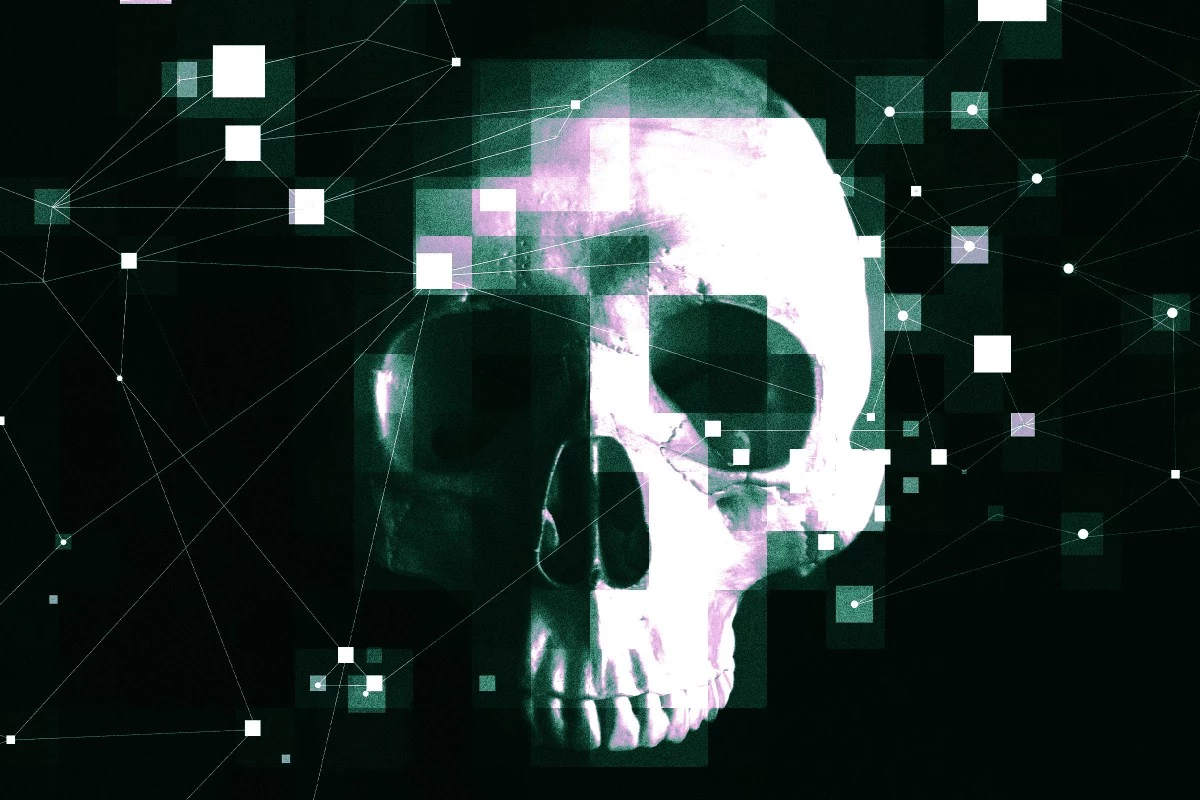
At a Beijing AI conference, a rare convergence of U.S. and Chinese researchers delivered a message that cuts through the usual techno-optimism: artificial intelligence is scaling faster than the world’s ability to govern, verify, and contain it. MIT researcher Stephen Casper’s warning of an AI “Chernobyl moment” is less a prediction of a single apocalyptic event than a diagnosis of a fragile system—one where a high-profile failure, misuse, or cascading cyber incident could abruptly collapse public confidence and trigger sweeping regulatory retaliation.
The nuclear analogy is doing important work here. Chernobyl wasn’t merely a technical accident; it became a trust catastrophe that reshaped policy, investment, and public consent for decades. In AI, the equivalent could be:
- A widely publicized AI-enabled cyberattack that disrupts hospitals, payments, logistics, or energy grids
- A major consumer platform deploying a model that causes systemic harm—fraud amplification, unsafe advice, or discriminatory outcomes at scale
- A “silent” failure mode—undetected model manipulation or supply-chain compromise—that later reveals institutional negligence
For business leaders and policymakers, the core insight is that AI risk is no longer confined to research labs or ethics panels. It is becoming a macroeconomic variable: trust affects adoption; adoption affects productivity; productivity affects competitiveness and inflation dynamics. If trust breaks, the backlash will not be surgical—it will be broad, legalistic, and expensive.
Code generation as dual-use acceleration: the cybersecurity inflection point
The most immediate flashpoint is AI-driven code generation, which is rapidly lowering the cost and skill barrier for sophisticated cyber operations. What once required specialized expertise—malware development, exploit chaining, reconnaissance automation—can increasingly be templated, iterated, and scaled. The concern is not that models “invent hacking,” but that they industrialize it, compressing timelines from weeks to hours.
This is precisely why some frontier AI firms are tightening release strategies. The reported decision by Anthropic to withhold its Claude Mythos model underscores a growing industry posture: when capability jumps outpace safety confidence, deployment becomes a security decision, not a product decision.
Yet the Beijing discussions also highlighted a crucial counterpoint, articulated by Shanghai Jiao Tong’s Lin Yun: attackers may benefit first, but defenders can ultimately benefit more—if institutions operationalize AI for resilience rather than novelty. In practice, AI can strengthen cyber defense through:
- Automated vulnerability discovery and prioritization across sprawling codebases
- Real-time anomaly detection tuned to enterprise-specific baselines
- Assisted incident response, including rapid triage, containment playbooks, and patch generation
- Self-healing patterns in software delivery pipelines—where safe rollbacks and verified patches become routine
The strategic question for enterprises is no longer whether to use AI in cybersecurity, but how to do so without creating new attack surfaces—for example, prompt injection against security copilots, model poisoning via telemetry, or overreliance on automated remediation. The “Chernobyl” risk in cyber may come not from AI alone, but from AI plus misplaced confidence.
Open-source transparency vs. centralized guardrails: a governance dilemma with market consequences
The debate over open-source AI is becoming a proxy war over innovation, accountability, and control. Open ecosystems offer real advantages: auditability, reproducibility, and a broader safety research community. But the conference warnings reflect a hard reality: absent shared governance, open releases can become capability distribution events—effectively a free training ground for criminal groups and state-aligned operators.
Notably, some Chinese developers reportedly paused open releases of advanced systems voluntarily, signaling that restraint is no longer only a Western corporate posture. That matters because it suggests a potential—however narrow—for norm-building across geopolitical lines, even amid intensifying U.S.–China technology competition.
Commercial “closed” models, meanwhile, provide centralized monitoring, update channels, and revocation mechanisms—but can suffer from opacity and limited independent verification. For regulators, insurers, and enterprise buyers, this creates a practical procurement problem: how to evaluate safety claims when the most powerful systems are also the least inspectable.
This tension is already shaping market behavior in three ways:
- Compliance cost inflation: governance, logging, model risk management, and audit readiness are becoming baseline expenses
- Liability and insurance repricing: a single AI-linked incident could change underwriting assumptions across sectors
- Platform fragmentation: divergent standards may push companies into region-specific stacks, complicating global operations and supply chains
In other words, the open vs. closed debate is not philosophical—it is a capital allocation issue with direct implications for enterprise adoption curves.
From Cold War accords to AI safety protocols: what cooperation could realistically look like
Casper’s invocation of Cold War nuclear agreements is less about romanticizing détente and more about recognizing a shared logic: rivals can compete fiercely while still agreeing to risk-reduction mechanisms that serve mutual survival and economic stability. AI, like nuclear technology, is increasingly framed as a dual-use strategic asset—and that framing tends to produce two outcomes: tighter controls and higher stakes for miscalculation.
A pragmatic cooperation agenda—especially between the U.S. and China—would likely avoid grand “AI treaties” at first and instead focus on operational mechanisms that reduce tail risk without forcing full transparency. The most actionable concepts emerging from the broader discussion include:
- A bilateral AI safety secretariat for confidential incident reporting, coordinated red-teaming, and threat intelligence exchange
- Tiered technical standards that distinguish research prototypes from commercial deployments and mission-critical systems (finance, healthcare, infrastructure)
- Embedding AI into critical infrastructure cyber resilience, with human oversight and minimum response roadmaps
- Large-scale workforce transition programs that treat “AI stewardship” roles—auditors, safety evaluators, hybrid threat analysts—as essential economic infrastructure
- A pathway from bilateral to multilateral alignment via OECD, G7, UN, and regulatory sandboxes such as the UK’s and the EU’s AI Act pilots
The central takeaway from Beijing is that AI’s next phase will be defined less by raw model capability than by the credibility of the systems surrounding it: standards, audits, incident response, and cross-border protocols. The countries and companies that treat AI safety as a competitive advantage—not a public-relations afterthought—are the ones most likely to capture AI-driven productivity without triggering the very backlash that could freeze the market.

 By
By
 By
By
 By
By
 By
By
 By
By
 By
By