


When Wi‑Fi Optimization Becomes Ambient Identification
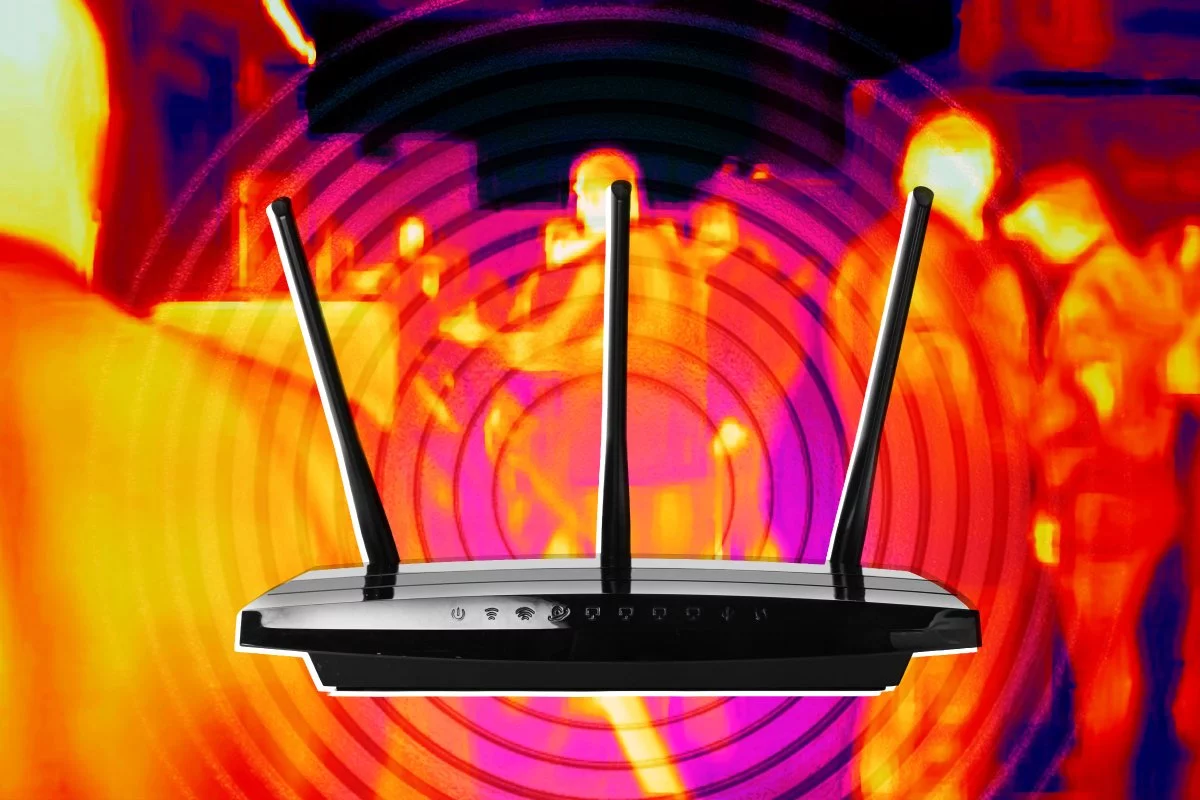
Research from the Karlsruhe Institute of Technology (KIT) lands with an uncomfortable message for the connected economy: a feature designed to make Wi‑Fi faster and more reliable—beamforming—can be repurposed into a high-fidelity identification tool. The mechanism at the center of the finding is beamforming feedback information (BFI), a stream of radio-channel feedback that helps routers steer signals toward devices. KIT’s work shows that these feedback patterns can be harvested and analyzed with machine learning to infer identity with startling precision.
In controlled conditions, the reported identification accuracy reaches up to 99.5% across 161 volunteers. More revealing is what happens when the scenario becomes less “lab-like”: even when individuals change their gait or carry objects, identification still holds at 50–60%, a range that remains operationally useful for tracking and correlation—especially when combined with other signals such as location, time, or access logs.
The most commercially significant detail is not merely the accuracy; it is the accessibility. KIT’s approach leverages BFI that can be captured without associating to the Wi‑Fi network and without installing software on the target device. That shifts the risk profile from “specialized attack” to scalable ambient sensing, turning everyday routers into potential passive surveillance infrastructure—often without the knowledge of owners, occupants, or visitors.
The Technical Pivot: From Radio Reflections to Biometric-Like Fingerprints
Beamforming depends on continuous feedback about how the environment shapes radio propagation. Those environmental effects—reflections, absorption, scattering—are influenced by walls, furniture, and human bodies in motion. KIT’s key contribution is demonstrating that these distortions can encode stable, person-linked signatures tied to physical attributes such as height, limb length, posture, and movement dynamics.
Several aspects make this development particularly disruptive for Wi‑Fi privacy and security:
- BFI is a byproduct of normal operation, not an exotic diagnostic stream. That means the “sensor” is already deployed at scale in homes, offices, retail spaces, and public venues.
- Machine learning lowers the barrier to exploitation, converting noisy radio telemetry into classification outputs that can be operationalized by non-specialists.
- No network association requirement undermines a common assumption in wireless security: that meaningful data exposure begins after authentication or connection.
- Comparative novelty versus prior work: earlier academic efforts (such as approaches leveraging channel state information) often relied on data that is harder to obtain or requires privileged access. KIT’s emphasis on openly obtainable BFI makes the scenario more plausible in real-world settings.
This is the familiar pattern of modern security failures: an optimization feature becomes a leakage channel. Like CPU side-channel episodes (e.g., speculative execution vulnerabilities), the issue is not that engineers ignored security—it’s that performance-centric design choices can create new inference surfaces once AI makes pattern extraction cheap and reliable.
Business, Liability, and Standards: A New Compliance Surface for Router Makers and Enterprises
For manufacturers and enterprise buyers, the KIT findings introduce a risk category that sits awkwardly between cybersecurity, privacy law, and product safety: identity inference without explicit data collection. If a router’s normal emissions can be used to identify individuals, the question becomes whether the device is effectively processing personal data—even if the router vendor never intended it.
The near-term industry implications are likely to cluster around three pressure points:
- Product liability and duty of care
Router vendors may face growing scrutiny over whether “reasonable security” includes protecting BFI against harvesting and inference. As consumer awareness rises, the reputational cost of “invisible sensing” could rival more traditional breach narratives.
- Retrofit economics and firmware realities
If mitigation requires encrypting BFI, obfuscating feedback, or redesigning how beamforming exchanges occur, the industry must confront the installed base. Firmware updates may help in some cases, but hardware constraints and fragmented device lifecycles could leave long tails of exposure.
- Standards and certification dynamics
The most consequential decisions may shift to IEEE 802.11, the Wi‑Fi Alliance, and national telecom regulators. The sector may need a recognizable assurance layer—think a “Wi‑Fi Privacy” certification—that signals protections against inference attacks, not just encryption of user traffic.
For enterprises, the operational takeaway is immediate: Wi‑Fi infrastructure can become a shadow biometric system. That complicates deployments in regulated environments—healthcare, education, workplaces, and venues where consent and notice requirements are stringent. It also raises procurement questions: security questionnaires that focus on WPA3 and patch cadence may no longer be sufficient if radio-layer metadata can be weaponized.
Strategic Misuse Scenarios: From Corporate Tracking to National Security Exposure
The leap from academic result to real-world harm often hinges on incentives. Here, incentives are not hard to imagine. Covert identity inference could support:
- Corporate espionage and executive tracking without cameras, by correlating movement signatures across lobbies, conference areas, or partner sites.
- Insider-threat augmentation, where anonymous presence becomes attributable over time through repeated observation.
- Critical infrastructure reconnaissance, particularly where enterprise Wi‑Fi is pervasive and physical security depends on controlling who is present, when, and where.
Regulatory fragmentation adds another layer. The EU’s GDPR framework is comparatively explicit about personal data and inference, while the United States’ sectoral approach can leave gaps. Multinationals may find themselves navigating inconsistent thresholds for what constitutes personal data when the “data” is radio feedback rather than names, faces, or device identifiers.
What KIT’s research ultimately underscores is a broader market reality: connectivity hardware is now sensing hardware. As AI continues to turn ambient signals into identity, intent, and behavior, the competitive advantage will accrue to vendors and standards bodies that treat privacy as a first-class radio requirement—not a policy document appended after the fact.

 By
By
 By
By
 By
By
 By
By

 By
By
 By
By








