
A satellite subsidy lands in Memphis as AI infrastructure scales at street level
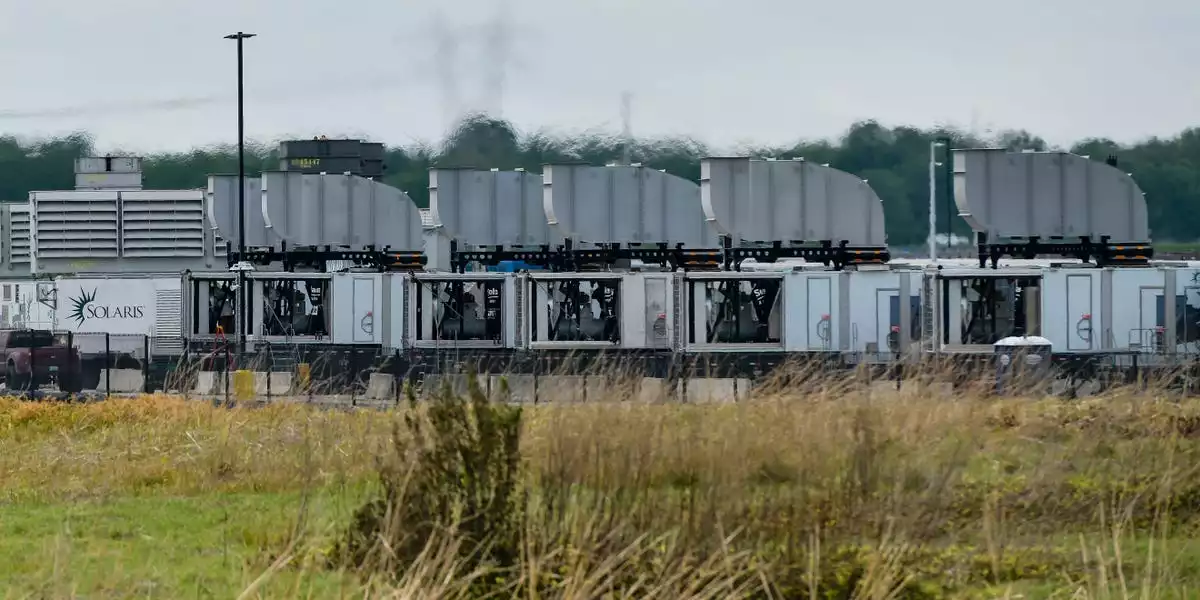
SpaceX’s decision to offer a time-undetermined 50% discount on Starlink for Memphis-area residents—waiving upfront hardware fees and halving monthly service costs for eligible addresses—reads, on its face, like a straightforward affordability play in a market where broadband gaps remain stubbornly real. Yet the timing and framing matter: the promotion was surfaced via xAI Memphis on X, then amplified by Elon Musk, alongside the rapid buildout of xAI’s Colossus data center in Memphis and its extension into Southaven, Mississippi—a compute footprint described as among the world’s largest AI clusters.
This is not merely a consumer internet promotion. It is a public-facing move that sits at the intersection of satellite connectivity, AI compute scale, and community license to operate. For Memphis residents, the immediate value proposition is tangible: lower-cost, high-bandwidth internet access with fewer upfront barriers. For SpaceX and xAI, the offer also functions as a narrative device—positioning the companies as investing in local benefit while their AI expansion draws scrutiny for energy use and emissions.
Key elements of the offer and context include:
- Discount scope: 50% off Starlink service, with hardware fees eliminated, applying to new and existing subscribers at eligible addresses
- Duration: explicitly time-undetermined, which introduces uncertainty for household budgeting and long-term adoption planning
- Strategic backdrop: the ongoing expansion of Colossus, a large-scale AI compute facility in the Memphis region
- Public tension: local advocacy groups raising concerns about energy consumption and emissions, described as comparable to powering 280,000 homes using methane gas
For business and technology leaders watching the AI infrastructure boom, Memphis is becoming a case study in how compute siting decisions and connectivity economics can collide with environmental and public-health debate—and how companies attempt to manage that collision in real time.
The emerging “orbit-to-cluster” stack: why Starlink and Colossus reinforce each other
The deeper strategic signal is the convergence of two assets: Starlink’s low-latency satellite broadband and Colossus’s AI training and inference capacity. Together, they suggest an “end-to-end” architecture that spans edge connectivity to centralized compute, with meaningful implications for competitive dynamics.
Several technology vectors stand out:
- Vertical integration as a moat: A company that can pair a global access network with massive AI compute can iterate faster on products that depend on both—especially where latency, reliability, and data movement are decisive. Competitors without comparable control over both layers may face higher costs or slower deployment cycles.
- Network–compute feedback loops: Starlink’s operational telemetry and user experience signals—when aggregated and analyzed—can become fuel for AI systems that optimize everything from predictive maintenance to constellation management and quality-of-service tuning. This is the logic of a closed-loop system: the network generates data, the compute refines models, the models improve the network.
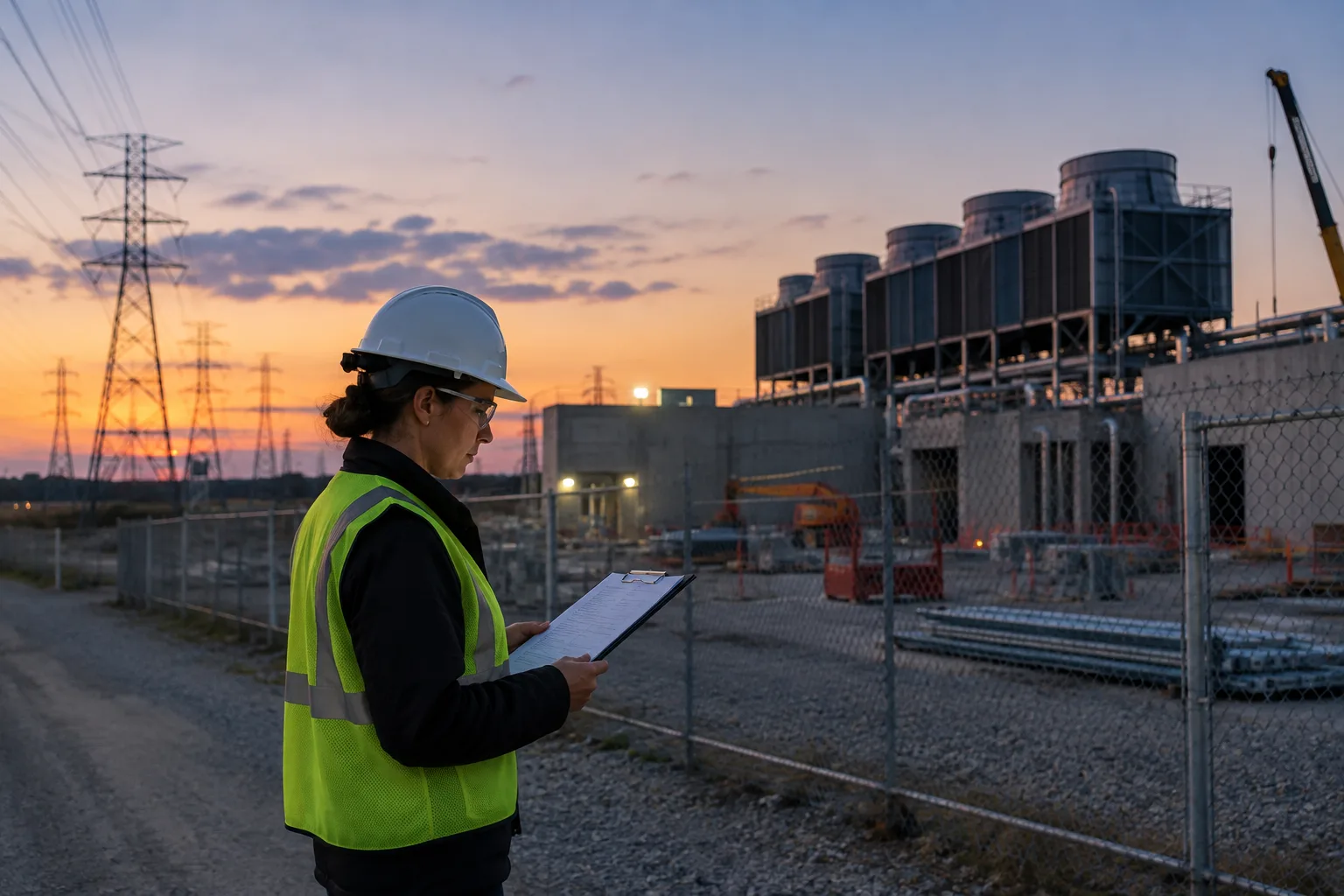
- Modular scale-out as the new data center playbook: Colossus’s rapid expansion reflects a broader shift toward containerized, modular data center design, optimized for GPU- and ASIC-heavy workloads. This approach compresses deployment timelines and enables capacity to be added in increments—an operational advantage in a market where AI demand forecasts can change quarter to quarter.
From an industry perspective, the Starlink–Colossus pairing also pressures hyperscalers and telecom incumbents to respond. Expect intensified experimentation with:
- satellite partnerships and multi-orbit strategies
- private 5G and localized edge deployments
- new interconnect approaches (including advanced optical networking) to reduce AI data movement bottlenecks
The strategic question is no longer whether connectivity and compute converge—it is who controls the junction.
Digital inclusion meets ESG scrutiny: the community calculus behind discounted broadband
The Memphis Starlink discount has a credible digital inclusion dimension. Lowering the cost of high-speed internet can expand access to:
- remote work and skills training
- telehealth and digital public services
- small business formation and online commerce
- education continuity, particularly in households where connectivity is intermittent or unaffordable
At the same time, the promotion arrives amid pointed critiques that Colossus’s energy appetite and associated emissions could impose environmental and public-health externalities. That juxtaposition is central: discounted connectivity can be experienced as a real household benefit while still functioning as a form of reputational counterweight—an “impact offset” in the public conversation, even if it does not directly mitigate emissions.
For executives and policymakers, the Memphis situation highlights a recurring pattern in AI-era infrastructure rollouts:
- Communities increasingly evaluate projects not only on jobs and tax base, but on grid impact, air quality, water use, and resilience planning.
- Companies increasingly deploy community benefit instruments—discounts, grants, training programs, local procurement—to maintain momentum and reduce friction.
- The hardest questions migrate from “Is this good?” to “Who bears the costs, who captures the value, and what is enforceable?”
The durability of SpaceX’s goodwill will likely depend less on the headline discount and more on whether stakeholders see credible movement on energy sourcing, transparency, and measurable local benefit.
What Memphis signals about the next wave of AI hubs—and the policy fights to come
Colossus’s Memphis-area expansion also underscores a geographic rebalancing: AI compute is no longer confined to the usual coastal and Northern Virginia corridors. Secondary markets can offer compelling advantages—logistics connectivity, real estate economics, and potentially more navigable permitting pathways. Memphis, with its proximity to a major global shipping hub, fits that emerging template.
But the same forces that make these sites attractive also intensify policy and regulatory attention. As AI data centers scale toward “small city” energy profiles, the next phase of competition will hinge on:
- power procurement strategy (renewables, long-term PPAs, on-site generation, storage)
- grid interconnection readiness and modernization timelines
- emissions accounting and disclosure, including potential carbon pricing exposure
- community-first operating models, where benefits are structured, trackable, and durable
SpaceX’s Starlink discount in Memphis is therefore best understood as both a consumer offer and a strategic signal: the AI economy is being built not only in code and chips, but in neighborhoods, utility commissions, and public trust. The companies that thrive will be those that can scale compute and connectivity while treating energy, transparency, and local legitimacy as first-order engineering constraints—not afterthoughts.

 By
By
 By
By

 By
By
 By
By

 By
By
 By
By