

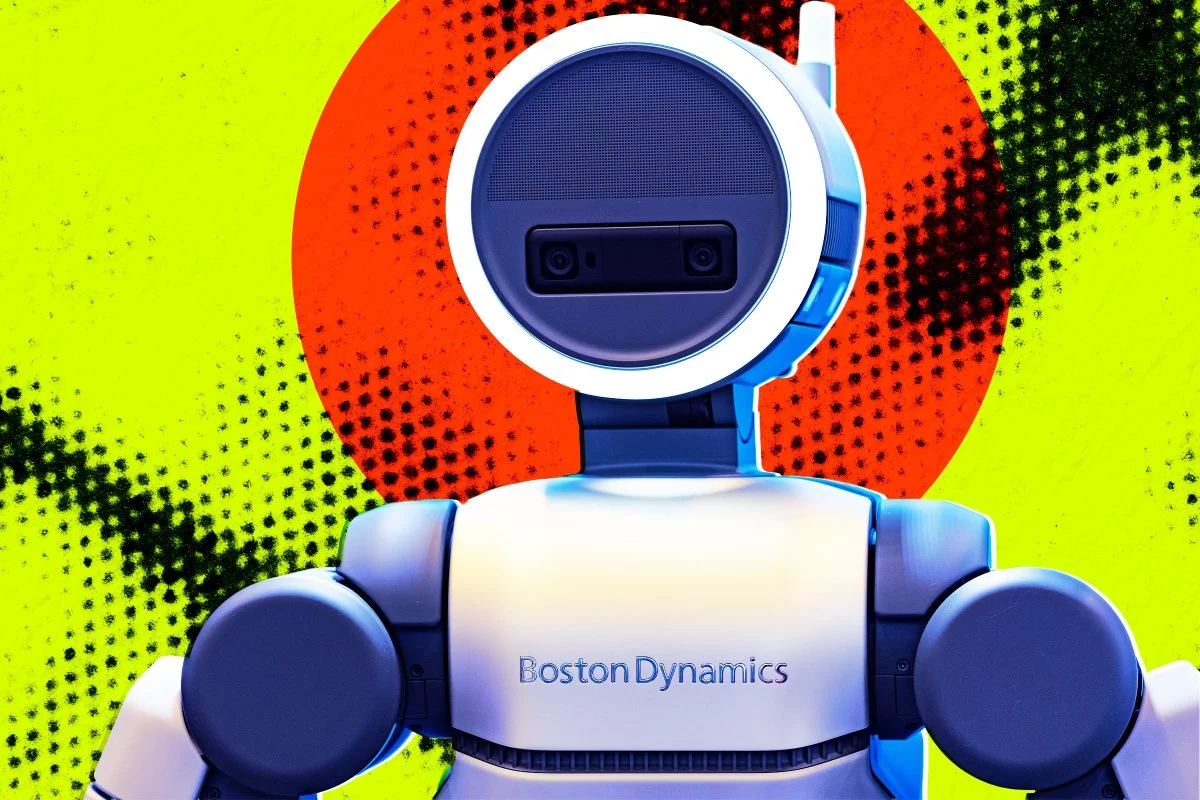

Hyundai’s humanoid-robot ambition meets Korea’s hard-edged labor reality
Hyundai Motor Company’s looming labor confrontation in South Korea is not merely a wage dispute dressed in futuristic language; it is an early stress test for how general-purpose humanoid robots will be introduced into legacy industrial systems where labor institutions are strong, politically salient, and historically willing to strike. The Korean Metalworkers’ Union-backed workforce has voted to strike amid rising concern that Hyundai’s planned deployment of Boston Dynamics Atlas humanoid robots—and broader automation initiatives—will translate into job displacement, weakened bargaining power, and a redistribution of productivity gains away from the shop floor.
Hyundai’s stated intent is to deploy humanoids primarily for “laborious and hazardous” tasks, framing the initiative as a safety and efficiency upgrade rather than a headcount reduction program. Yet the union’s skepticism is grounded in scale: Hyundai has signaled ambitions to field more than 25,000 humanoid units globally by 2028. At that magnitude, even conservative productivity assumptions imply meaningful operational redesign—potentially altering staffing models, overtime patterns, subcontractor usage, and the internal labor market for line roles.
The union’s two headline demands crystallize the underlying contest over governance and value distribution in the AI era:
- A formal consultative role in any AI/robotics rollout—effectively seeking institutionalized influence over automation strategy, deployment sequencing, and workforce impact.
- A one-third share of annual profits, estimated at roughly $27,000 per employee for its 73,000 members, positioning profit-sharing as the mechanism to ensure workers participate in the upside of AI-driven productivity.
This is the new center of gravity in industrial relations: not only “how much are workers paid,” but who gets to decide how automation is introduced, and who captures the surplus when machines amplify output.
Why humanoid robots change the automation conversation—technically and operationally
Traditional industrial automation has largely been about fixed-function robotics: welding cells, pick-and-place arms, conveyors, and highly engineered systems optimized for repeatability. Humanoid robots, by contrast, promise something more disruptive: adaptability across tasks and environments designed for humans. If they work as advertised, they could reduce the need to redesign factories around machines—because the machines can increasingly operate in the human-designed world.
That promise is precisely why labor anxiety is intensifying. Humanoids blur the boundary between “automation of a task” and “automation of a role.” In manufacturing, roles often bundle many small tasks—material movement, inspection, tool handling, line feeding—some of which are variable and hard to automate with single-purpose equipment. A sufficiently capable humanoid platform could, in theory, begin to unbundle and absorb those task clusters.
At the same time, the technology remains early in its industrial maturity. Key constraints still shape the real-world business case:
- Reliability and uptime in messy, high-mix production settings remain unproven at scale.
- Speed and precision can lag specialized automation designed for one job.
- Total cost of ownership (maintenance, energy, spares, software updates, safety validation, integration engineering) can erode headline ROI.
- Safety and compliance requirements for human–robot collaboration add operational complexity and governance overhead.
This tension—high strategic potential, uneven near-term performance—is what makes Hyundai’s plan so consequential. The company is effectively betting that learning curves in hardware, AI control, and fleet management will improve quickly enough to justify aggressive scaling. The union is betting that, regardless of technical maturity, the direction of travel points toward workforce contraction or restructuring.
Profit-sharing, governance, and the “relative deprivation” effect across global industry
Hyundai’s labor standoff is unfolding in a competitive environment where automation is increasingly associated with windfalls for capital and management, not necessarily for frontline workers. Reports of Samsung’s AI-linked bonus gains, alongside visible automation moves elsewhere—robot baggage handling at Japan Airlines, humanoid sorting experiments at China Post, and robotics trials in automotive manufacturing such as BMW—create a powerful psychological and political backdrop: workers see a global productivity surge narrative and ask where their share sits.
This is the “relative deprivation” dynamic: even if Hyundai’s wages are stable, the perception that other firms are converting AI into outsized rewards—while Hyundai workers face uncertainty—can harden bargaining positions. It also reframes the debate from narrow compensation to broader legitimacy: does the company have a social license to automate at scale without codified worker participation?
For Hyundai, the economic logic of automation is straightforward: reduce variable labor costs, improve safety outcomes, stabilize throughput, and protect margins in an industry under pressure from electrification costs and intense global competition. But the union’s demands introduce a new kind of risk premium:
- Operational risk from strikes and production disruptions in Korea.
- Reputational risk in Hyundai’s home market, where labor disputes can become national political issues.
- Recruitment and retention risk if manufacturing careers are perceived as precarious in the face of humanoid deployment.
- Precedent risk across Korean chaebols if worker consultation becomes a de facto standard for automation governance.
In other words, the cost of humanoids is not only capex and maintenance—it may also include institutional concessions that reshape how productivity gains are shared.
The strategic stakes: time-to-market, IP control, and a new social contract for AI factories
Hyundai’s global manufacturing strategy—including planned humanoid deployments in places like Georgia—signals a dual objective: scale automation where labor constraints are tighter and build a replicable template for next-generation plants. Yet Korea remains a critical node. If domestic operations become a choke point through prolonged negotiations, Hyundai risks losing time-to-market advantages to rivals racing to integrate advanced robotics and AI-driven manufacturing.
The deeper competitive question is who controls the stack:
- Robotics IP and platform architecture (hardware design, actuators, sensors)
- Data and integration layers (factory systems, digital twins, fleet telemetry)
- Software monetization (updates, optimization, predictive maintenance, orchestration)
First movers that master these layers can evolve from manufacturers into platform operators, capturing recurring revenue through robot fleet services and industrial AI optimization. But that future depends on execution discipline—and on labor stability.
What emerges from Hyundai’s situation is a clear signal to industry leaders: humanoid robots are forcing a renegotiation of the industrial social contract. The companies that move fastest may not be those that automate most aggressively, but those that can phase deployments through credible pilots, measure impact transparently, and build governance models where workers are not treated as a residual cost—but as stakeholders in the productivity dividend that AI and robotics are designed to unlock.

 By
By


 By
By
 By
By
 By
By
 By
By
 By
By







