


Amazon MGM’s “Artificial” reversal: when AI partnerships reshape creative risk
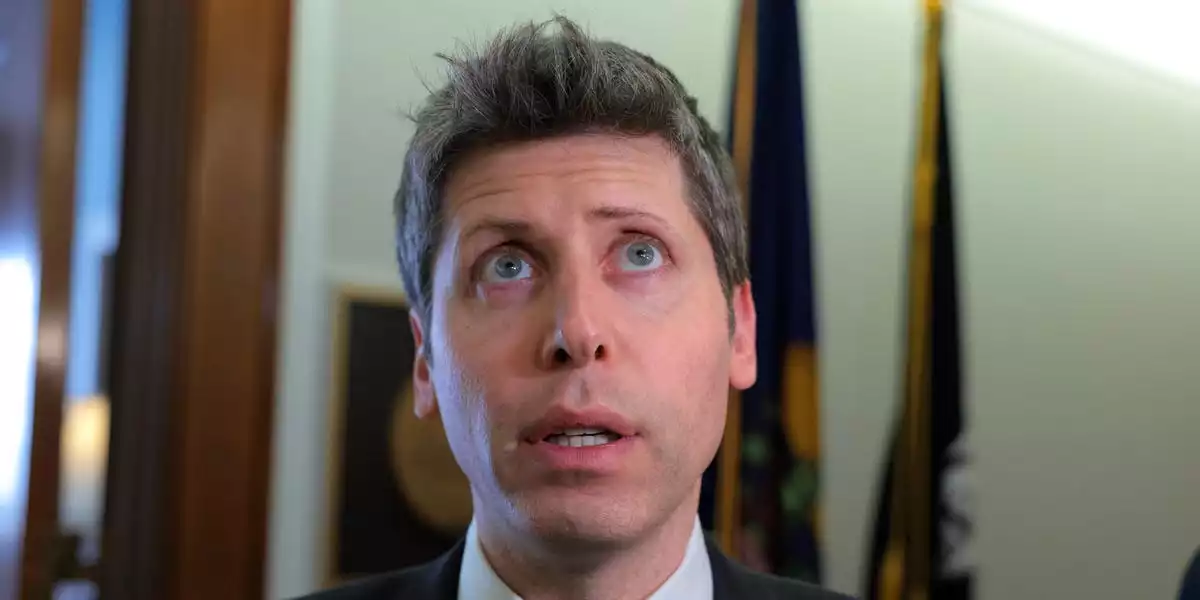
Amazon MGM Studios’ decision to pull the release of “Artificial,” Luca Guadagnino’s dramatization of Sam Altman’s November 2023 ouster and rapid reinstatement as OpenAI CEO, lands as more than a scheduling change. It reads as a strategic recalibration at the intersection of AI dealmaking, studio portfolio management, and corporate reputation control—especially in a moment when artificial intelligence is no longer a thematic backdrop for entertainment, but a defining pillar of Big Tech strategy.
The timing is difficult to ignore. Amazon’s reported $50 billion investment and licensing relationship with OpenAI has elevated the partnership from a typical vendor arrangement to a high-visibility alliance with implications for cloud positioning, enterprise AI adoption, and long-term platform leverage. Against that backdrop, distributing a film that reanimates one of the most scrutinized governance episodes in modern tech—complete with a living, powerful protagonist—creates a risk profile that looks less like prestige cinema and more like corporate exposure.
Amazon’s stated rationale—misalignment with evolving corporate priorities—signals a familiar truth in today’s media economy: content decisions increasingly behave like extensions of corporate strategy, not merely editorial bets. In this environment, a single title can become a proxy battle over brand stability, partner trust, and legal defensibility.
—
The economics behind the pullback: streaming ROI, portfolio discipline, and the shadow of “Melania”
From a business perspective, “Artificial” sits in a challenging category: a high-profile, one-off “living biography” with uncertain upside and potentially asymmetric downside. Amazon MGM’s recent disappointment with the documentary “Melania,” which reportedly underperformed critically and commercially, likely sharpened internal scrutiny around marketing spend, distribution risk, and subscriber impact.
In a streaming market defined by slower growth and tighter content budgets, studios are increasingly optimizing for predictable retention rather than cultural conversation alone. That shift tends to favor:
- Franchise-based or serialized IP with repeat engagement
- Wholly owned universes where rights and downstream monetization are clearer
- Lower-volatility narratives that don’t invite real-time reputational blowback
A film like “Artificial”—scripted by Simon Rich, starring Andrew Garfield as Altman, and completed by October 2025—may be artistically compelling, but it is also expensive to launch properly. The marketing challenge is structural: prestige dramas often require sustained promotion to break through, and the return is harder to model than for established IP. When CFOs and strategy teams weigh opportunity cost, the question becomes blunt: will the film drive enough incremental Prime Video engagement to justify the spend—*and* the potential friction with a cornerstone AI partner?
Amazon’s move to seek a new distributor suggests a pragmatic compromise: preserve the asset’s value while offloading the most sensitive part of the equation—being the corporate entity that puts the story into the market.
—
Governance as entertainment—and as liability: legal exposure in the era of real-time corporate drama
“Artificial” is not just a film about a CEO; it is a film about boardroom power, institutional control, and the governance mechanics of frontier AI. That is precisely what makes it culturally resonant—and operationally hazardous.
The Altman episode remains entangled with broader disputes and scrutiny around OpenAI’s structure, mission, and commercialization. As litigation and discovery processes unfold in parallel (including high-profile conflicts involving prominent industry figures), a dramatization that implies specific motivations, conversations, or sequences of events can trigger a cascade of concerns:
- Defamation and false light claims, particularly when depicting identifiable individuals in contested events
- Discovery and evidentiary complications, if the film is perceived to mirror privileged or non-public deliberations
- Errors-and-omissions (E&O) insurance constraints, as insurers reassess exposure for “living subject” portrayals
- Partner relationship strain, where distribution is interpreted as editorial judgment—or corporate signaling
This is where the modern studio calculus departs from the traditional “based on a true story” playbook. The risk profile of near-contemporary corporate storytelling increasingly resembles investigative journalism, but with higher budgets and a wider blast radius. Studios that once relied on standard indemnities and legal review now face a world where real-time litigation risk can alter distribution plans late in the cycle.
—
A broader signal for Big Tech media: content as alliance management in the AI age
The most consequential implication may be what this episode suggests about the future of entertainment inside tech conglomerates. As Big Tech firms deepen investments in AI labs, cloud ecosystems, and model licensing, content is no longer just a consumer product—it can become a governance tool, a reputational lever, or a diplomatic incident.
Pulling “Artificial” can be read as a form of strategic signaling: a decision to prioritize the perceived stability of a flagship AI partnership over the short-term attention that a dramatized controversy might generate. It also hints at a future where deal teams, legal teams, and corporate affairs play a larger role in early greenlight decisions—especially for stories involving:
- Active executives and boards
- Ongoing regulatory scrutiny
- Pending litigation or discovery
- Strategic partners whose trust is commercially material
At the same time, the market appetite for these stories is real. Corporate governance—particularly in AI—has become a narrative genre of its own, fueled by public fascination with who controls transformative technology and how decisions get made behind closed doors. That demand won’t disappear; it will likely migrate toward more flexible distribution models, where contentious titles are packaged for third parties, niche platforms, or international buyers better positioned to absorb the reputational heat.
Amazon MGM’s retreat from “Artificial” ultimately captures a defining tension of the AI era: the closer technology companies move to the center of cultural production, the harder it becomes to separate storytelling from strategy—and the more every release decision starts to look like a boardroom decision, too.

 By
By
 By
By

 By
By

 By
By

 By
By







