
Instacart and Weis Markets bring “edge AI” into the grocery aisle—one cart at a time
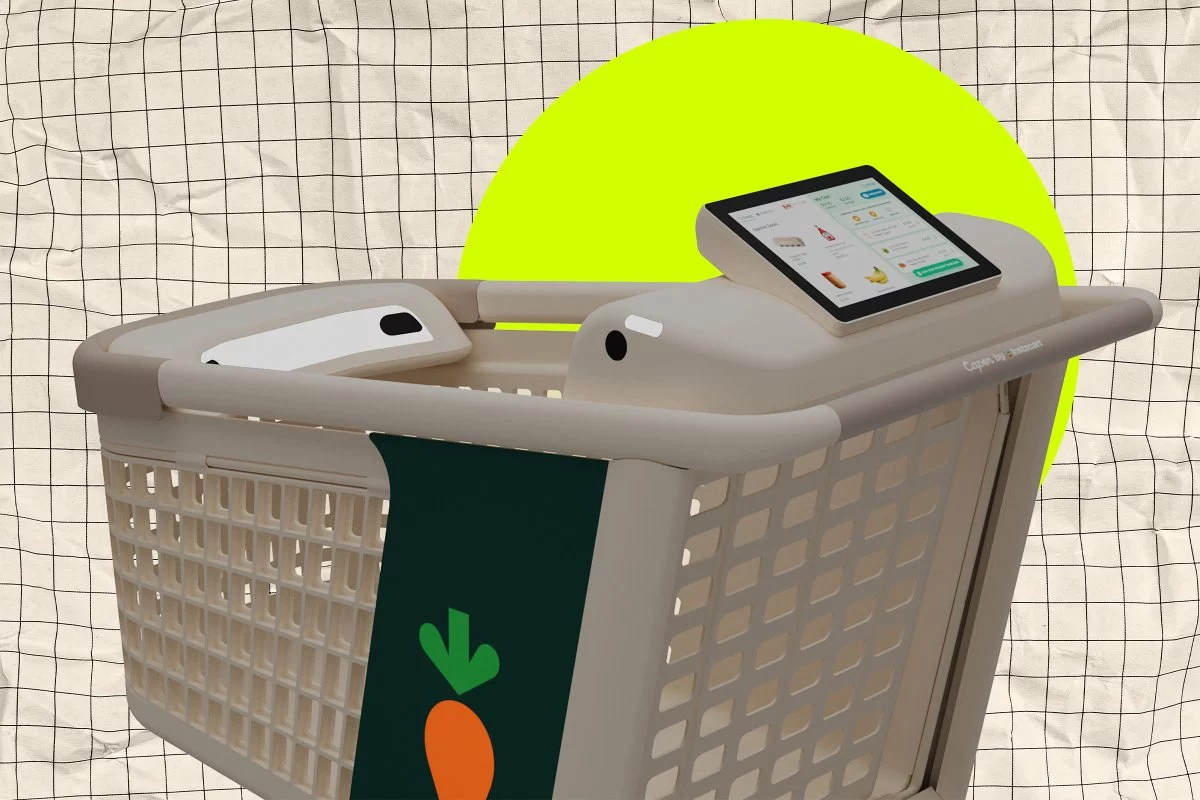
Instacart’s partnership with Pennsylvania-based Weis Markets to deploy Caper Carts signals a decisive shift in how physical retail is being re-engineered: not by replacing the store, but by instrumenting it. These AI-enabled shopping carts—equipped with camera sensors, digital weight scales, touchscreens, and location tracking—aim to compress the convenience of e-commerce into the in-store journey, turning the cart into both a checkout pathway and a real-time marketing surface.
At the core is an increasingly common architectural pattern in enterprise AI: an edge-to-cloud continuum. The cart performs latency-sensitive tasks locally—such as recognizing items, validating weight, and triggering aisle-relevant prompts—while cloud-based models refine personalization and promotion logic using aggregated historical behavior. Instacart’s advantage is data scale: models trained on over 1.6 billion historical grocery orders and roughly a decade of operational learnings can be continuously tuned to predict what shoppers might want next, what they might forget, and what price or promotion might change their decision.
Early reported outcomes—about a 1% increase in average basket size—may sound incremental, but in grocery retail, where margins are thin and volume is everything, small lifts can be strategically meaningful. Instacart has also tripled deployments year-over-year, placing the company alongside major grocers such as Kroger in accelerating smart-cart pilots and broader “physical AI” experiments.
Sensor fusion and frictionless retail: why smart carts are more than self-checkout 2.0
Caper Carts represent a practical evolution beyond traditional self-checkout. Rather than asking shoppers to scan barcodes and manage exceptions, these carts attempt to infer intent and inventory automatically through sensor fusion—the combination of computer vision, weight verification, and in-store location awareness.
This matters for three reasons:
- Reduced friction without full store retrofits: Unlike ceiling-camera “just walk out” systems that can require heavy infrastructure investment, smart carts can be deployed store-by-store and scaled with less disruption.
- Real-time context as a new retail interface: The cart’s screen becomes a moment-by-moment decision layer—surfacing product information, loyalty prompts, reminders tied to past purchases, and targeted ads based on where the shopper is standing.
- A feedback loop that improves over time: Every interaction—what was picked up, put back, substituted, or ignored—can feed models that sharpen recommendations and promotion timing.
For retailers, the strategic promise is not simply faster checkout; it is a digitally measurable in-store experience. That measurement layer is what e-commerce has long enjoyed: clickstreams, conversion funnels, and attribution. Smart carts attempt to create an analog equivalent—capturing behavioral signals that were previously invisible in physical aisles.
Yet that same capability raises a central tension: the more precisely a system can detect and predict behavior, the more it risks crossing from “helpful” into “manipulative,” especially when promotions and advertising are optimized for conversion rather than consumer welfare.
The business case: modest basket lifts, outsized revenue implications, and a new data asset class
A 1% basket-size increase can be transformative at scale. For a grocery chain with billions in annual sales, that uplift can translate into nine-figure revenue impact, particularly if incremental purchases skew toward higher-margin categories such as promoted items or private label. In an environment where food inflation has made consumers more price-sensitive and promotion-driven, AI-guided offers can also help retailers avoid blunt discounting—delivering more targeted incentives that preserve margin while still signaling value.
Beyond revenue, the deeper strategic asset is data—not just what people buy, but how they shop:
- In-aisle behavioral analytics can improve demand forecasting and assortment planning.
- Operational signals can inform labor scheduling and replenishment timing.
- Promotion performance can be measured with greater granularity, strengthening retailer negotiating power with brands and ad partners.
This is where Instacart’s role becomes especially consequential. The company is not only providing hardware; it is helping define a retail media and personalization layer inside the store. Cart screens can become premium advertising real estate, and the combination of location context plus purchase history can create highly valuable targeting—potentially expanding monetization beyond grocery margins into retail media networks, payments partnerships, and loyalty ecosystems.
For brick-and-mortar grocers competing with digital-first players, smart carts also offer a “best of both worlds” narrative: the immediacy and tactile experience of a store, paired with the personalization and guidance of an app.
Trust, regulation, and labor: the non-technical variables that will decide adoption
The operational and ethical questions around AI shopping carts are not side issues—they are adoption determinants.
Privacy vs. personalization is the most immediate fault line. Continuous camera-based recognition and location tracking can feel intrusive, even if the system is designed for item detection rather than identity. Retailers and technology providers will likely face growing pressure to implement privacy-by-design, including:
- clear opt-in/opt-out mechanisms tied to loyalty programs and personalization features
- data minimization (e.g., discarding raw video after inference)
- transparent explanations of what is collected, what is stored, and what is shared
- user-accessible controls, potentially including data dashboards
Regulatory scrutiny is also intensifying. As policymakers increasingly examine “surveillance capitalism” in physical spaces, smart carts could become a test case for how data protection frameworks apply beyond browsers and mobile apps. Companies that treat compliance as a product feature—rather than a legal afterthought—will be better positioned to scale without reputational drag or costly redesigns.
Then there is labor. Retail has already absorbed waves of automation—self-checkout, kiosks, and inventory systems—often accompanied by customer frustration and theft concerns. AI carts may reduce checkout bottlenecks while preserving staff oversight, but they also risk shifting headcount away from entry-level roles. The more durable path for retailers is to plan for role redesign, not just labor reduction: transitioning workers into customer support, exception handling, device maintenance, and store-level analytics operations.
Instacart’s Caper Carts are ultimately a bet that the next competitive frontier in grocery is not online versus offline, but intelligent versus non-intelligent retail environments. The winners will be those who can translate real-time AI into tangible shopper value—savings, convenience, clarity—while proving that personalization can coexist with privacy, and automation can coexist with a credible social license to operate.

 By
By
 By
By

 By
By

 By
By
 By
By
 By
By