


A sub-\$1 price point as a deliberate signal in the streaming economy
Paramount Plus’ limited-time \$0.99-per-month promotion for the first two months, available on both the ad-supported Essential tier and the ad-free Premium tier, reads less like a simple discount and more like a strategic marker in an increasingly mature streaming market. Valid through June 25, 2026, the offer effectively compresses the “trial” decision into a low-friction impulse buy—then shifts the real monetization test to month three, when plans auto-renew at \$8.99/month (Essential) or \$13.99/month (Premium).
This structure matters because it reflects how streaming has evolved: subscriber growth is no longer purely about awareness, but about reducing signup resistance, extending engagement long enough to form habit, and capturing data signals that can be monetized through advertising, personalization, and retention mechanics.
Key mechanics embedded in the promotion include:
- Parity pricing across tiers during the promo window, which encourages consumers to sample Premium features without immediately confronting the price delta.
- A built-in “value discovery” period, where users can explore a library of 40,000+ titles and marquee programming before the renewal decision.
- A clear segmentation after the promo:
– Premium: ad-free viewing, downloads, live CBS streams, and major sports like NFL on CBS and UEFA Champions League, plus Showtime Originals.
– Essential: ad-supported viewing with limited features, notably no downloads and no live CBS.
For business leaders, the headline isn’t merely the savings (over \$20 across two months). It’s the way Paramount is using price as a behavioral lever—a tactic designed to convert attention into routine usage, and routine usage into either higher-ARPU subscriptions or ad-supported scale.
Hybrid monetization: why Paramount is betting on both ads and premium ARPU
The decision to discount both the ad-supported and ad-free tiers to the same entry price is a revealing move in the broader shift toward hybrid streaming monetization, now a defining pattern across competitors such as Netflix, Disney+, and Max. Paramount’s approach suggests it is optimizing for two outcomes simultaneously:
- Scale and advertising leverage via Essential
- Higher revenue per user and retention anchors via Premium
This dual-track model is increasingly attractive because it diversifies revenue in a market where consumers are more price-sensitive and churn is structurally high. Paramount can use the Essential tier to expand reach and generate ad inventory, while Premium becomes the upsell path for households that value live sports, downloads, and uninterrupted viewing.
From an ad-tech perspective, the Essential tier is particularly consequential. A large influx of low-cost subscribers can expand Paramount’s first-party data footprint—viewing behavior, device graphs, content affinities, and ad responsiveness—at a moment when privacy changes and signal loss have made first-party relationships more valuable. The strategic implication is that Paramount is not only competing with other streamers, but also strengthening its position against entrenched digital advertising incumbents by building a more measurable, addressable TV-like environment.
For executives evaluating the competitive landscape, the promotion also functions as a live experiment in price elasticity:
- How many users will downgrade to Essential after sampling Premium?
- How many will retain Premium because sports and live CBS become habitual?
- How effectively can Paramount convert promo cohorts into long-term value without eroding brand pricing power?
Content and sports as retention infrastructure, not just programming
Paramount’s content positioning underscores a core truth of modern streaming: content is no longer merely a catalog—it is retention infrastructure. The platform is leaning into two complementary engines:
- Franchise gravity and fandom economics
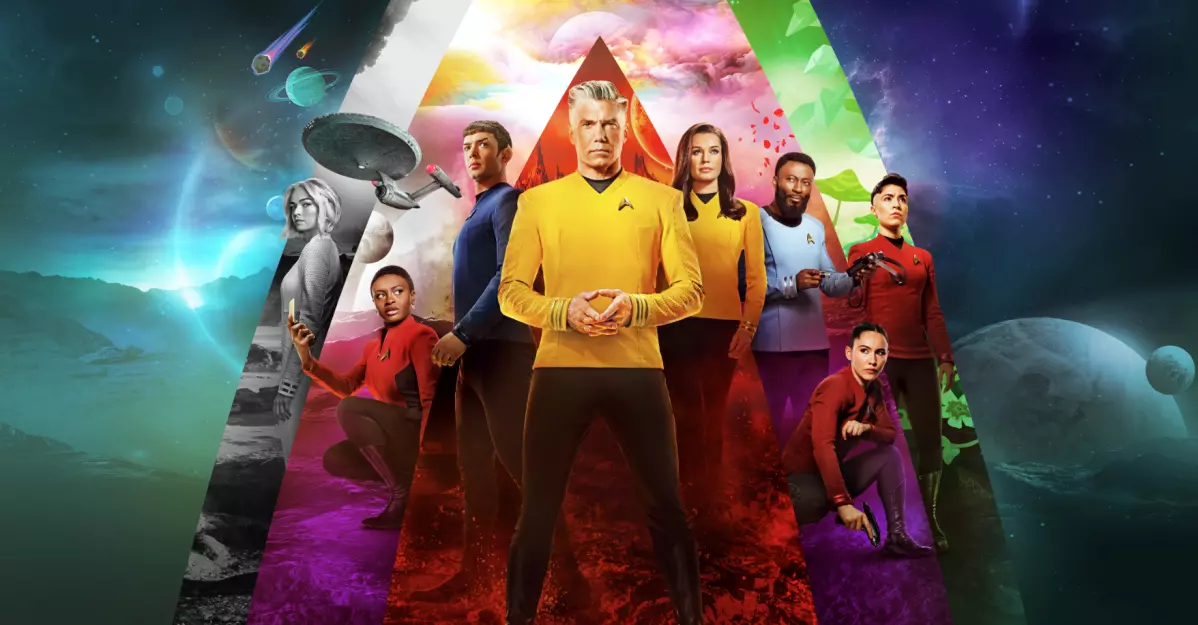
Paramount’s ownership and control of major IP—especially the full Star Trek library—offers a defensible advantage in an era where distinctive franchises can outperform broad catalogs. Add nostalgia-driven properties like The Naked Gun (including the 2025 reboot) and long-running cultural staples such as South Park, and the service gains multiple on-ramps for different demographics, including Gen Z’s demonstrated appetite for “retro revival” content.
- Live sports as churn suppression
Premium’s inclusion of NFL on CBS and UEFA Champions League is not simply a feature upgrade; it is a structural retention tool. Sports programming creates recurring appointment viewing—weekly, seasonal, and event-driven—reducing the binge-and-cancel pattern that plagues purely on-demand libraries. This mirrors strategies seen at Amazon Prime Video and Peacock, but Paramount’s advantage lies in the CBS integration, which can normalize the service as a default destination for both entertainment and live events.
For technology and product leaders, the operational challenge becomes clear: live sports raises expectations around latency, stream stability, concurrency scaling, and real-time personalization. If Paramount successfully converts promotional users into sports-driven regulars, the platform’s technical performance becomes inseparable from its commercial outcomes.
What this promotion telegraphs about partnerships, distribution, and pricing architecture
The unusually long promotional horizon—running through mid-2026—suggests Paramount is planning beyond a short-term subscriber spike. It signals an intent to keep a low-cost acquisition tool available while the company navigates broader distribution realities, including the growing influence of:
- Telecom and ISP bundles that reduce acquisition costs and embed streaming into broadband/mobile plans
- Smart TV operating systems and device ecosystems, where placement, billing integration, and default app positioning can materially affect subscriber growth
- Studio-to-platform coordination, aligning streaming promotions with theatrical and franchise calendars (notably around tentpoles like the upcoming Naked Gun reboot)
Just as importantly, the post-promo renewal prices—\$13.99/month Premium and \$8.99/month Essential—set up a decisive test of long-term monetization design. Paramount will likely need a sophisticated pricing playbook to manage the transition from promotional cohorts to durable revenue, including:
- Targeted win-back offers and seasonal discounts
- Tier migration incentives (Premium trials, sports-weekend sampling, download unlocks)
- Loyalty mechanics and bundling experiments that protect ARPU without accelerating churn
Paramount Plus’ \$0.99 promotion is ultimately a compact expression of where streaming is headed: price as acquisition, data as leverage, sports as retention, and franchises as differentiation—all operating inside an ecosystem where distribution partners and platform economics increasingly determine who can grow profitably, not just who can attract attention.

 By
By
 By
By
 By
By

 By
By

 By
By
 By
By







