
A turbulent SpaceX IPO becomes a live referendum on capital-intensive innovation
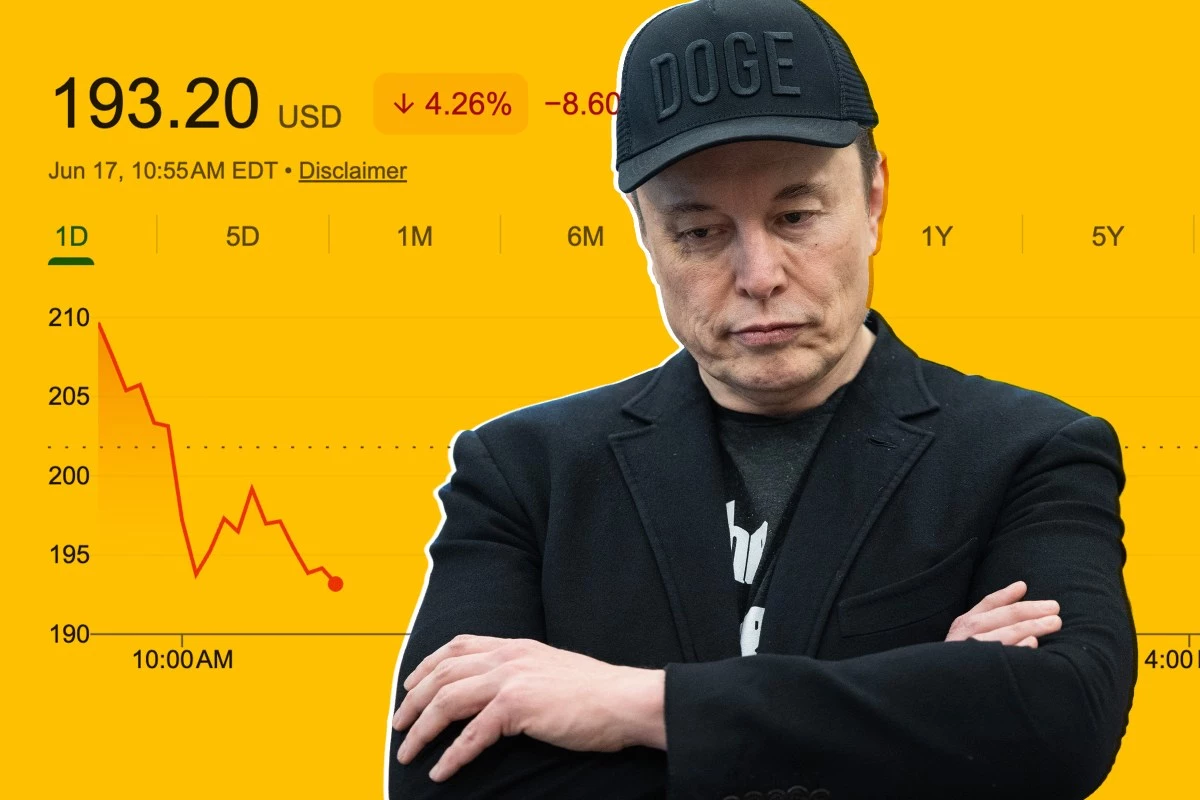
SpaceX’s first week as a public company has functioned less like a conventional debut and more like a real-time stress test of investor tolerance for high-burn, high-ambition deep tech. Shares opened last Friday, surged past $222 by Tuesday, then retreated into the high $180s by Wednesday—still roughly 20% above the debut price, but with volatility that signals something more than routine price discovery.
The market’s message appears twofold. First, investors are still willing to pay for a “moonshot premium” when the narrative is compelling and the addressable market is vast. Second, that premium is fragile in a late-cycle environment where interest rates and credit conditions reward near-term cash flow and punish open-ended capital expenditure. SpaceX’s annual burn—described as billions per year with no clear break-even timeline—keeps the valuation debate anchored to a single question: how quickly can ambition be converted into durable, segmentable revenue?
The trading pattern also evokes a familiar precedent. Tesla’s history shows that volatility can coexist with long-term value creation, but it also demonstrates that public markets demand repeatable milestones—production ramps, margin expansion, and credible guidance—rather than visionary end-states alone. SpaceX is now subject to that same cadence, with quarterly scrutiny replacing private-market patience.
The xAI merger intensifies scrutiny of cash burn, governance, and strategic coherence
The merger with Musk’s AI venture, xAI, adds both optionality and complexity. On one hand, it expands the story from connectivity and launch services into AI infrastructure and inference at the edge—a theme that resonates with enterprise buyers and defense customers. On the other, xAI’s reported $6.4 billion loss in 2025, alongside public-relations setbacks, compounds investor concern that the combined entity could become a multi-front capital campaign without a sufficiently narrow path to profitability.
For public-market participants, the key issue is not whether AI and space are synergistic in theory, but whether the company can articulate operational linkages that translate into measurable unit economics. The strategic rationale becomes more credible if SpaceX can show that:
- Starlink network telemetry improves model performance, routing, or predictive maintenance in ways that reduce operating costs
- On-orbit compute supports low-latency inference for maritime, aviation, disaster response, or defense use cases
- xAI services can be packaged into subscription tiers that lift ARPU (average revenue per user) for enterprise connectivity customers
Absent that specificity, the merger risks being interpreted as portfolio sprawl—a narrative that markets typically discount when cash flow is distant and capex is immediate.
Orbit-scale compute: the million-satellite data-center vision meets physics, regulation, and economics
Musk’s proposal to field a million solar-powered data-center satellites is the kind of concept that can redefine categories—or collide with the hard constraints of engineering and governance. The technological implications are profound, but so are the feasibility questions.
To deliver compute resources at orbital scale, SpaceX would need breakthroughs across multiple domains simultaneously:
- Miniaturized, data-center-grade hardware that can survive radiation, operate autonomously, and be serviced or replaced efficiently
- Intersatellite networking capable of high-throughput, low-latency routing—likely dependent on advanced laser interlinks
- Energy harvesting and thermal management that can sustain meaningful compute loads, including storage and heat dissipation in vacuum
- Autonomous orbital maintenance to manage collisions, debris risk, and constellation health at unprecedented scale
Even if the physics and manufacturing challenges are solved, the regulatory and geopolitical layers remain formidable. Spectrum allocation and coordination through the ITU, national licensing regimes, export controls affecting advanced optical links, and intensifying scrutiny around orbital debris could all slow deployment timelines—creating a mismatch between capital outlay and revenue realization.
Economically, the central question is whether orbit-based compute can beat terrestrial alternatives on cost, latency, resilience, or sovereignty. Terrestrial hyperscalers are rapidly expanding edge footprints, while 5G/6G rollouts continue to improve last-mile performance. For SpaceX, the most defensible near-term wedge may be niche, high-value environments—remote regions, contested zones, maritime corridors—where terrestrial infrastructure is weak or politically constrained.
What public markets will demand next: milestones, modularity, and anchor revenue
SpaceX’s IPO volatility is not merely a stock chart story; it is a broader signal about how capital markets are repricing risk. In a yield-sensitive environment, investors tend to reward companies that can translate vision into milestone-based execution with transparent economics. For SpaceX, several proof points could stabilize sentiment and reduce multiple-compression risk:
- Segmented monetization guidance: clearer disclosure on Starlink consumer versus enterprise ARPU, churn, and margin trajectory; plus defined pricing and adoption targets for xAI services
- Anchor customers and long-duration contracts: telecommunications carriers, defense agencies, and cloud providers that can underwrite early cash flows and de-risk capex
- Modular platform execution: incremental satellite buses optimized for specific verticals—maritime connectivity, Earth observation with embedded analytics, secure government networks—rather than a monolithic mega-constellation bet
- Demonstrable cross-domain synergies: concrete case studies showing how satellite-derived data improves AI models, logistics, energy forecasting, or autonomy pipelines
SpaceX now occupies a rare position: it is simultaneously a bellwether for deep-tech public listings and a test case for whether markets will finance the next era of space infrastructure at scale. The company’s challenge is not to temper ambition, but to translate it into a sequence of credible, investable steps—where each technical milestone unlocks a commercial one, and each commercial win reduces the cost of the next leap.

 By
By
 By
By
 By
By



 By
By
 By
By