


A founder’s playbook shaped by Nvidia’s urgency and SpaceX’s audacity
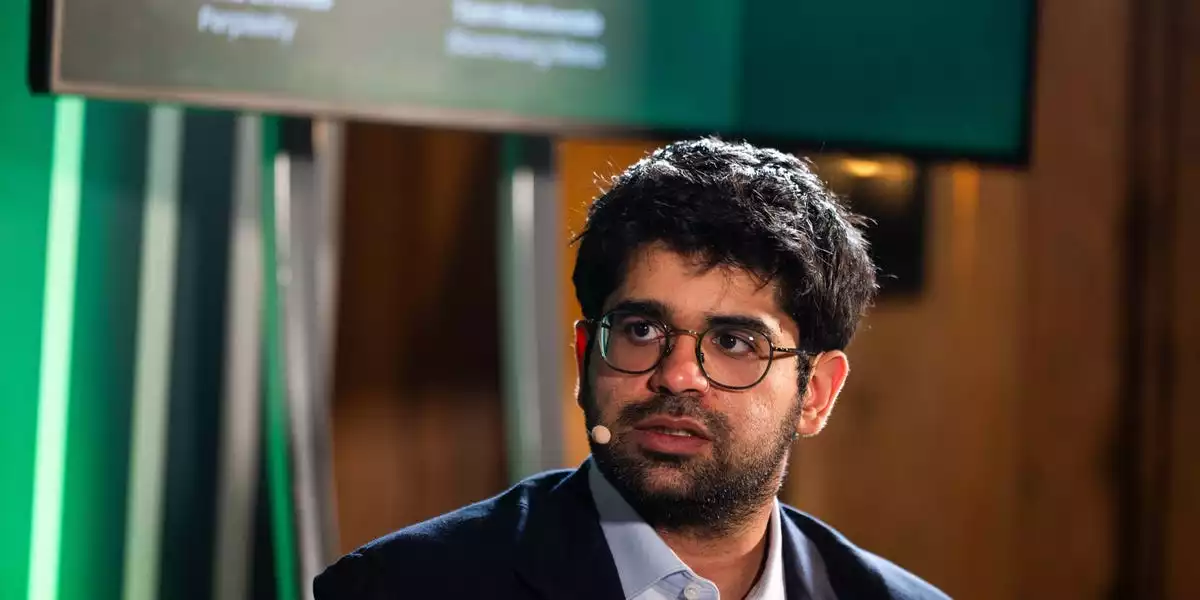
Aravind Srinivas, CEO of AI search company Perplexity and a former researcher across Google DeepMind and OpenAI, used a recent “20VC” podcast appearance to surface two leadership lessons that read less like motivational slogans and more like operating principles for frontier technology companies. One comes from Nvidia CEO Jensen Huang—a posture of persistent existential risk even at enormous scale. The other comes from Elon Musk—a compensation and motivation model tethered to a mission so large it dwarfs quarterly incentives.
Taken together, these ideas illuminate a widening divide in modern tech leadership: between founders who treat companies as vehicles to an exit and those who treat them as long-duration institutions. Srinivas’s explicit rejection of the “exit-and-retire” mindset—alongside skepticism toward the FIRE (Financial Independence, Retire Early) movement—signals a worldview in which purpose, identity, and sustained engagement are not side effects of success but prerequisites for it.
This is not merely cultural commentary. In AI, semiconductors, and space technology—domains defined by capital intensity, regulatory friction, and long R&D arcs—how leaders frame risk and reward directly shapes product road maps, talent retention, and investor alignment.
“Constructive paranoia” as an operating system for AI and semiconductor-era competition
Huang’s oft-cited framing—running the business as if bankruptcy could be 30 days away—functions as a form of constructive paranoia: a deliberate cognitive tension between ambition and fragility. In practice, this mindset can harden organizations against the very dynamics now reshaping technology markets: export controls, supply-chain chokepoints, model training costs, and sudden platform shifts.
For executives, the strategic value is not fear; it is decision velocity and discipline. When worst-case scenarios are treated as plausible baselines rather than remote tails, companies tend to institutionalize behaviors that improve resilience:
- Capital allocation rigor: prioritizing R&D bets with measurable technical leverage (e.g., inference efficiency, data advantage, distribution) rather than prestige projects.
- Supply-chain diversification: reducing single points of failure across chip supply, cloud dependencies, and critical vendors—especially under geopolitical uncertainty.
- Scenario planning as governance: boards and leadership teams stress-testing cash flows, compute access, and regulatory exposure as routinely as they review product metrics.
- Modular architectures: building systems that can swap models, providers, or hardware targets without existential rewrites—an increasingly material advantage in AI.
In the AI search and LLM ecosystem, this posture also reflects a competitive reality: model capabilities commoditize quickly, while distribution, trust, and unit economics become the differentiators. “Constructive paranoia” pushes leaders to ask uncomfortable questions early—about customer acquisition costs, inference margins, and defensibility—before the market forces those answers through layoffs or down rounds.
Mission-tethered compensation and the redefinition of long-term incentives
Musk’s lesson, as Srinivas recounts it, centers on anchoring compensation to an audacious mission—famously, SpaceX equity vesting tied to milestones such as enabling a Mars colony. Whatever one’s view of Musk, the structure is a notable departure from conventional executive pay, which often rewards near-term valuation events, revenue targets, or stock performance windows that can be gamed through timing and financial engineering.
Mission-linked incentives reshape the risk–reward contract in ways that matter for frontier tech:
- Long-horizon alignment: rewards accrue when the organization clears difficult technical and operational thresholds, not merely when markets are exuberant.
- Reduced short-term arbitrage: less incentive to optimize optics—press cycles, superficial growth, or financial packaging—at the expense of durable capability.
- Talent signaling: ambitious engineers and operators often self-select into environments where the mission is legible and the scorekeeping is tied to real outcomes.
The broader implication is that compensation design is becoming a strategic tool, not an HR afterthought. Companies can adapt the principle without copying the Mars narrative by tying rewards to verifiable, mission-relevant milestones—such as AI safety benchmarks, sustainability targets, reliability SLAs, or measurable reductions in compute per query. For firms navigating public scrutiny around AI ethics and societal impact, this can also serve as reputational risk management, making “responsible scaling” part of the incentive fabric rather than a marketing layer.
The end of “exit-and-retire” as a default narrative—yet not a mandate for burnout
Srinivas’s critique of early retirement culture echoes a familiar refrain from investors like Kevin O’Leary: retirement can produce boredom, and work often functions as identity. But in today’s labor market—marked by layoffs, hiring freezes, and intensifying performance expectations—there is a thin line between purpose-driven intensity and organizational burnout.
The most durable interpretation of Srinivas’s stance is not that everyone should work endlessly, but that innovation leadership in AI and deep tech increasingly requires continuity: staying close to the product, the research frontier, and the competitive landscape long enough to compound learning. That continuity is difficult to square with a culture optimized for liquidity events.
At the same time, companies that valorize perpetual grind without safeguards risk degrading the very human capital they depend on. The next generation of high-performance tech organizations is likely to blend Huang-style urgency and Musk-style mission with explicit sustainability mechanisms, including:
- Workload transparency and staffing realism to prevent chronic overcommitment
- Rotational sabbaticals focused on skill renewal rather than disengagement
- AI-enabled automation of routine internal work to preserve human attention for high-leverage decisions
- Clear ethical and operational guardrails so speed does not become recklessness
From a capital markets perspective, Srinivas’s “stay in the arena” posture also arrives at a moment when higher interest rates and tighter venture funding punish companies built primarily for fast exits. A founder-led commitment to long-duration execution can shift negotiations toward structures that reward real milestones—technical breakthroughs, regulatory approvals, or durable product-market fit—rather than purely financial timing.
What emerges from Srinivas’s reflections is a coherent thesis for the current era of business and technology: treat risk as ever-present, treat mission as the incentive, and treat endurance as a competitive advantage. In markets where the frontier keeps moving—AI capability, chip sovereignty, space infrastructure—the companies that last will be those that operationalize urgency without panic, and ambition without illusion.

 By
By
 By
By

 By
By
 By
By
 By
By

 By
By







