

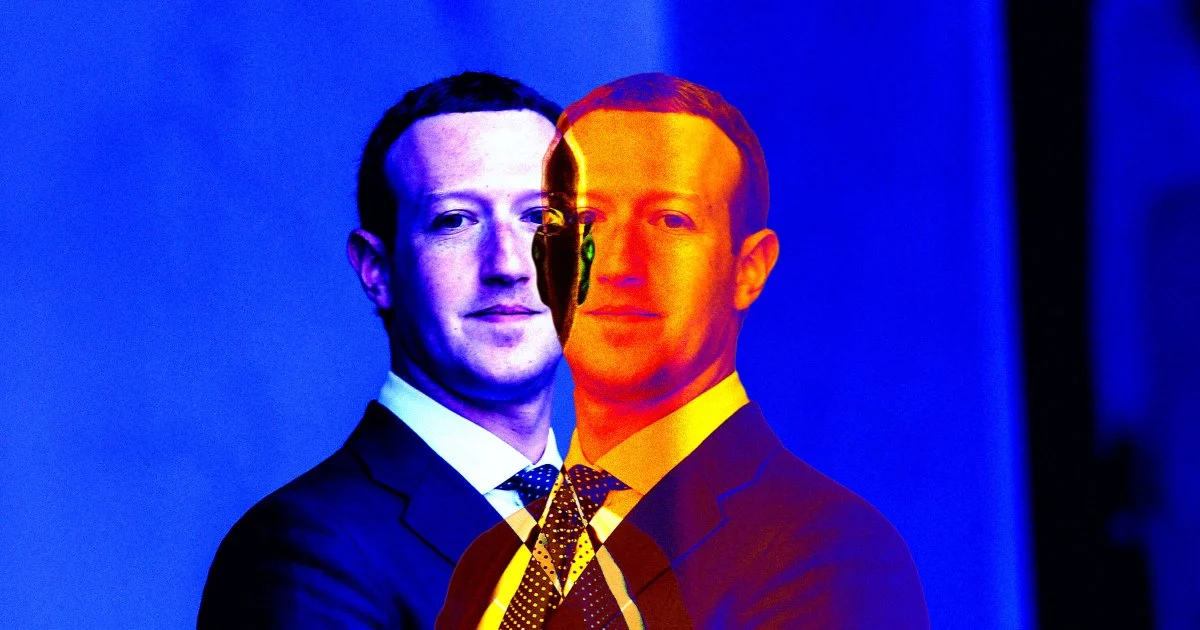

A CEO as product: Meta’s bet on a photorealistic Zuckerberg avatar
Meta Platforms is moving beyond abstract talk of “AI transformation” into something far more literal: Mark Zuckerberg is personally driving the creation of a photorealistic, generative-AI avatar of himself, reportedly spending five to ten hours per week training the model on extensive imagery and audio. Internally framed as “vibe coding,” the effort signals a leadership posture that blends executive vision with hands-on prototyping—an approach that can accelerate product intuition, but also concentrates strategic attention on a highly symbolic artifact.
The initiative arrives with important historical context. Meta’s earlier experiments with celebrity chatbots in late 2023 were curtailed after backlash and questions around authenticity, safety, and user value. A Zuckerberg avatar, however, is not merely another “character bot.” It is a test case for identity-based AI: a system that must convincingly reproduce a real person’s voice, face, mannerisms, and conversational style—while operating at interactive speed and at scale.
If Meta succeeds, the avatar becomes a living demonstration of the company’s long-running thesis: that avatars will mediate digital presence, from customer service and creator engagement to collaboration in virtual environments. If it fails—or is perceived as gimmickry—it risks reinforcing a narrative that Meta is chasing spectacle while the market demands disciplined execution.
—
The engineering reality: photorealism, latency, and the compute trade-offs
Building a credible, interactive digital human is among the hardest problems in applied generative AI. It requires the convergence of multiple technical domains:
- Computer vision and neural rendering to reproduce facial geometry, micro-expressions, and lighting realism
- Neural audio synthesis to generate voice that is both accurate and emotionally consistent
- Real-time inference to keep latency low enough for natural conversation
- Safety and identity controls to prevent misuse, impersonation, or harmful outputs
This is not just a research challenge; it is a resource allocation challenge. Meta’s AI ambitions already compete for scarce infrastructure—GPUs and custom accelerators that also support revenue-critical systems like ad targeting, ranking, and measurement. A photorealistic avatar, particularly one intended for broad deployment, can become compute-hungry quickly: higher fidelity typically means larger models, heavier rendering pipelines, and more expensive inference.
That tension is sharpened by reports of underperformance in Meta’s Muse Sparks model and ongoing infrastructure constraints. In practical terms, leadership must decide whether the avatar is:
- a strategic platform investment that will unlock new product categories, or
- a high-cost demonstration that risks diverting cycles from core monetization and reliability work
“Vibe coding” also introduces a cultural variable. Founder-led prototyping can energize teams and compress decision loops, but it can also skew priorities if executive enthusiasm outpaces product-market evidence. In a company of Meta’s scale, the difference between a compelling internal demo and a scalable, trustworthy product is measured in governance, metrics, and operational discipline—not charisma.
—
The parallel build: a “CEO agent” and the quiet reshaping of corporate power
Alongside the avatar, Meta engineers are reportedly developing a separate “CEO agent” designed to help employees access corporate information more quickly. This is a different class of system—less about photorealistic presence and more about organizational throughput. If implemented well, it could reduce friction in large-company knowledge flows: policies, strategy memos, product decisions, and institutional context that typically live in fragmented documents and meetings.
Yet the implications are not merely technical. A capable internal agent can flatten hierarchies by reducing dependence on managerial gatekeeping and by accelerating decision-making for individual contributors. That promise aligns with a broader enterprise trend: companies across finance, manufacturing, and healthcare are deploying AI agents to compress routine workflows and shorten approval chains.
At the same time, Meta’s AI push is unfolding amid planned workforce reductions exceeding 20%, which naturally heightens internal sensitivity to any narrative that AI is replacing human roles. Even if the intent is productivity, the optics matter: a digital CEO and an automated “CEO agent” can be interpreted—fairly or not—as symbols of a company prioritizing automation while employees face uncertainty.
For Meta, the organizational question becomes: can AI be positioned as capability amplification rather than headcount substitution, especially when cost discipline is already in motion?
—
Trust, regulation, and brand risk: the deepfake problem moves in-house
A photorealistic avatar of a living public figure is not just a product; it is a governance stress test. The closer the likeness, the higher the stakes. Risks include:
- Deepfake amplification: even controlled systems can be repurposed, imitated, or used as training references
- Defamation and sexualization: realistic avatars can be weaponized in ways that are reputationally catastrophic
- Consent and provenance expectations: users and regulators increasingly demand clarity on what is synthetic, what is real, and who authorized it
- Regulatory exposure under emerging U.S. and EU AI governance frameworks, especially around biometric likeness and deception
Meta’s prior experience with celebrity bots underscores a key lesson: novelty does not create trust. Trust is built through guardrails, transparency, and enforceable policy, plus clear user value that outweighs the discomfort many people feel when confronted with highly realistic synthetic humans.
Strategically, the avatar initiative also intersects with Meta’s longer-term metaverse narrative. A credible digital human could strengthen the case for avatar-mediated work and social presence. But it could just as easily become a lightning rod if the public perceives it as manipulative, unsafe, or simply unnecessary.
Meta’s next chapter in generative AI may hinge less on whether it can build a convincing digital Zuckerberg—and more on whether it can prove that such power can be deployed responsibly, measured rigorously, and aligned with a business model that rewards trust as much as technical virtuosity.

 By
By
 By
By

 By
By
 By
By
 By
By

 By
By







