


A quarter-million miles—and a very human moment inside Orion
NASA’s Artemis 2 mission has pushed human spaceflight into a new operational bracket, carrying four astronauts aboard the Orion spacecraft to 252,752 miles from Earth, eclipsing the distance record set during Apollo 13 (1970). The milestone is more than a number: at roughly a quarter-million miles out, mission control’s support becomes meaningfully less immediate, communications lag grows, and the spacecraft’s systems must perform with fewer practical “shortcuts” available than in low Earth orbit.
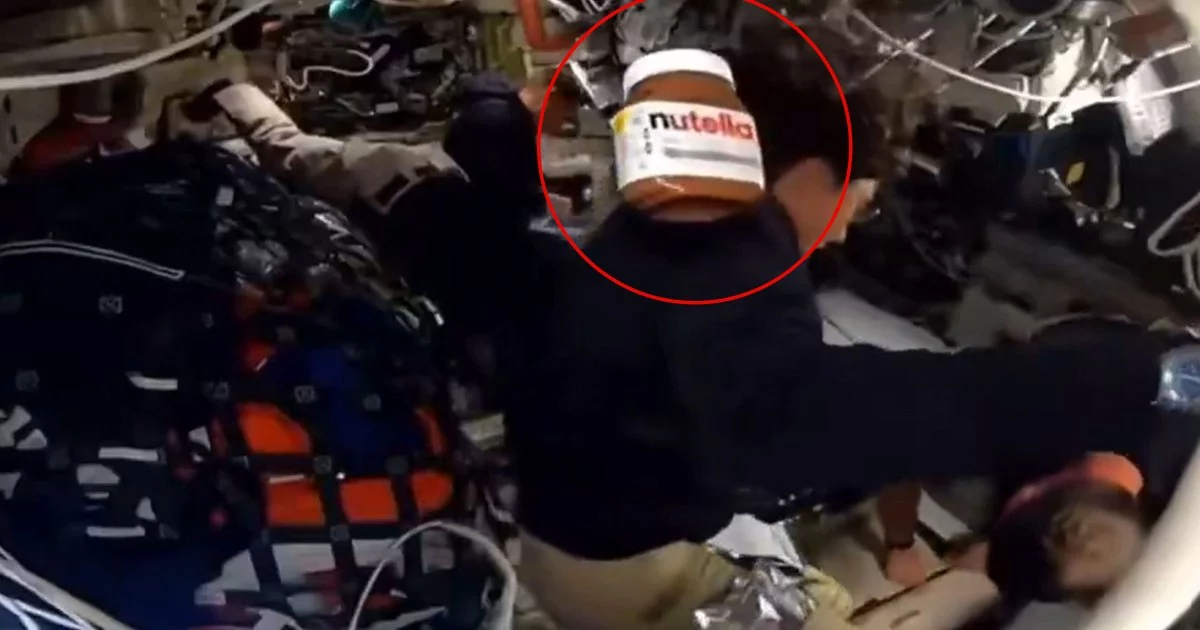
Yet the public’s attention briefly snapped to something far more ordinary: a jar of Nutella drifting through the cabin moments before the record was officially surpassed. The image—absurd, relatable, and instantly shareable—became a cultural hook for a mission otherwise defined by checklists, telemetry, and engineering discipline. NASA’s press office moved quickly to clarify that no brand partnership influenced crew meal selections, seeking to keep the focus on mission integrity rather than marketing optics.
The juxtaposition is instructive. Artemis 2 is simultaneously a high-stakes validation of deep-space readiness and a reminder that human exploration is carried forward by people who still crave small comforts, familiar tastes, and levity amid risk.
Deep-space validation: life support, waste systems, and the realities of living off Earth
From a technology and operations standpoint, Artemis 2’s distance record reframes Orion’s performance as deep-space habitation proof, not merely an incremental extension of cislunar operations. The mission’s ten-day duration, combined with the remoteness, pressures the spacecraft’s environmental and crew-support systems in ways that are difficult to simulate fully on the ground.
Key implications for spacecraft design and mission assurance include:
- Life-support reliability at meaningful latency: At these distances, the one-way communications delay exceeds five seconds, which subtly but materially changes troubleshooting dynamics. Crews must be more autonomous, and systems must be more fault-tolerant.
- Waste management as a mission-critical subsystem: Reports of a malfunctioning waste system underscore a truth long understood by veteran flight surgeons and mission planners: “unsexy” subsystems can become the most operationally consequential. Every anomaly becomes a data-rich event for improving redundancy, maintainability, and crew procedures ahead of Artemis 3 and longer-duration architectures.
- Crew sleep and habitability constraints: Adaptation to cocoon-style sleeping bags highlights the ongoing tradeoffs between mass/volume constraints and human factors. Over longer missions, sleep quality becomes a performance variable, not a comfort metric—affecting cognition, mood stability, and error rates.
In this light, Artemis 2 reads as a practical rehearsal for the next phase of lunar operations, where mission success will depend as much on habitability engineering and procedural resilience as on propulsion and navigation.
The Nutella episode: packaging engineering, morale science, and the marketing question
The floating jar moment is easy to dismiss as a viral footnote, but it surfaces three serious threads: microgravity food handling, behavioral health, and commercialization boundaries.
First, the incident spotlights the engineering reality that packaging is flight hardware. In microgravity, a container’s seal integrity, opening mechanism, and contamination risk matter disproportionately. A traditional jar is not inherently optimized for zero-g use; future missions—especially those lasting weeks or months—benefit from packaging that is:
- Leak-resistant and crumb-free, minimizing particulate contamination risks
- One-handed and glove-compatible, supporting constrained operations
- Shelf-stable with predictable texture, ensuring nutrition and palatability over time
Second, comfort foods are not frivolous. NASA’s inclusion of familiar items alongside standardized rations reflects a growing body of evidence that morale and psychological continuity are operational assets. Small rituals—taste, smell, and shared humor—can reduce stress and reinforce crew cohesion, particularly as missions extend beyond the “novelty window” into sustained isolation.
Third, the media debate over “space advertising” points to a market that is forming whether agencies invite it or not. NASA’s denial of brand influence is important for public trust, but the broader ecosystem is shifting. As commercial stations, private missions, and mixed-use platforms proliferate, the incentives for brands to seek visibility in space will intensify—through sponsored payloads, underwritten experiments, or content partnerships. The Nutella moment illustrates how earned media can mimic paid placement, creating reputational and regulatory pressure even when no transaction exists.
Business, policy, and soft power: why small stories shape big programs
Artemis 2’s technical success strengthens NASA’s strategic posture, but the communications afterglow may prove equally consequential. Public programs compete for attention and funding in an environment where narratives travel faster than appropriations. A floating jar can become a proxy for broader questions: What is the purpose of deep-space exploration? Who benefits? How should it be funded?
Several forward-looking dynamics emerge:
- Cost-per-kilogram economics are evolving: The presence of nonessential comfort items signals a gradual shift toward more flexible payload prioritization—an indicator of improving lift capacity and logistics planning. Over time, this supports more diverse cargo mixes, including commercial research and consumer-product testing.
- Cross-industry R&D opportunities are real: Food science, materials engineering, and packaging design are increasingly relevant to spaceflight. Consumer-goods companies with expertise in preservation, sensory design, and lightweight materials may find credible entry points into aerospace supply chains.
- Narrative control is a form of geopolitical infrastructure: Artemis blends scientific ambition with public spectacle, reinforcing national and partner prestige. In a competitive lunar landscape, even “trivial” moments can become soft-power signals—proof that a program is not only capable, but culturally resonant.
Artemis 2 ultimately demonstrates that deep-space exploration is not just an engineering contest; it is a systems challenge spanning technology, human performance, economics, and legitimacy. The spacecraft set the record—but the mission’s enduring impact may hinge on how effectively NASA and its partners translate hard-won capability into a sustainable model for going farther, staying longer, and bringing the public along for the ride.

 By
By


 By
By
 By
By

 By
By
 By
By







