
Giga Berlin at the crossroads of automation ambition and Germany’s co-determination model
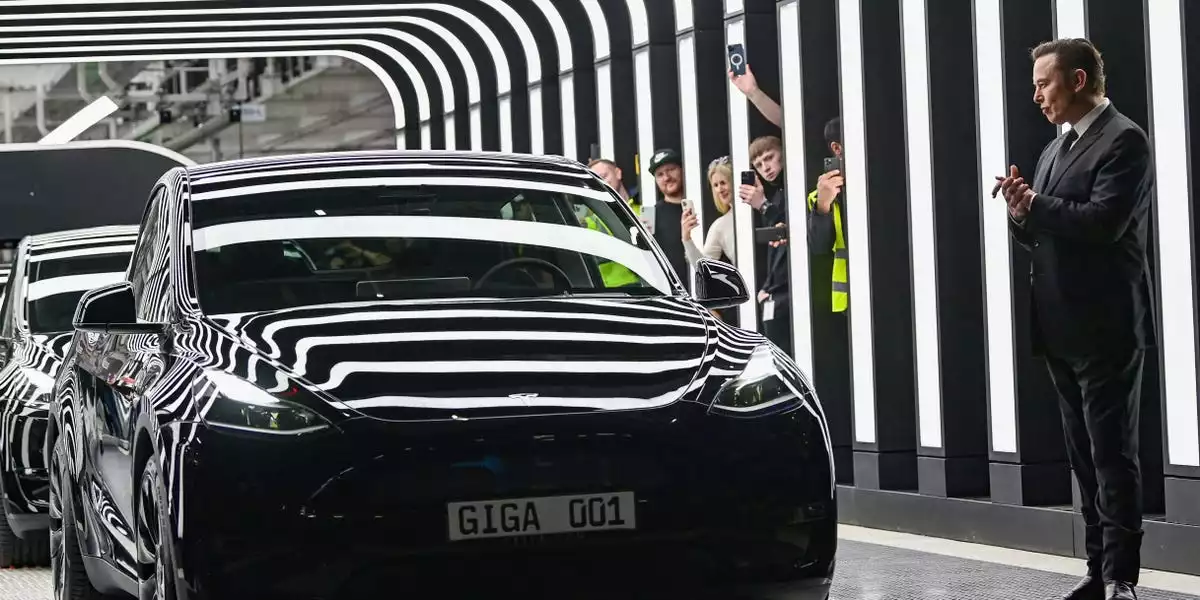
Elon Musk’s warning that Tesla’s planned Giga Berlin expansion—including battery-cell production, the Cybercab robotaxi, and the Optimus humanoid robot—could be jeopardized if “outside organizations” gain influence over the site’s works council is more than a labor-relations skirmish. It is a high-stakes test of whether a Silicon Valley-style operating philosophy can scale inside Europe’s most institutionalized industrial framework.
Germany’s system of works councils (Betriebsrat) and co-determination is not a peripheral feature; it is a core governance mechanism that shapes shift patterns, workplace policies, and elements of compensation and working conditions. For manufacturers, it can be a stabilizer—reducing churn and improving safety and training—yet it also constrains unilateral “move fast” management instincts. Musk’s preference for a hands-off, management-led factory culture collides with a model designed to formalize worker voice and union participation.
The immediate backdrop—escalating tensions with IG Metall and cross-filed legal complaints tied to alleged unauthorized recordings—adds a sharper edge. In Europe, workplace recording disputes can quickly become data-protection and compliance issues, not merely HR matters. Even if litigation does not materially alter production schedules, it can:
- Increase reputational risk among regulators, local communities, and prospective hires
- Raise the cost of operational change through heightened scrutiny and documentation
- Complicate Tesla’s ability to present Giga Berlin as a flagship for Europe-focused industrial policy
For Tesla, the strategic question is not whether co-determination exists—it does—but whether the company can convert it from a perceived constraint into a predictable governance channel that supports ramp-ups, new product lines, and advanced manufacturing.
Europe’s EV demand shock meets a credibility test for Tesla’s brand and pricing power
The labor dispute lands at an awkward moment: Tesla’s European EV registrations fell roughly 38% last year, while BYD’s sales surged, reflecting a broader shift in the region’s competitive center of gravity. Europe is no longer a market where brand halo alone can offset pricing pressure, incentive volatility, and rapidly improving alternatives.
Several forces are converging:
- Chinese OEM competition: BYD and peers are compressing the value gap with aggressive pricing, fast product cycles, and increasingly localized logistics and partnerships.
- Macro headwinds: Higher financing costs and uneven consumer confidence are softening discretionary purchases, including EVs—especially in price-sensitive segments.
- Brand sensitivity in politically attentive markets: Musk’s political commentary has become a measurable variable in Europe, where consumer sentiment can shift quickly and where corporate behavior is often interpreted through social and regulatory lenses.
For a premium EV manufacturer, reputational drag is not abstract—it can manifest as higher customer acquisition costs, weaker conversion rates, and reduced tolerance for price increases. That matters because Tesla’s long-term thesis in Europe depends on maintaining enough pricing power and volume stability to justify capital-intensive expansions like battery-cell production and new vehicle platforms.
In this environment, Giga Berlin is not simply a factory; it is Tesla’s European credibility engine. Any perception of operational instability—whether from labor conflict, legal disputes, or delayed expansion—risks amplifying competitive momentum for rivals that can present themselves as more locally aligned and politically neutral.
Battery cells, industrial policy, and the hidden leverage of a works council
Tesla’s battery-cell ambitions at Giga Berlin intersect with a central European priority: battery sovereignty. The EU has spent years trying to reduce dependence on external supply chains and to cultivate domestic capacity through industrial policy, incentives, and ecosystem-building. A successful Tesla cell operation in Germany would support that agenda—on paper.
But the politics of industrial policy are conditional. If expansion timelines slip due to governance friction, the strategic consequences can extend beyond Tesla’s balance sheet. Delays can influence how policymakers and funding bodies allocate attention and support across competing projects, potentially benefiting other European-aligned initiatives and consortia.
From a business-technology perspective, the key insight is that factory governance is now part of the supply chain. Localization risk is no longer only about ports, chips, or raw materials; it also includes:
- The speed and predictability of workforce agreements
- The legal exposure created by workplace practices (including recording and data handling)
- The social license to operate in communities that expect negotiated outcomes
For multinational manufacturers, Giga Berlin is becoming a case study in how advanced automation—robotics-heavy production, software-defined vehicles, and potentially humanoid robotics—must coexist with human-centric governance structures that have real veto points.
FSD in the Netherlands: a software-led upside constrained by Europe’s regulatory geometry
Against these headwinds, Tesla’s push for regulatory approval of Full-Self-Driving (FSD) in the Netherlands highlights the company’s enduring strategic advantage: a software-first approach that aims to differentiate beyond hardware and price. If Tesla secures meaningful approvals, it would validate a core narrative—continuous capability upgrades delivered via software, with a pathway to higher-margin services.
Yet Europe is not a single regulatory surface. Even with progress in one jurisdiction, pan-European deployment remains complex, shaped by:
- Divergent national interpretations of EU frameworks
- Safety and liability expectations that evolve after high-profile incidents
- The practical reality that advanced driver assistance and autonomy features are scrutinized not just technically, but socially and politically
This is where Tesla’s parallel challenges converge. Regulatory trust is influenced by corporate behavior, labor relations, and perceived alignment with local norms. A company seeking expanded autonomy permissions benefits from being seen as operationally disciplined, culturally attentive, and governance-ready.
Tesla’s next phase in Europe will be decided less by any single product—Cybercab, Optimus, or a new battery line—than by whether it can synchronize industrial relations, brand stewardship, and regulatory strategy into a coherent operating model. In a region where institutions matter as much as innovation, the winners will be those who treat governance not as friction, but as infrastructure.

 By
By
 By
By


 By
By
 By
By

 By
By