
A quiet race in low-Earth orbit is redefining “reusability” and strategic reach
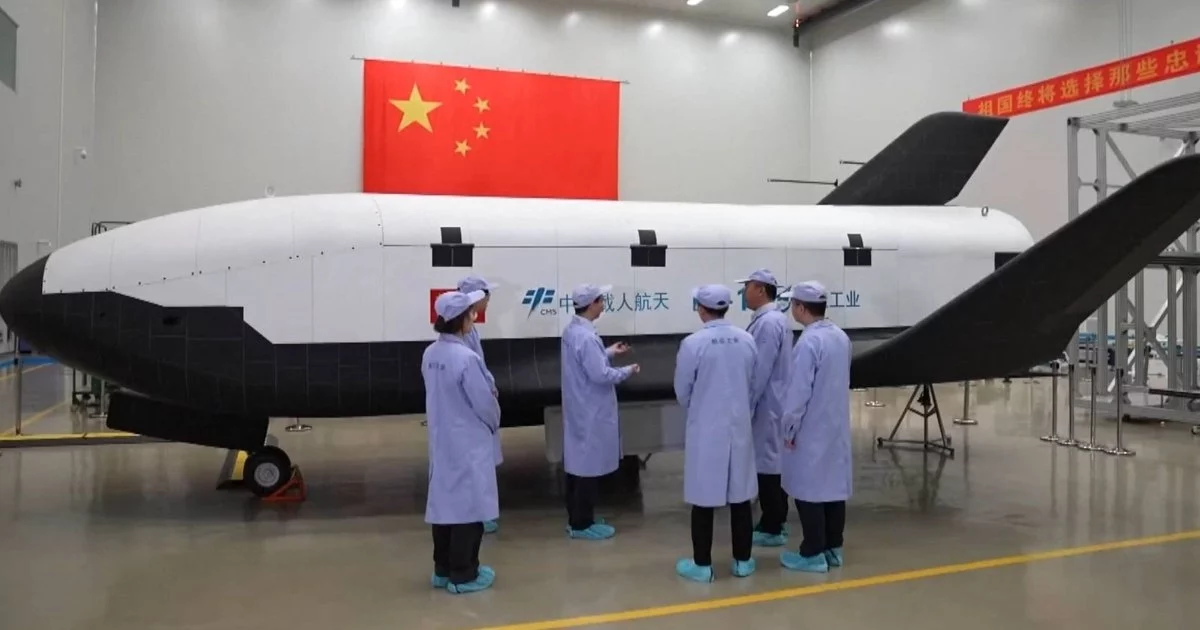
Over roughly 15 years, the U.S. Space Force’s Boeing X-37B robotic spaceplane has flown seven missions and accumulated thousands of days in orbit, while China’s Shendong (“Divine Dragon”) reusable spaceplane—linked to the China Aerospace Science and Technology Corporation (CASC)—has flown four missions, most recently on February 7, 2025. In both cases, official descriptions remain limited to broad “technology demonstration” language, with operational specifics largely classified.
That parallel opacity is not incidental; it is part of the signal. Reusable spaceplanes sit at the intersection of cost efficiency, persistence, and maneuverability—a combination that matters as low-Earth orbit (LEO) becomes more commercially valuable and more strategically contested. Unlike traditional satellites, a spaceplane can potentially change orbits, approach other objects, deploy payloads, and return—a lifecycle that blurs lines between spacecraft, aircraft, and on-orbit service vehicle.
From an industry perspective, these programs are less about a single platform and more about validating a repeatable architecture: autonomous operations, thermal protection, rapid refurbishment, and modular payload integration. From a geopolitical perspective, they represent a measured escalation in capability demonstration without disclosure, a pattern that complicates trust-building while accelerating technical learning curves on both sides.
Key takeaway for business and technology leaders: reusable spaceplanes are emerging as a dual-use backbone—supporting civilian markets like in-orbit servicing and advanced Earth observation, while also enabling military missions that benefit from discretion and proximity operations.
The engineering story: autonomy, thermal protection, and modular payload bays
Technically, the most consequential aspect of X-37B and Shendong is not simply that they are reusable—it is what reusability forces a program to master. A vehicle intended to fly again must be designed for repeatability, which drives advances across materials, avionics, software, and operations.
Several technology pillars stand out:
- Thermal management and reentry durability
Reusable spaceplanes require robust heat-shield systems, high-temperature structures, and predictable reentry performance. Progress here tends to spill into adjacent sectors, including hypersonics, advanced aviation materials, and high-temperature manufacturing.
- Autonomous flight control and long-duration reliability
Multi-month or multi-year missions imply mature autonomy: fault detection, power management (often solar arrays plus batteries), and resilient guidance and navigation. These are foundational for precision maneuvering and for any future on-orbit servicing business model.
- Payload versatility via modular bays
Reports of small payloads or “satellites” being deployed point to a modular approach—payloads that can be swapped between missions. That modularity is commercially attractive (faster iteration cycles) and militarily valuable (mission flexibility).
In practical terms, a reusable spaceplane is a testbed that can be re-flown, allowing iterative upgrades in a way that resembles software development more than classic spacecraft procurement. This compresses innovation timelines and can shift competitive advantage toward organizations that excel at rapid integration and verification.
Rendezvous and proximity operations: the dual-use capability with the highest strategic gravity
The most strategically sensitive capability implied by these missions is rendezvous-proximity operations (RPO)—the ability to approach, inspect, and maneuver near other objects in orbit. RPO is not inherently hostile; it is central to legitimate commercial needs such as inspection, repair, refueling, and debris mitigation. Yet the same skill set can support counterspace missions, including interference, disabling, or coercive signaling.
This is why RPO sits at the heart of today’s space security debate: it is functionally ambiguous. A vehicle conducting “inspection” can look indistinguishable from one rehearsing a threat scenario—especially when mission details are classified.
For the commercial sector, the RPO angle is equally consequential. As satellite operators seek to extend asset lifetimes and reduce replacement cadence, in-orbit servicing is moving from concept to market. Many forecasts place the servicing and related logistics market at multi-billion-dollar scale by 2030, driven by:
- higher-value satellites needing life extension
- crowded orbital regimes requiring better inspection and maneuvering
- insurance and financing incentives tied to resilience and recoverability
At the same time, the proliferation of mega-constellations increases the premium on space traffic management, autonomous collision avoidance, and reliable coordination protocols. Spaceplanes—because they can maneuver and potentially interact with other objects—raise the bar for tracking, attribution, and safety standards across the entire orbital economy.
Capital, procurement, and governance: where the next competitive edge will be decided
The economic logic behind reusable spaceplanes is straightforward: amortize development and manufacturing costs across multiple flights and reduce per-mission expense through refurbishment rather than replacement. But the second-order effects are where business strategy becomes decisive.
Reusable vehicles demand specialized components—thermal protection systems, radiation-tolerant avionics, composite structures, and precision actuators. That creates opportunities for suppliers that can meet stringent reliability requirements and scale production despite constraints in semiconductors and advanced materials.
In the United States, defense procurement has increasingly leaned on commercial-style contracting and fixed-price models where feasible, accelerating technology transfer between military and civilian ecosystems. China’s model differs structurally, but it is also evolving toward a blended approach that incorporates state-backed commercial actors. For investors, this convergence increases the addressable market for dual-use technologies—while also elevating regulatory and geopolitical risk.
Existing frameworks such as the 1967 Outer Space Treaty were not designed for reusable spaceplanes, routine RPO, or commercial servicing at scale. The result is a regulatory vacuum around proximity operations, transparency norms, and liability in increasingly congested orbits. As insurers and underwriters recalibrate risk models, the cost of ambiguity may show up not only in diplomacy but also in premiums, financing terms, and operational constraints.
For executives, the strategic question is no longer whether reusable, autonomous orbital operations will mature—it is who will shape the standards, capture the supply chains, and define acceptable behavior. In a domain where the most important missions are often the least described, durable advantage will accrue to organizations that can pair technical credibility with governance fluency, operating confidently in a market where capability and ambiguity are advancing in lockstep.

 By
By
 By
By

 By
By
 By
By

 By
By
 By
By