
From 43 Hours at Bain to a New Kind of Leadership Laboratory
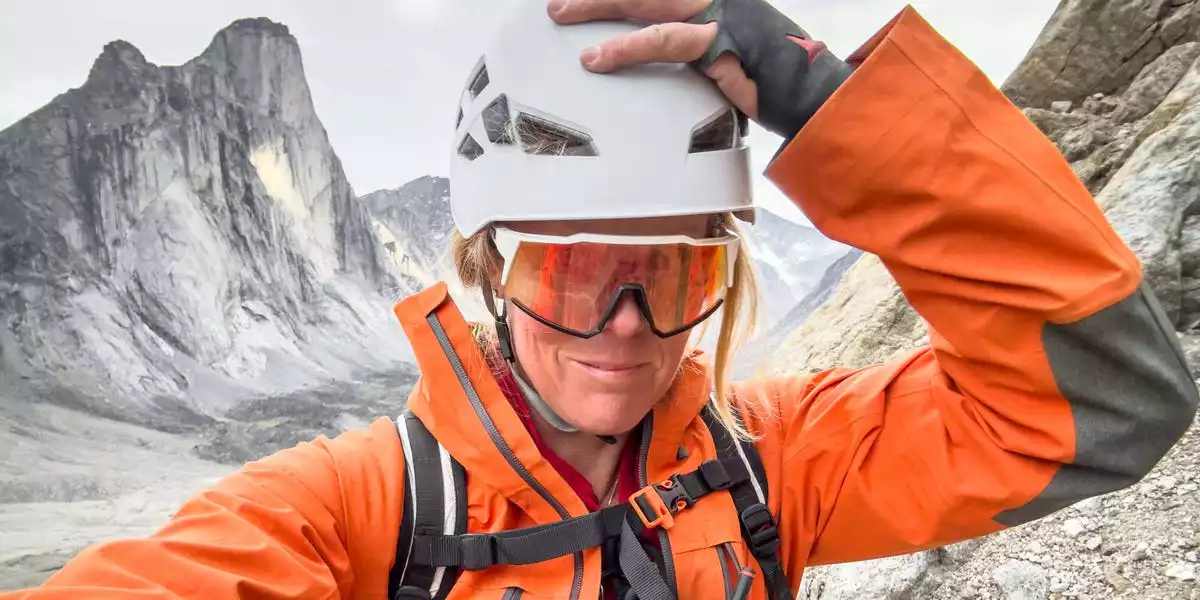
Sunny Stroeer’s career pivot—from senior consultant at Bain & Company to founder-operator in outdoor adventure and guiding—captures a broader shift underway in business: elite talent increasingly weighs purpose, autonomy, and well-being alongside prestige and compensation. Her departure in 2015, catalyzed by a punishing 43-hour workday, is not merely a personal anecdote; it is a signal of how high-performance cultures can collide with human limits, and how those same high-performance skills can be redeployed into entirely different arenas.
What makes Stroeer’s story especially relevant to business and technology audiences is the way it reframes “extreme” decision-making. In consulting, the stakes are often financial, reputational, and organizational. In high-altitude or remote terrain, the stakes can become immediate and physical. Yet the underlying leadership mechanics—clarity under uncertainty, disciplined execution, and risk governance—translate with surprising fidelity.
Her trajectory also challenges a lingering assumption in corporate career narratives: that leaving a top-tier firm is a step down in complexity. Stroeer’s experience suggests the opposite. The outdoors, particularly in guided expedition contexts, can function as a real-time operating environment where decisions must be made with incomplete data, shifting conditions, and limited margin for error—conditions many executives recognize from crisis management, only with fewer buffers.
Consulting Frameworks Rebuilt for the Backcountry Economy
Stroeer’s transition underscores the portability of consulting’s core toolkit—when applied with humility to a domain that does not negotiate. The same methods used to advise Fortune 500 clients can be repurposed to design safer, more scalable, and more resilient adventure operations.
Key transferable capabilities stand out:
- Strategic decision-making under pressure
Scenario planning, risk-reward tradeoffs, and iterative feedback loops are as applicable to route selection and turnaround decisions as they are to market entry strategy. The difference is tempo: outdoor environments compress decision cycles and penalize hesitation.
- Execution rigor and measurable outcomes
Consulting’s emphasis on KPIs and accountability can translate into operational discipline: client readiness screening, standardized safety protocols, guide training systems, and post-trip debriefs that improve quality over time.
- Analytical resilience in crisis
During the COVID-19 shock—an existential threat to travel and tourism—Stroeer reportedly leaned on familiar playbooks: cash-flow modeling, demand forecasting, and stakeholder communication. The result, notably, was not just survival but growth, with revenues tripling since 2020.
This is where the story intersects with a larger market reality: the “backcountry economy” is no longer niche. Outdoor recreation and adventure travel have become a durable category shaped by wellness trends, experience-led spending, and remote-work flexibility. Industry projections cited in the material point to the global adventure tourism market growing at roughly a 14% CAGR through 2027, a growth profile that attracts both entrepreneurs and investors—especially those seeking differentiated, values-aligned brands.
Gender Equity as Both Social Imperative and Competitive Strategy
Stroeer’s founding of the Alliance for Gender Equity and Outdoor Adventure, alongside leadership of a Utah-based guiding service, places gender inclusion at the center of operational identity rather than as an external pledge. In an industry where women have historically faced barriers in guiding, sponsorship, and leadership pathways, her approach positions equity as a structural design choice—one with measurable business implications.
From a market standpoint, gender equity can function as a strategic differentiator in at least three ways:
- Brand trust and customer alignment
A growing segment of consumers evaluates companies through the lens of values and lived authenticity. Organizations that demonstrate credible equity practices can strengthen loyalty and word-of-mouth in communities where reputation travels quickly.
- Talent pipeline expansion in a tight labor market
Outdoor guiding depends on skilled labor, local knowledge, and leadership maturity. Reducing barriers for women and underrepresented groups expands the addressable talent pool and can improve retention through stronger belonging and clearer advancement pathways.
- ESG and partnership readiness
As corporations increasingly seek experiential programming—leadership retreats, wellness travel, team development—partners that can document inclusion practices help buyers satisfy DEI and ESG objectives without resorting to performative marketing.
Importantly, this is not a claim that equity initiatives are automatically profitable; rather, Stroeer’s model illustrates how social impact and commercial strategy can reinforce each other when embedded into operations, hiring, and customer experience—not bolted on as a campaign.
The Next Frontier: Adventure-Tech, Data-Enabled Safety, and Scalable Experiences
The most forward-looking dimension of this story sits at the intersection of technology, safety, and service design. Guiding is inherently local and human-led, but it is increasingly augmented by digital infrastructure—mirroring trends seen across professional services and logistics.
Several technology and operational levers are reshaping the sector:
- Digital platform integration for booking, CRM, and direct-to-consumer relationships, enabling small operators to compete with larger incumbents through speed, personalization, and dynamic pricing.
- Data-enabled risk management, including AI-informed weather and terrain analytics, satellite data, and decision-support tools that can improve route planning and emergency readiness.
- Real-time monitoring and safety tooling, such as IoT wearables and geofencing, which can strengthen incident response and accountability—while raising important questions about privacy, liability, and standard-of-care expectations.
- Hybrid and adjacent revenue streams, including virtual workshops, coaching, and training content that can extend a guiding brand beyond geography and seasonality.
For investors and corporate innovation teams, the implication is clear: “adventure-tech” is not just gadgets and apps; it is a convergence of risk analytics, customer experience design, and operational resilience. For employers watching top performers rethink career paths, Stroeer’s journey offers a sharper takeaway: the competition for talent is no longer only about compensation or title—it is about whether work feels sustainable, meaningful, and aligned with the life people want to lead.
In that sense, the most consequential part of this narrative may not be the pivot itself, but what it reveals: modern leadership is being forged not only in boardrooms and spreadsheets, but also in environments where preparation meets uncertainty—and where decisions must hold up against reality, not just a slide deck.

 By
By
 By
By
 By
By
 By
By
 By
By


 By
By