
Cyber shocks to the food aisle are becoming a board-level risk
A string of high-impact cyber incidents is exposing how tightly modern food supply chains are coupled—and how quickly digital disruption can become a physical, consumer-facing crisis. The ransomware attack that forced JBS Foods to halt meat-processing operations across North America and Australia, alongside the Ahold Delhaize USA breach that exposed records tied to 2.2 million employees at Stop & Shop and Hannaford, illustrates two distinct but converging threat vectors: operational paralysis and mass data compromise.
What makes these events especially consequential is not merely their scale, but their timing. Food distribution has evolved into a high-velocity system optimized for cost, freshness, and minimal inventory. That efficiency is increasingly orchestrated by AI-driven risk algorithms, transportation-management systems (TMS), and just-in-time inventory controls—tools that can outperform humans in routine optimization, yet can also amplify disruption when attacked or when upstream data becomes untrustworthy.
As Durham University’s Mohammed Alzuhair has argued in the UK context, AI now permeates the food system end-to-end—from field to fork to waste. The efficiency gains are real. The vulnerability is equally real: when human oversight is reduced to monitoring dashboards, the system can lose the practical ability to improvise when automation fails, networks are compromised, or decisions must be made under degraded connectivity.
—
The hidden fragility of “algorithmic monocultures” in logistics and retail
A defining feature of today’s supply chain technology stack is standardization. Many firms rely on similar classes of models—risk scoring, demand forecasting, real-time routing, and automated procurement—often sourced from the same limited set of vendors or built on comparable architectures. This creates what can be described as an algorithmic monoculture: a landscape where shared assumptions, shared dependencies, and shared interfaces can become shared failure modes.
Several technical dynamics are shaping this fragility:
- Cascading failure through shared logic: When routing engines or risk models are manipulated—via poisoned data, compromised credentials, or disrupted APIs—errors can propagate across distribution nodes, not just within a single facility.
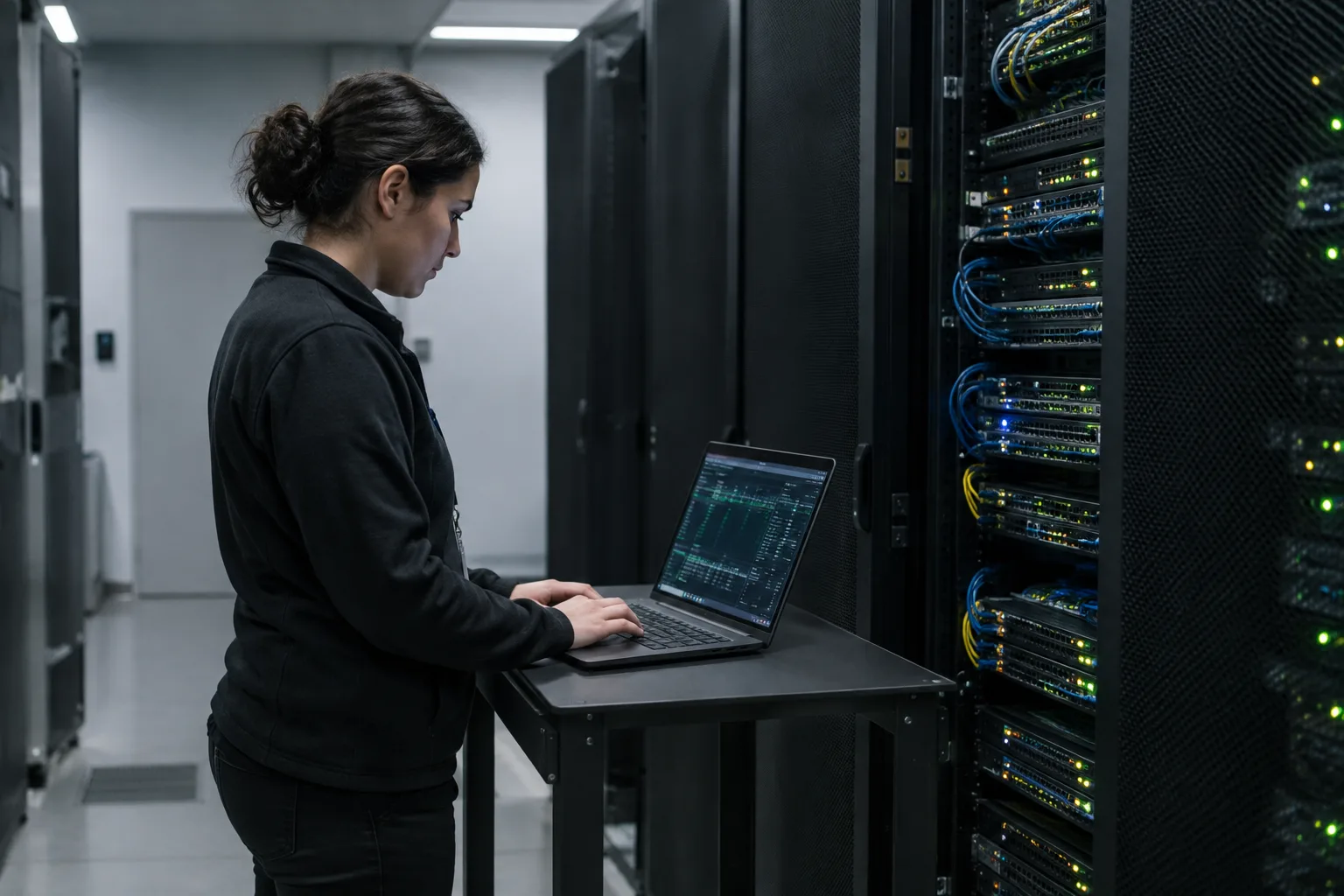
- IT/OT convergence expands the blast radius: Food logistics increasingly blends enterprise IT (identity, email, ERP) with operational technology (warehouse controls, refrigeration sensors, plant systems). Attackers who gain a foothold can use lateral movement to reach systems that directly affect physical operations.
- Cyber-physical interdependence turns outages into shortages: A ransomware event in a meat-packing plant is not a “digital inconvenience.” It can translate into empty shelves, price spikes, delivery backlogs, and contractual penalties—with knock-on effects for retailers, foodservice, and exporters.
- Real-time AI decisions can lack provenance and guardrails: In high-speed environments, systems may prioritize throughput over verification. Without strong cryptographic integrity checks, anomaly detection, and robust fallback modes, automation can “freeze” or misroute shipments precisely when resilience is needed most.
The strategic lesson is that resilience is no longer just about redundancy in trucks and warehouses. It is about redundancy in decision-making pathways—including the ability to operate safely when the “brain” of the network is degraded or untrusted.
—
Inflation, insurance, and consolidation: the market consequences of cyber disruption
Cyberattacks on food supply chains are increasingly macro-relevant because they intersect with inflation-sensitive categories—meat, dairy, produce—where consumers notice price changes quickly and where substitution is limited. When a primary supplier is disrupted, volatility can ripple through procurement markets and retail pricing, forcing firms to choose between margin compression and pass-through inflation.
Key economic and competitive pressures are intensifying:
- Margin stress and inflationary feedback loops
– Disruptions in processing or distribution can tighten supply, pushing up spot prices and contract renegotiations.
– Retailers may face higher shrink and spoilage if cold-chain logistics are interrupted or mismanaged during recovery.
- Cyber insurance repricing
– Underwriters are recalibrating risk models around ransomware frequency and breach severity, driving higher premiums, stricter exclusions, and more demanding controls for grocers, processors, and logistics providers.
- Competitive consolidation
– Large incumbents can amortize security investments—zero trust architectures, 24/7 monitoring, incident response retainers—across scale.
– Mid-market distributors and regional operators may struggle to fund both advanced automation and advanced defense, increasing acquisition pressure and potentially reducing market diversity.
- Rising barriers to entry
– New entrants must compete not only on cost and service levels, but on demonstrable cyber resilience, third-party risk management, and recovery capabilities—effectively turning cybersecurity into a prerequisite for market access.
For investors and executives, the implication is clear: cyber resilience is migrating from an IT line item to a determinant of earnings stability, brand trust, and supply assurance.
—
Building resilient automation: governance, workforce, and security architecture
The emerging playbook is not “less AI,” but better-balanced automation—designed to degrade gracefully under attack and to preserve human agency when algorithms cannot be trusted. That requires changes in operating models, not just technology upgrades.
Priority moves gaining traction across critical infrastructure sectors include:
- Human-in-the-loop operating reserves
– Establish trained operators who can override automated decisions, validate risk alerts, and run manual routing or procurement when systems are compromised.
– Embed cross-functional incident response—logistics, IT/OT security, legal, communications—into operational command structures rather than isolating them at corporate headquarters.
- Layered cybersecurity across IT and OT
– Apply zero-trust principles to identities, devices, and APIs; assume breach and limit movement.
– Use micro-segmentation for warehouse controls, refrigeration systems, and TMS interfaces to prevent a single compromise from paralyzing an entire region.
– Integrate sector threat intelligence, including ISAC-style sharing, to reduce time-to-detection and improve coordinated defense.
- Scenario-based resilience engineering
– Run wargames that simulate ransomware lockdowns, prolonged internet outages, and compound crises (cyber plus extreme weather).
– Use digital twins of distribution networks to stress-test cyber-physical contingencies and identify choke points before attackers do.
- Contractual and financial hedging
– Add cyber-resilience clauses to supplier agreements, including audit rights for AI risk models and recovery playbooks.
– Explore parametric-style coverage tied to service-level failures to accelerate liquidity during operational shutdowns.
Regulators are also likely to raise expectations—minimum segmentation standards, tighter incident reporting timelines, and deeper third-party assessments—especially as food supply cyber resilience becomes framed as a national security and public welfare issue. In a world where software now mediates the movement of calories, the competitive edge will belong to organizations that can prove not only speed and efficiency, but controlled failure, rapid recovery, and accountable decision-making when the network is under attack.
 By
By
 By
By
 By
By
 By
By

 By
By

 By
By