
AI as the New Bargaining Table: Automation, Anxiety, and the Return of Collective Power
For most of the postwar era, organized labor served as a counterweight to corporate power in the United States. That balance has steadily eroded. Union density has fallen from roughly 35% in the mid-20th century to under 11% today, a decline shaped by restrictive labor rules, aggressive corporate lobbying, and a durable cultural narrative that framed unions as friction rather than infrastructure. Yet the economic backdrop has shifted in ways that make this long decline newly unstable.
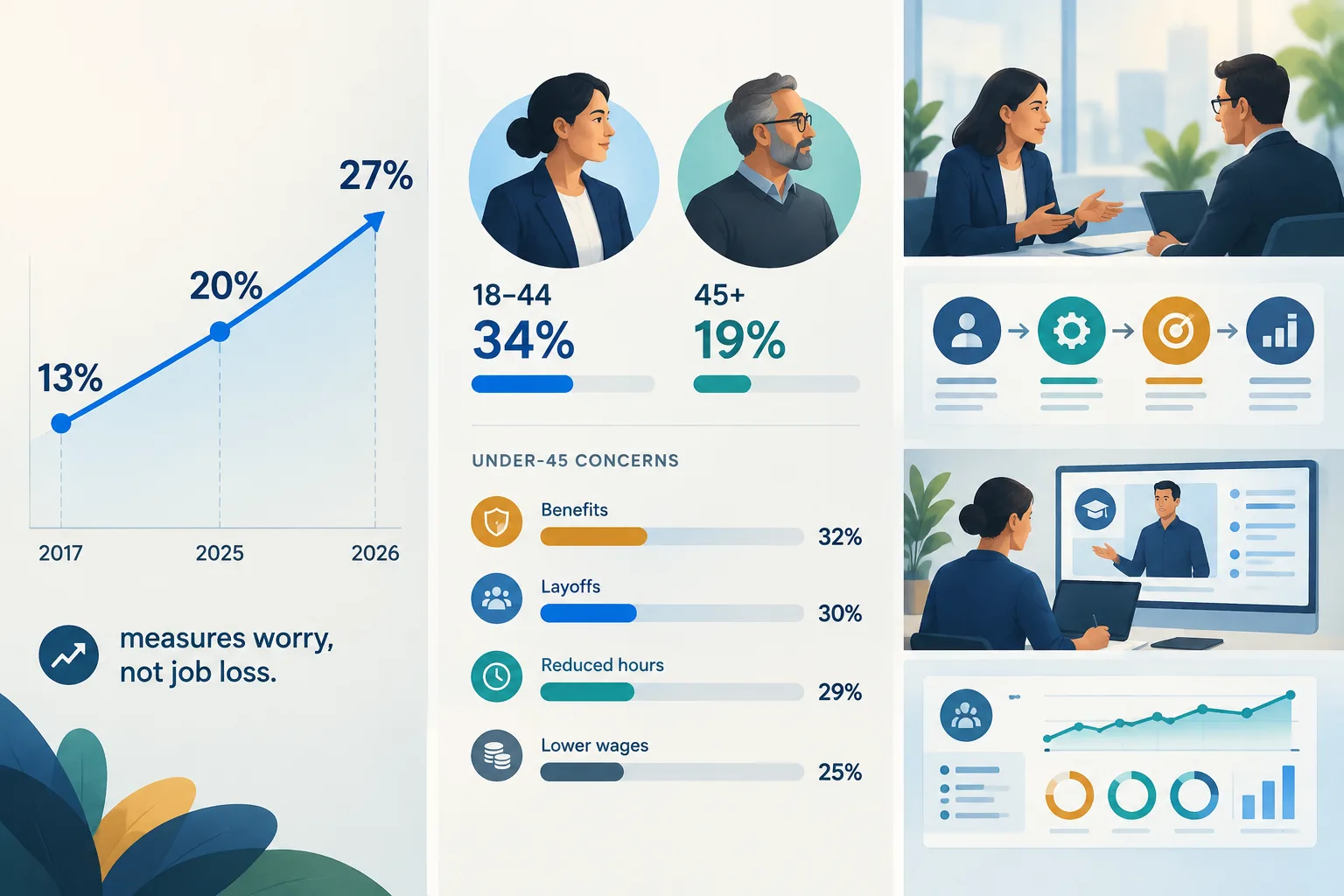
The most consequential catalyst is not a traditional recession or a single industry shock—it is artificial intelligence. AI is arriving not merely as a productivity tool, but as a restructuring force that can reassign tasks, compress job ladders, and redefine what “work” means across both white-collar and blue-collar occupations. Public sentiment reflects the scale of the disruption: polls indicating 71% of Americans fear permanent job loss to AI suggest that automation anxiety is no longer confined to manufacturing towns or call centers. It has moved into professional identity itself.
That shared vulnerability matters. Historically, labor organizing has often been segmented—by sector, education level, and perceived class status. AI has the potential to collapse those boundaries, creating a single, unifying question across the economy: *who benefits from productivity gains when machines can do more of the work?* With reports that over 50 million workers want union representation in 2025 but cannot secure it, the demand signal is clear; the constraint is institutional.
The Mechanics of Disruption: From Labor Substitution to the Surveillance Workplace
AI’s labor impact is frequently discussed as “job displacement,” but the deeper story is power displacement—who controls workflows, performance standards, and the data that defines “good work.” Two dynamics stand out.
First, AI as a labor substitute. Advanced machine learning systems can replicate tasks across clerical, analytical, and industrial domains. The immediate corporate incentive is straightforward: reduce headcount while increasing output. Even when AI does not eliminate roles outright, it can “hollow out” jobs by removing higher-value tasks, leaving workers with narrower responsibilities and weaker leverage.
Second, AI as a management amplifier. Without governance guardrails, AI can accelerate what critics describe as a surveillance economy—real-time monitoring, automated scoring, and algorithmic scheduling that erodes autonomy. This is not a theoretical risk. The same tools that optimize logistics can also optimize labor control, shifting decision-making from human managers to opaque systems that are difficult to contest.
Key risks that labor advocates and business leaders alike are now watching include:
- Algorithmic performance management that penalizes workers without transparent appeal mechanisms
- Work intensification as AI sets ever-higher productivity benchmarks
- Data asymmetry, where employers hold the metrics while workers lack visibility into how they are evaluated
- Fragmentation of accountability, as firms attribute decisions to “the model” rather than policy choices
These dynamics help explain why AI is emerging as an organizing accelerant. When workers experience automation not as augmentation but as unilateral control, the impulse to seek collective bargaining tends to rise—especially when traditional channels for negotiation are weak.
The Productivity Paradox Meets Wage Reality: Why AI Could Reignite Labor Politics
The economic context is the quiet engine behind today’s labor volatility. Since the 1980s, productivity has risen more than 70%, yet labor’s share of national income has declined by over five percentage points. For many households, the lived experience is stagnation: wages that fail to track output, paired with rising costs and heightened job insecurity.
AI threatens to widen this gap. If automation-driven savings flow primarily to shareholders and senior executives, the result is not just inequality—it is a legitimacy problem for the modern firm. That is where unionization and worker representation re-enter the strategic picture, not merely as a labor issue but as a macroeconomic stabilizer. Broad-based wage growth supports demand; demand supports growth; growth supports investment. When that cycle breaks, polarization fills the vacuum.
Meanwhile, the policy environment remains uneven. Inadequate enforcement of the National Labor Relations Act and state-by-state variability in labor protections leave many workers exposed to unfair labor practices. The result is a structural mismatch: rising interest in organizing, but limited pathways to achieve it at scale.
AI also changes organizing logistics. Digital-native workers—alongside warehouse staff, data-center operators, and service employees—can use encrypted messaging, rapid coordination tools, and distributed networks to mobilize quickly. In that sense, technology does not only threaten labor; it can also lower the barriers to collective action, enabling campaigns that move at the speed of modern communications rather than the pace of traditional institutions.
Corporate Strategy, ESG Pressure, and the Two Futures of AI at Work
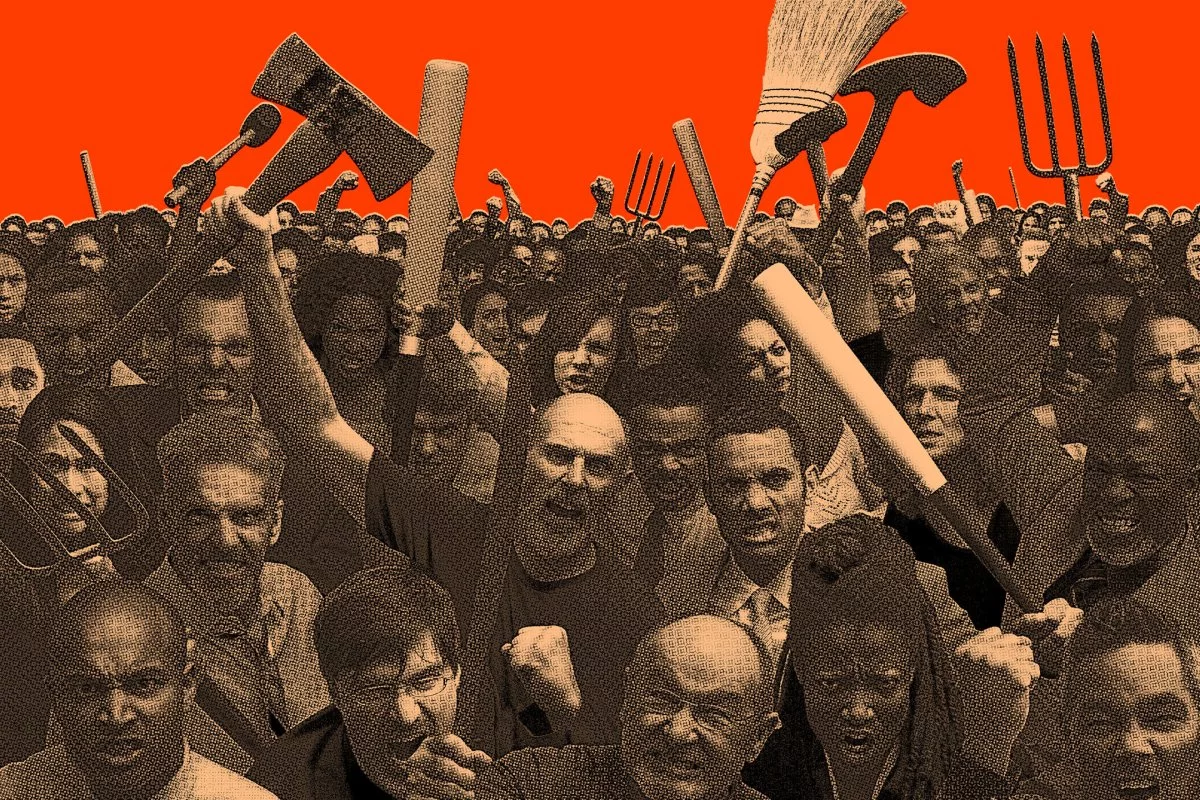
For executive leadership, the emerging labor landscape is not simply a compliance challenge; it is a strategic fork. Companies face rising reputational and operational risk as worker grievances scale into broader social movements—illustrated by high-profile mass demonstrations such as the 50,000-strong Minnesota protest referenced in recent discourse. In an era of instant amplification, labor disputes can quickly become brand crises, investor questions, and political flashpoints.
At the same time, AI governance is becoming intertwined with ESG and stakeholder capitalism. Worker representation, AI ethics, and surveillance boundaries are increasingly material to:
- Institutional investors assessing social risk and human-capital management
- Talent markets where retention depends on trust, not just compensation
- Regulators exploring AI impact assessments and workplace protections
- Global competitiveness, as U.S. firms benchmark against stronger labor frameworks abroad, including European co-determination models
This creates two plausible trajectories.
- A “Surveillance Economy” path, where AI is deployed primarily to extract efficiency and tighten control—inviting resistance, strikes, churn, and regulatory backlash.
- A “Shared Prosperity” path, where firms co-design AI systems with workers, establish transparent data governance, and align productivity gains with wage growth, mobility, or profit-sharing.
The second path is not altruism; it is risk management and long-term performance strategy. Companies that build worker-centric AI governance—through councils, participatory impact reviews, and credible reskilling tied to real internal mobility—may find they can adopt AI faster, with less friction, and with stronger social license to operate.
AI is often framed as destiny. The more accurate framing is choice: automation will reshape work, but governance will determine whether it reshapes trust—and whether the next era of productivity becomes a new gilded age or the foundation for a modern labor renaissance.

 By
By


 By
By
 By
By
 By
By

 By
By