


Lunar Ambitions Eclipse Martian Dreams: The Calculus Behind SpaceX’s Strategic Pivot
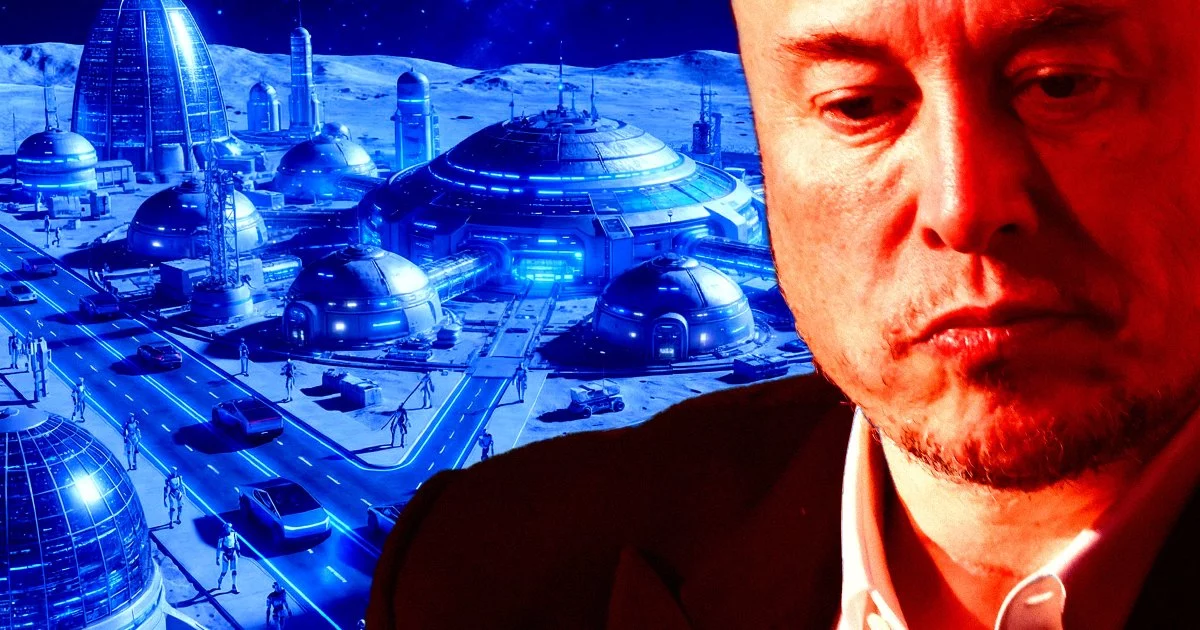
Elon Musk’s latest recalibration of SpaceX’s celestial ambitions—deferring Mars in favor of a self-sustaining lunar city—marks a watershed moment in the commercial space race. The timing is hardly accidental. Amid persistent Starship launch hurdles, whispers of a $1.25 trillion IPO, and a U.S. government eager to cement lunar logistics under NASA’s Artemis program, SpaceX’s pivot is as much about terrestrial economics as it is about extraterrestrial engineering.
The Moon as a Strategic and Financial Launchpad
The Moon, long a symbol of Cold War triumph, now emerges as a pragmatic proving ground for 21st-century space capitalism. Several factors underpin SpaceX’s shift:
- Cash-Flow Certainty: NASA’s Artemis contracts and the Department of Defense’s cislunar initiatives offer a multi-billion-dollar pipeline, providing a revenue clarity that Mars—distant, both literally and figuratively—cannot yet match.
- Risk and Cost Compression: Lunar missions demand less delta-V, meaning lower propellant budgets, simpler life-support requirements, and reduced insurance premiums. The Moon’s proximity translates to manageable mission durations and fewer unknowns.
- Capital Market Signaling: A decade-scale lunar roadmap is digestible for public investors. Should SpaceX pursue its rumored IPO, the Moon narrative offers a tangible, near-term growth story—critical for justifying a trillion-dollar-plus valuation.
- Integrated Portfolio Synergy: Starlink’s next generation, in-space refueling, and rapid launch cadence all dovetail with lunar logistics, creating a cohesive value proposition for both investors and government stakeholders.
This recalibration is not a retreat from Mars, but a tactical advance—an acknowledgment that the Moon is the gateway to sustainable interplanetary operations and, perhaps, to the financial windfall necessary to fund deeper ventures.
Technological Bottlenecks and Accelerators
SpaceX’s lunar ambitions rest on a foundation of both proven and nascent technologies. Starship, the company’s flagship for deep space, faces formidable hurdles:
- Launch and Reusability: The Super Heavy booster must achieve orbital re-entry recovery with >95% reliability—a prerequisite for the rapid cadence lunar operations will demand. The unique gravity and surface conditions of the Moon necessitate new variants, particularly engines capable of throttled, precise landings in 1/6th Earth gravity.
- Propellant Transfer: Unlike Mars, lunar missions require only short-term cryogenic storage, simplifying the challenge of in-space refueling and opening near-term revenue streams under NASA’s evolving contract options.
- Surface Infrastructure: Lunar regolith—abundant but abrasive—will be both obstacle and asset. Processing it for radiation shielding and 3D-printed habitats will serve as a test bed for future Martian ISRU (In-Situ Resource Utilization). The near-constant sunlight at the lunar poles also steers SpaceX’s supply chain toward advanced solar partners, rather than nuclear vendors, for power solutions.
Each of these technological vectors not only advances lunar capability but also builds the scaffolding for eventual Martian settlement, creating a recursive loop of innovation and risk reduction.
Capital Markets, Geopolitics, and the New Lunar Gold Rush
A potential $1.25 trillion IPO looms over SpaceX’s lunar narrative. To justify such a valuation, the company must expand its total addressable market beyond launch services, staking claims in lunar freight, communications, and even resource extraction. The Moon city storyline supplies precisely this expansion, offering liquidity for engineers and suppliers, and positioning SpaceX as a keystone in the emerging cislunar economy.
Geopolitically, the stakes are equally high. China’s Chang’e program targets a 2030 crewed landing, while Blue Origin and Northrop Grumman intensify domestic competition. The race to establish a permanent lunar presence is as much about soft power as it is about science or commerce. SpaceX’s acceleration could force NASA to diversify its procurement, echoing the dual-vendor approach of the Commercial Crew era.
For governments and regulators, the challenge will be to foster diversity in the lunar ecosystem—protecting smaller startups from being crowded out, and codifying property rights to preempt international friction. For technology leaders beyond aerospace, lunar-driven advances in robotics, additive construction, and edge computing promise spillover benefits for terrestrial industries, from remote energy to disaster recovery.
The Dawn of Cislunar Industrialization
SpaceX’s lunar pivot is less a philosophical swerve than a calculated response to market forces, technological maturity, and shifting government priorities. Mars remains the aspirational lodestar, but the Moon has become the commercially bankable waypoint. The next decade will see the cislunar corridor transformed from a geopolitical abstraction into an industrial reality—one that will ripple through supply chains, capital markets, and global diplomacy.
For those watching from the ground, the message is clear: the center of gravity in space economics is shifting. The Moon is no longer a mere stepping stone; it is the new frontier of human enterprise, where the ambitions of industry, government, and society will converge—and where the future of off-world civilization will be forged.

 By
By
 By
By
 By
By
 By
By
 By
By


 By
By







